

Blog
Dogs for Sale: How to Choose the Right Dog for Your Lifestyle
Searching for dogs for sale can be exciting, especially when you have already started imagining a new puppy running around your home. However, choosing a dog should be more than a quick decision based on appearance, price, or a cute photograph. A dog can become part of your family for many years, so the best choice is the one that fits your lifestyle, living environment, experience, schedule, and expectations.
Today, people searching for dogs for sale online, puppies for sale, dogs for sale near me, or simply information about how to buy a dog have access to an enormous number of breeds and sellers. This variety is useful, but it can also make the process confusing. A small dog may look convenient but still require extensive grooming. A large breed may appear intimidating but actually have a calm temperament. A puppy may seem easier than an adult dog, while in reality puppies often require considerably more time, patience, training, and supervision.
The goal of this guide is to help prospective dog owners make a thoughtful decision before purchasing or adopting a dog. Instead of beginning with a particular breed, begin with yourself.
What kind of home do you have? How much time can you dedicate to exercise? How comfortable are you with training? Do you want a playful companion, an active outdoor partner, a calm family dog, or a dog that can adapt to a relatively quiet household?
Once you answer these questions, the search for the right dog becomes much easier.
Why Choosing the Right Dog Matters
Choosing a dog is not simply choosing an animal that looks attractive.
Every dog has its own combination of:
- Energy level
- Temperament
- Exercise requirements
- Training needs
- Grooming requirements
- Size
- Social behavior
- Independence
- Sensitivity
- Potential health considerations
- Compatibility with children and other pets
Two breeds that look similar can have completely different lifestyles.
A dog bred for intensive work may become frustrated in a home where there is little activity. A highly social dog may struggle if left alone for most of the day. A breed with a dense coat may require much more grooming than a short-haired breed.
This is why the most important question is not simply, “Which dog do I like?”
A better question is:
“Which dog can live happily and comfortably with the way I actually live?”
Start With Your Lifestyle Before Looking at Dogs for Sale
Before searching through advertisements, make an honest assessment of your daily routine.
Think about:
- Your working hours
- Your weekends
- Your exercise habits
- Your travel frequency
- Your household size
- Your home environment
- Your previous dog experience
- Your budget
- Your ability to provide training
- Your tolerance for barking
- Your willingness to groom
- Your ability to handle an energetic dog
It is easy to imagine yourself becoming more active after getting a dog.
However, your decision should be based on your current lifestyle rather than an idealized version of your future routine.
If you rarely exercise now, choosing an extremely high-energy breed because you hope the dog will motivate you to run every morning may not be the safest assumption.
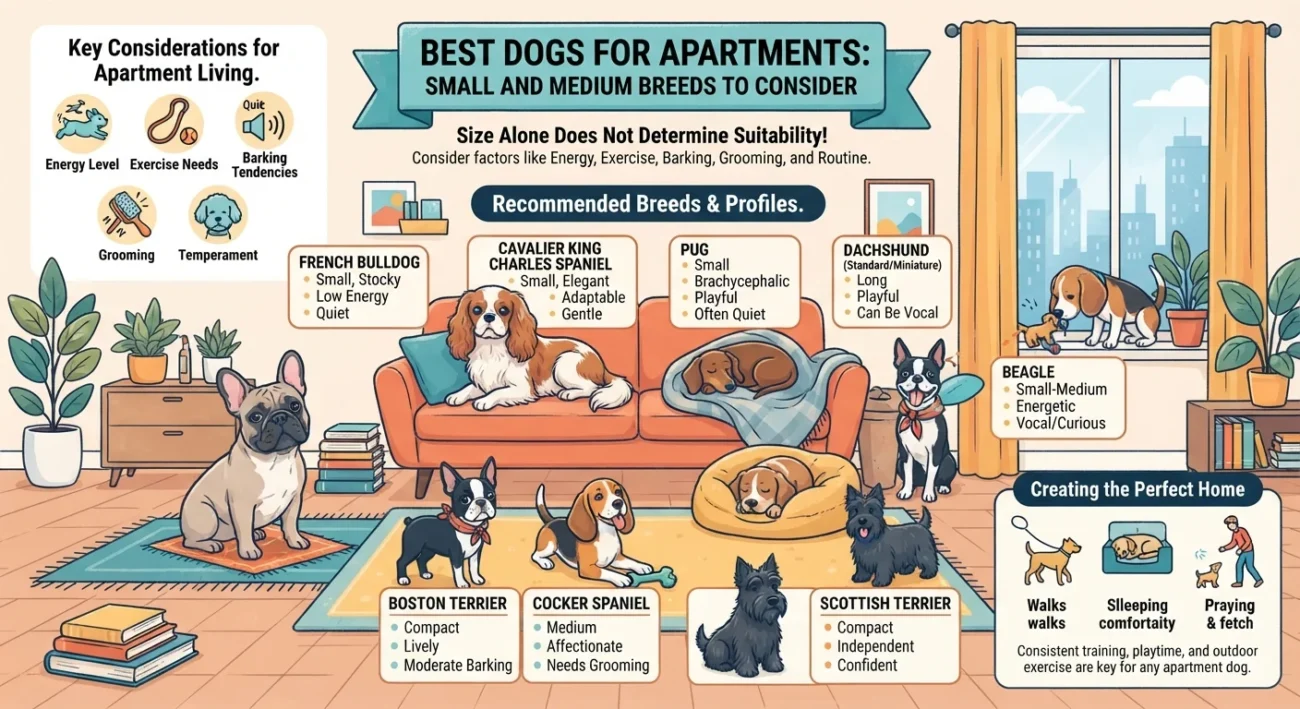
Consider the Size of Your Home
Home size is an important factor, but it should not be treated as the only measure of whether a dog is suitable.
People sometimes assume that small dogs automatically belong in apartments and large dogs automatically need huge houses.
That is not always true.
Some large dogs can adapt well to indoor living if their exercise and mental stimulation needs are met. Some small dogs can be surprisingly energetic and require substantial daily activity.
When evaluating a dog, consider both:
Physical space and lifestyle compatibility.
A small apartment with an active owner may work well for certain energetic small breeds, while a large house with an inactive owner may not automatically be suitable for every large breed.
Apartment Living and Dogs
If you live in an apartment, several characteristics become particularly important.
Look for a dog whose needs you can realistically satisfy without relying entirely on a backyard.
Important considerations include:
- Exercise requirements
- Barking tendencies
- Ability to settle indoors
- Size
- Energy level
- Neighbor sensitivity
- Toilet-training requirements
- Separation behavior
A balcony or small outdoor area does not replace proper walks.
Dogs need opportunities to explore, sniff, move, and interact with their environment.
Houses With Yards
A yard can make dog ownership more convenient, but it does not eliminate the need for walks.
A yard provides space for:
- Short play sessions
- Toilet breaks
- Supervised outdoor time
- Training games
- Relaxation
However, a dog should not simply be placed outside and expected to entertain itself for hours.
Dogs are social animals.
They need interaction with their human family.
Active Owners Should Consider Active Breeds
If you enjoy:
- Hiking
- Running
- Long walks
- Outdoor adventures
- Agility
- Fetch
- Training activities
you may be able to provide an appropriate home for a higher-energy dog.
Active breeds can be wonderful companions for people who genuinely enjoy physical activity.
But energy level should still be researched carefully.
A dog that needs two hours of meaningful activity every day may be inappropriate for someone who only occasionally exercises.
Less Active Owners Need Different Characteristics
If your lifestyle is quieter, consider dogs that are more comfortable with moderate activity.
This does not mean a dog should receive little exercise.
Every dog needs appropriate physical and mental stimulation.
The difference is in the amount and intensity required.
A calmer dog may be perfectly happy with regular walks, play sessions, training, and time with the family.
Consider Your Work Schedule
Your work schedule is one of the most overlooked factors when people search for puppies for sale.
Puppies need frequent attention.
They need:
- Toilet training
- Feeding
- Supervision
- Socialization
- Training
- Play
- Rest
- Safe exploration
If everyone in the household works long hours and nobody can provide appropriate care during the day, a young puppy may be difficult to manage.
An adult dog with an established routine may sometimes be a better match.
Puppies Versus Adult Dogs
Choosing between a puppy and an adult dog is one of the biggest decisions you will make.
Puppies are appealing because you can experience their development from an early age.
However, they also require substantial work.
Adult dogs may offer advantages such as:
- More predictable temperament
- Established size
- Existing training
- Established personality
- Potentially easier routines
Neither option is automatically better.
The right choice depends on your experience and lifestyle.
Why Puppies Require More Work Than They Appear to
A puppy may sleep for many hours, but that does not mean puppy care is easy.
During waking periods, puppies can be extremely curious.
They may:
- Chew furniture
- Bite objects
- Have accidents
- Wake during the night
- Jump
- Bark
- Chase things
- Explore unsafe areas
Training requires consistency.
A puppy should not be expected to automatically understand household rules.
The Importance of Early Socialization
Socialization is one of the most important parts of raising a healthy, confident dog.
Appropriate early experiences can help puppies become familiar with:
- Different people
- Household sounds
- Gentle handling
- Appropriate environments
- Other suitable dogs
- Different surfaces
- Car travel
- Grooming
- Veterinary handling
Socialization should be gradual and positive.
The goal is not to overwhelm the puppy with as many experiences as possible.
Instead, experiences should be safe, controlled, and appropriate for the puppy’s developmental stage.
Choosing a Breed Based on Temperament
Appearance often attracts buyers first.
Temperament should influence the final decision much more strongly.
Consider whether you want a dog that is:
- Affectionate
- Independent
- Playful
- Calm
- Protective
- Social
- Highly trainable
- Energetic
- Sensitive
- Confident
Remember that breed tendencies are not guarantees.
Individual dogs can differ significantly.
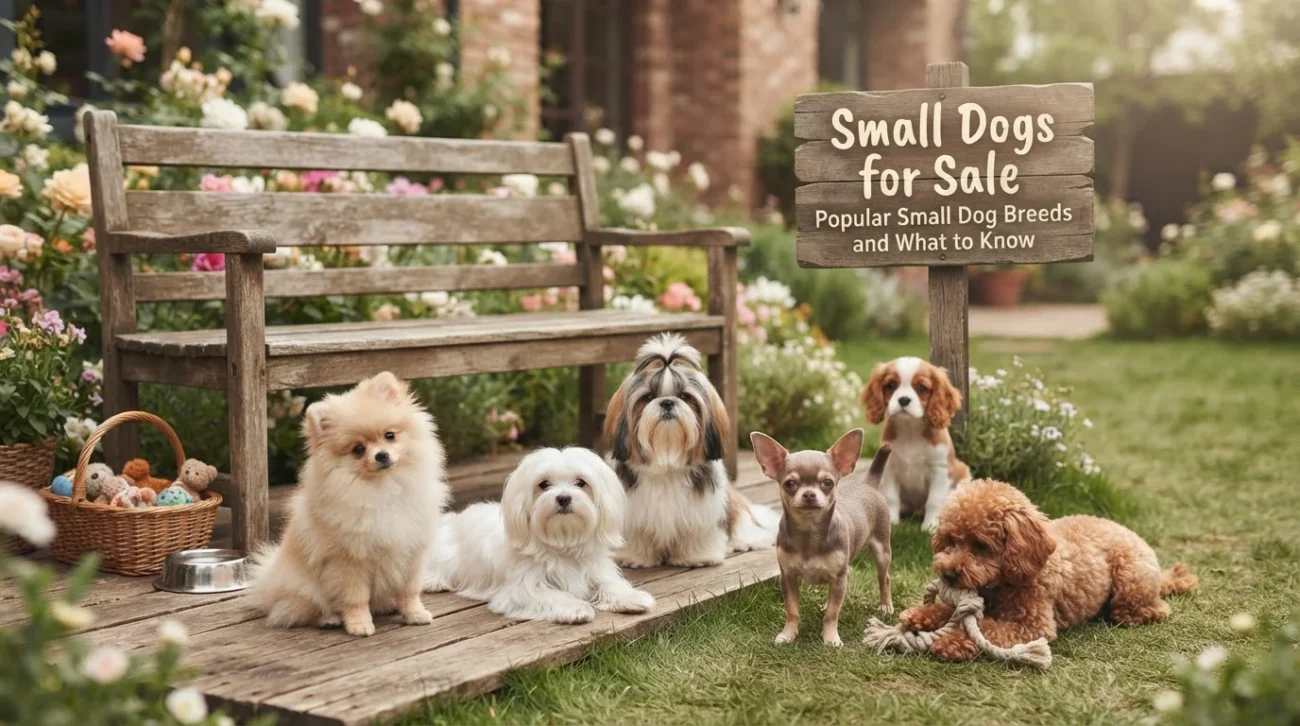
Small Dog Breeds
Small dogs can be excellent companions, especially for people who want a dog that is easier to physically manage.
Potential advantages include:
- Easier transportation
- Less physical space required
- Easier handling
- Often lower food costs
- Convenient for some urban lifestyles
But small dogs are not automatically low-maintenance.
Some small breeds are energetic, vocal, sensitive, or demanding.
Large Dog Breeds
Large dogs can make wonderful family companions.
However, size affects many aspects of ownership.
You may need to consider:
- Food consumption
- Transportation
- Leash handling
- Space
- Training
- Equipment
- Veterinary costs
- Physical strength
A large dog that pulls strongly on a leash can be challenging for an inexperienced owner.
Medium-Sized Dogs
Medium-sized dogs often offer a balance between physical manageability and versatility.
They may suit households that want a dog larger than a toy breed without committing to the size and strength of a giant breed.
Again, temperament and energy level matter more than the label “medium.”
Grooming Requirements Matter
Grooming is another major factor that people sometimes overlook when searching for dogs for sale.
A beautiful long coat can require:
- Frequent brushing
- Professional grooming
- Regular bathing
- Coat maintenance
- Ear care
- Nail trimming
Short-haired dogs may require less coat maintenance, but they still need appropriate grooming and hygiene.
Long-Haired Dogs
Long coats can be beautiful but demanding.
Depending on the breed, owners may need to deal with:
- Mats
- Tangling
- Shedding
- Coat trimming
- Dirt collection
- Skin problems
If you do not enjoy grooming, choosing a breed with extensive coat maintenance may become frustrating.
Short-Haired Dogs
Short-haired dogs are often easier to brush.
However, short hair does not mean no shedding.
Some short-haired breeds can shed significantly.
Therefore, if shedding is important to you, research the breed’s actual shedding pattern rather than assuming short hair means minimal hair.
Hypoallergenic Claims Require Care
People sometimes search for “hypoallergenic dogs.”
It is important to understand that no dog is completely allergen-free.
Allergens can come from:
- Dander
- Saliva
- Skin particles
- Urine
Some breeds may produce fewer allergens or shed differently, but individual reactions vary.
If allergies are a concern, spend time around the breed before making a commitment.
Exercise Requirements
Exercise is not just about making a dog tired.
Regular activity supports:
- Physical fitness
- Mental stimulation
- Healthy routines
- Appropriate behavior
- Bonding
Different dogs need different levels of activity.
A dog bred for work or sport may require considerably more than a companion breed.
Mental Stimulation Is Just as Important
A dog can receive physical exercise and still become bored.
Mental stimulation may include:
- Puzzle toys
- Training
- Scent games
- Food puzzles
- Basic obedience
- Trick training
- Controlled exploration
This is especially important for intelligent and energetic dogs.
Training Requirements
Every dog benefits from training.
Basic skills may include:
- Name recognition
- Recall
- Sit
- Stay
- Loose-leash walking
- Drop it
- Leave it
- Calm behavior
Training should focus on clear communication and positive reinforcement.
Dogs for First-Time Owners
If this is your first dog, avoid choosing based only on prestige or appearance.
A first-time owner may benefit from a dog that is:
- Trainable
- Social
- Adaptable
- Manageable in size
- Appropriate for the owner’s activity level
This does not mean experienced owners should automatically choose difficult breeds.
Every owner should select a dog they can realistically manage.
Dogs for Experienced Owners
Experienced owners may be better prepared for breeds with more complex training needs.
However, experience does not eliminate the need for research.
A breed can still be challenging if its natural characteristics do not match your lifestyle.
Consider Other Pets
If you already have:
- Dogs
- Cats
- Birds
- Rabbits
- Other small animals
consider how the new dog may interact with them.
Breed tendencies can matter, especially regarding prey drive and social behavior.
Individual temperament matters too.
Introduce animals carefully and safely.
Consider Children in the Household
Families with children should evaluate temperament, size, energy, and behavior.
A dog should never be selected solely because it is described as a “family breed.”
Children should also be taught how to interact appropriately with dogs.
Important rules include:
- Do not disturb a dog while eating
- Do not pull ears or tails
- Do not climb on dogs
- Give dogs space when resting
- Supervise interactions
A responsible adult should supervise young children around dogs.
The Difference Between Breed Reputation and Individual Temperament
Breed descriptions are useful starting points.
But they do not tell the complete story.
Individual puppies can be:
- More confident
- More reserved
- More playful
- More independent
- More sensitive
Ask the seller about the puppy’s observed behavior.
How to Evaluate a Seller
Finding dogs for sale online is easy.
Finding a responsible seller requires more effort.
A reputable seller should be willing to answer questions.
Ask about:
- Parents
- Health history
- Vaccinations
- Deworming
- Veterinary examinations
- Socialization
- Feeding
- Living conditions
- Registration where applicable
- Previous veterinary care
Avoid sellers who become defensive when asked reasonable questions.
Warning Signs of a Poor Seller
Be cautious if a seller:
- Refuses to provide basic health information
- Avoids showing where puppies are raised
- Wants immediate payment
- Pressures you to decide quickly
- Has many unrelated breeds available constantly
- Cannot answer basic questions
- Offers unusually low prices without explanation
- Refuses veterinary documentation
- Wants to meet only in an unusual public location
- Provides copied or suspicious photographs
One warning sign may not prove wrongdoing, but several together should make you reconsider.
Be Careful With Dogs for Sale Online
Online marketplaces can make buying a dog convenient.
They can also create risks.
Photos can be misleading.
Descriptions can exaggerate:
- Breed quality
- Size
- Temperament
- Health
- Age
- Training
Whenever possible, verify information independently.
Do not transfer money simply because an advertisement looks professional.
Why You Should Meet the Dog
Seeing a dog in person allows you to observe more than photographs can show.
You can assess:
- General appearance
- Movement
- Alertness
- Behavior
- Interaction with people
- Environment
- Cleanliness
If buying a puppy, observing the environment where the puppy lives can also provide useful information.
Evaluating the Puppy’s General Condition
A healthy-looking puppy should generally appear alert and appropriately active for its age.
Look at:
- Eyes
- Nose
- Ears
- Coat
- Skin
- Body condition
- Movement
- Breathing
- General behavior
A puppy that appears unusually weak, lethargic, excessively thin, or distressed deserves veterinary evaluation before purchase.
Eyes and Nose
Eyes should be observed for obvious signs of:
- Excessive discharge
- Severe redness
- Swelling
- Cloudiness
Similarly, nasal discharge should not be ignored.
A mild temporary issue may have many causes, but unexplained symptoms should be evaluated by a veterinarian.
Coat and Skin
Check for:
- Bald patches
- Severe redness
- Crusting
- Parasites
- Excessive scratching
- Heavy dandruff
Coat condition can provide clues about general care, although it cannot diagnose a health problem by itself.
Body Condition
A puppy should not appear extremely thin or excessively overweight.
Appropriate body condition varies with breed and age.
A veterinarian is the best person to assess whether a puppy’s physical condition is appropriate.
Vaccination Records
Vaccination history is one of the most important documents to review.
Ask for written veterinary records showing:
- Vaccine name
- Date administered
- Veterinary provider
- Next recommended vaccination
- Other relevant preventive care
Do not assume that a seller’s verbal statement that “the puppy is vaccinated” is sufficient.
Why Vaccination Timing Matters
Puppies usually require a series of vaccinations rather than a single shot.
The exact schedule depends on factors such as:
- Age
- Vaccine type
- Local disease risks
- Veterinary recommendations
- Previous vaccination history
Your veterinarian should determine the appropriate continuation schedule.
Deworming and Parasite Prevention
Ask whether the puppy has received parasite prevention.
Documentation should ideally show what was given and when.
Parasites can affect:
- Growth
- Appetite
- Stool
- General health
Your veterinarian can recommend an appropriate prevention program after examining the dog.
Veterinary Examination Before Purchase
One of the smartest steps when buying a dog is arranging an independent veterinary examination.
Ideally, the examination should be performed by a veterinarian you choose rather than someone selected by the seller.
The veterinarian can assess:
- General health
- Body condition
- Heart and lungs
- Musculoskeletal system
- Eyes
- Ears
- Skin
- Parasites
- Vaccination records
Depending on the dog’s age and circumstances, additional tests may be recommended.
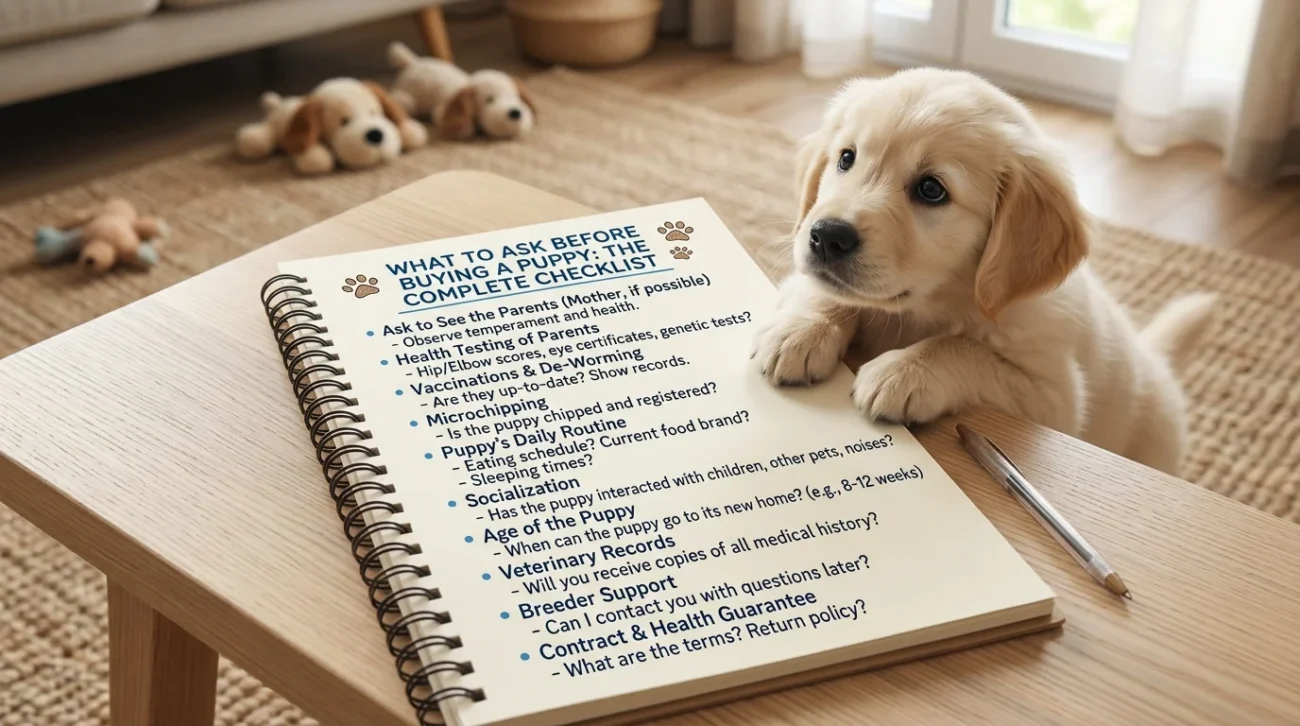
Ask About the Parents
When buying a puppy, the parents can provide useful information.
Ask to see the mother when possible.
Observe:
- Temperament
- General health
- Body condition
- Environment
For certain breeds, ask about relevant health screening performed on the parents.
Responsible breeding involves more than producing puppies with desirable appearances.
Pedigree and Registration
Depending on your goals, you may care about pedigree or registration.
If you are buying a dog for companionship, pedigree may be less important than health and temperament.
If you are interested in showing or breeding, documentation becomes much more significant.
Always verify official paperwork rather than relying on verbal claims.
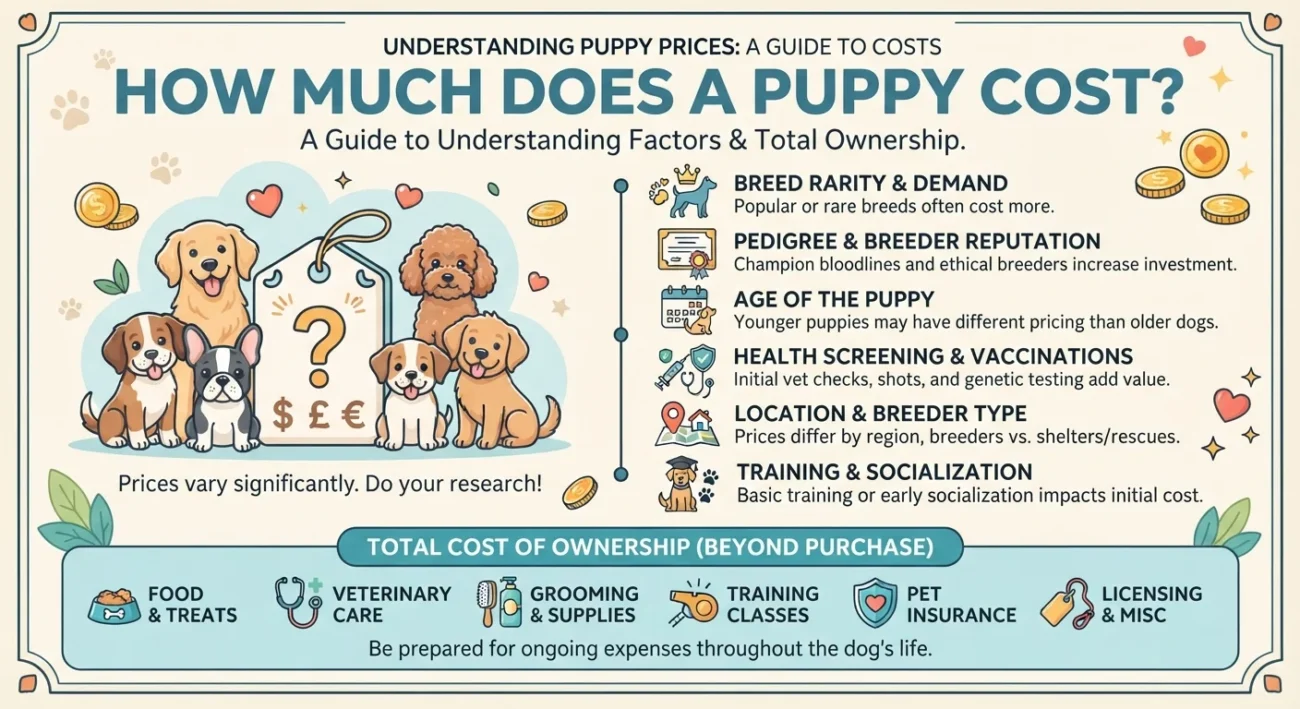
Price Should Not Be Your Only Criterion
Searching for the cheapest dogs for sale near me may seem financially sensible.
But the initial purchase price is only one part of dog ownership.
You should also budget for:
- Food
- Veterinary care
- Vaccinations
- Parasite prevention
- Grooming
- Training
- Toys
- Bedding
- Collar and leash
- Crate
- Emergency care
- Insurance where available
- Boarding or pet care during travel
A cheaper dog can become much more expensive if its health or care needs are underestimated.
Understanding Total Cost of Ownership
Before buying a dog, create a monthly budget.
Estimate:
Food + routine healthcare + parasite prevention + grooming + supplies + training + emergency savings
The exact amount will depend on the dog’s size, breed, health, location, and lifestyle.
The goal is not to predict every expense perfectly.
The goal is to make sure dog ownership fits your financial reality.
Buy From a Seller Who Prioritizes the Dog’s Welfare
A responsible seller should care about where the puppy goes.
They may ask you questions about:
- Your home
- Experience
- Working hours
- Other pets
- Children
- Exercise plans
This can actually be a positive sign.
A seller who does not care where the puppy goes may be more focused on completing a transaction than finding a suitable home.
Avoid Impulse Purchases
A puppy can create an immediate emotional response.
You may see a photograph and think:
“I want this dog.”
But wait.
Ask yourself:
- Can I afford this dog?
- Can I exercise it?
- Can I provide training?
- Can I handle its grooming?
- Can I care for it when traveling?
- Does it fit my household?
- Am I ready for a long-term commitment?
If the answer to these questions is uncertain, wait before buying.
Why Breed Appearance Can Be Misleading
A breed’s appearance does not tell you everything about its behavior.
A beautiful dog may be:
- Extremely energetic
- Vocal
- Independent
- Difficult to train
- Sensitive
- Highly social
Choose behavior and needs first.
Appearance should come later.
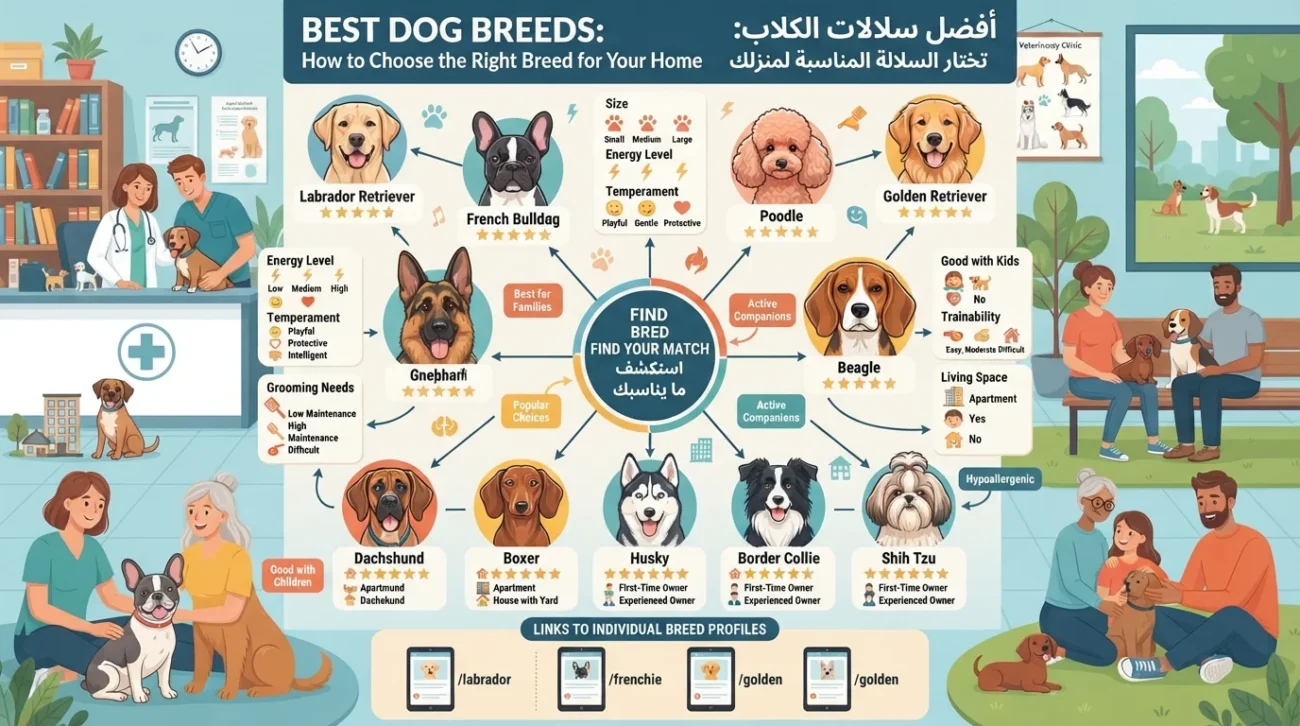
How to Create a Dog Selection Checklist
Before browsing advertisements, write down your requirements.
For example:
Home: Apartment
Exercise: Moderate
Grooming: Low to moderate
Experience: Beginner
Children: Yes
Other pets: Cat
Preferred size: Small to medium
Time alone: Several hours
This simple profile can dramatically narrow your search.
Matching Energy Level to Your Routine
Energy mismatch is one of the most common causes of frustration.
A very energetic dog may become destructive or restless if it consistently lacks appropriate activity.
A low-energy dog may become overwhelmed if expected to accompany its owner on intense daily adventures.
Think about your typical week.
Not your best week.
Your typical week.
Matching Grooming Needs to Your Time
If you dislike brushing, avoid breeds that require extensive coat maintenance.
If you enjoy grooming and don’t mind professional appointments, more demanding coats may be perfectly manageable.
The important thing is knowing what you are committing to.
Matching Temperament to Your Household
A household with frequent visitors may benefit from a social and adaptable dog.
A quiet household may prefer a calmer temperament.
A family with young children may prioritize patience and stability.
A single active owner may prioritize trainability and energy.
There is no universally perfect temperament.
There is only a better or worse match for a specific home.
How to Choose Between a Puppy and Adult Dog
Ask yourself which stage fits your life.
Choose a puppy if you can commit to:
- Frequent training
- Toilet training
- Socialization
- Supervision
- Early veterinary care
Consider an adult dog if you prefer:
- More predictable personality
- Potentially established habits
- Less puppy-specific supervision
Adult dogs can also form extremely strong bonds with new owners.
The Importance of Patience During the First Weeks
Even a well-socialized dog may need time to adjust to a new home.
The first days can involve:
- Confusion
- Excitement
- Stress
- Changes in appetite
- Different sleeping patterns
- Toilet accidents
Give the dog time.
Establish a consistent routine.
Avoid overwhelming it with too many visitors or experiences immediately.
Preparing Your Home Before the Dog Arrives
Before bringing the dog home, prepare essential supplies.
These may include:
- Food and water bowls
- Appropriate food
- Collar
- Identification
- Leash
- Bed
- Crate if appropriate
- Toys
- Waste bags
- Grooming supplies
- Cleaning products
- Puppy-safe barriers
Preparing in advance makes the transition smoother.
Puppy-Proofing Your Home
Puppies explore with their mouths.
Secure:
- Electrical cables
- Cleaning products
- Medications
- Small objects
- Toxic plants
- Food
- Sharp objects
Use barriers where necessary.
A puppy-safe environment reduces accidents and helps you manage exploration.
Choosing Food After Buying a Dog
Do not immediately change the puppy’s food without a plan.
Ask the seller what the dog has been eating.
If you need to change food, your veterinarian can advise you on an appropriate transition.
Food requirements depend on:
- Age
- Size
- Breed
- Growth stage
- Activity
- Health
Water Should Always Be Available
Fresh, clean water should generally be accessible.
Keep water bowls clean and refill them regularly.
Hydration is particularly important during warm weather and after activity.
Training Should Begin Early
Training does not have to mean complicated obedience routines.
Start with:
- Name
- Attention
- Toilet routine
- Gentle handling
- Appropriate chewing
- Basic commands
- Calm behavior
Short, positive sessions can be more effective than long sessions.
Don’t Expect Perfect Behavior Immediately
A puppy is learning.
An adult dog may also need time to learn your household rules.
Mistakes are normal.
Consistency is essential.
Avoid punishment that creates fear or confusion.
Focus on teaching the dog what you want it to do.
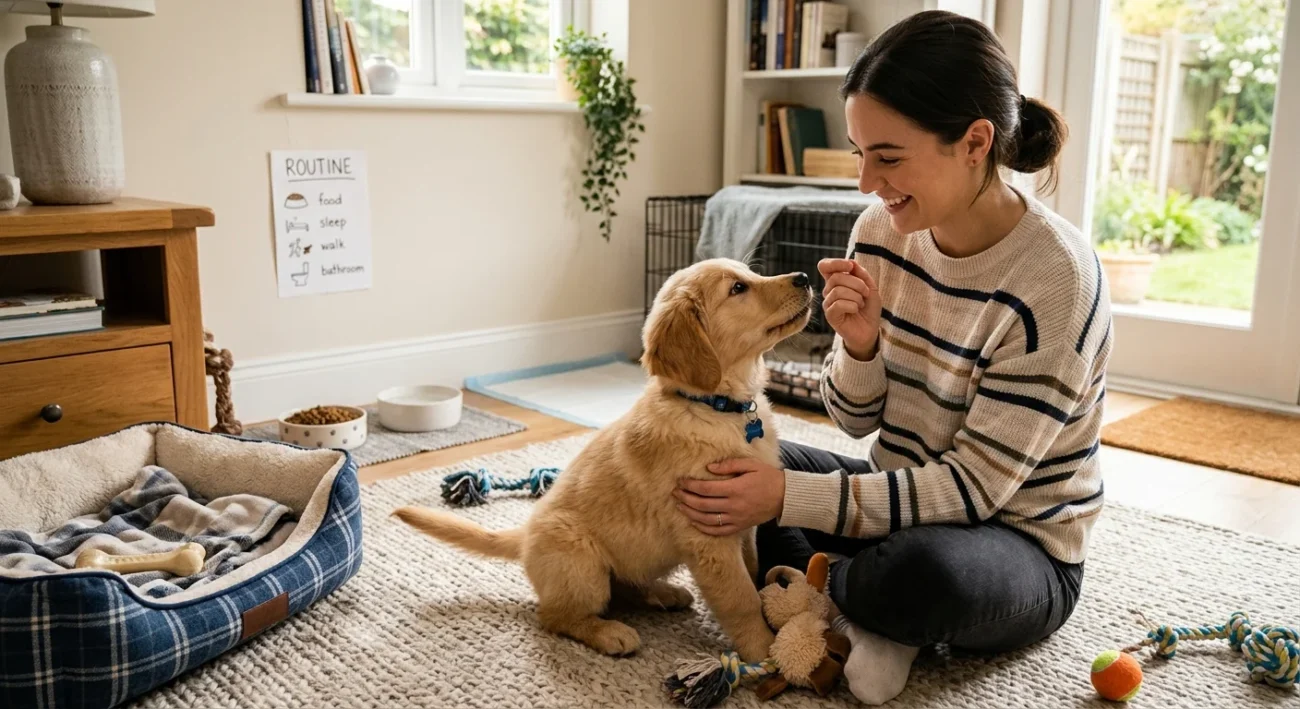
The Role of Routine
Dogs often benefit from predictable routines.
Try to maintain relatively consistent times for:
- Meals
- Walks
- Toilet breaks
- Training
- Rest
- Play
A routine can make adjustment easier.
What to Look for When Searching “Dogs for Sale Near Me”
Local searches can be convenient because you may be able to visit the seller.
But proximity should never replace due diligence.
A nearby seller is not automatically trustworthy.
Evaluate:
- Health records
- Living conditions
- Seller reputation
- Transparency
- Veterinary documentation
- Puppy behavior
The best seller is not necessarily the closest one.
What to Look for When Searching “Dogs for Sale Online”
When shopping online, treat photographs as an introduction rather than proof.
Ask for:
- Recent photographs
- Videos
- Health records
- Parent information
- Veterinary documentation
- Clear age information
If possible, arrange an in-person visit or a reliable independent verification before completing a transaction.
Be Careful With Deposits
Some legitimate sellers require deposits.
However, never send money without understanding:
- What the deposit represents
- Whether it is refundable
- What happens if the veterinary examination reveals a problem
- When the dog can be collected
- What documentation will be provided
Get agreements in writing.
Ask Questions Before You Pay
A serious buyer should be comfortable asking many questions.
Examples include:
How old is the puppy?
What vaccinations has it received?
Can I see the records?
Has it been examined by a veterinarian?
What food is it eating?
Has it been dewormed?
How has it been socialized?
Can I meet the mother?
What is the puppy’s daily routine?
What happens if my veterinarian identifies a health concern?
A responsible seller should provide clear answers.
How to Compare Multiple Dogs
If several dogs seem suitable, compare them objectively.
Create a table with:
| Factor | Dog A | Dog B | Dog C |
|---|---|---|---|
| Age | |||
| Size | |||
| Energy | |||
| Grooming | |||
| Temperament | |||
| Health records | |||
| Vaccinations | |||
| Socialization | |||
| Seller transparency | |||
| Price |
This prevents emotions from dominating the decision.
Don’t Ignore Your Own Experience Level
A breed may be wonderful but inappropriate for a beginner.
If you have never owned a dog, be honest about that.
You do not need to prove anything by choosing a difficult breed.
The goal is to build a successful relationship with your dog.
Choosing a Dog for an Older Owner
Older owners may want to consider:
- Physical manageability
- Leash strength
- Exercise requirements
- Grooming
- Temperament
A dog that is easy to physically handle can make daily care safer and more enjoyable.
Choosing a Dog for an Active Family
Active families may enjoy dogs that can participate in outdoor activities.
But remember that children and dogs should always interact under appropriate supervision.
The dog should also have a quiet space where it can rest without being disturbed.
Choosing a Dog for Someone Who Travels Frequently
Frequent travelers need a realistic care plan.
Ask:
- Who will care for the dog?
- Can the dog stay with family?
- Is boarding available?
- What happens during emergencies?
- Can the dog travel with you?
A dog should never be acquired without considering these scenarios.
Choosing a Dog for a Busy Professional
Busy professionals should consider adult dogs, lower-maintenance breeds, or arrange reliable daytime care.
Possible solutions include:
- Dog walkers
- Pet sitters
- Dog daycare
- Family support
But these services should be included in your budget.
Why Product Pages Matter After Choosing a Dog
Buying the dog is only the beginning.
Once you know the dog’s size, age, breed, and needs, you can choose appropriate products.
Useful categories include:
- Dog food
- Collars
- Leashes
- Harnesses
- Beds
- Crates
- Toys
- Grooming tools
- Bowls
- Training products
- Travel accessories
- Dental care products
Product selection should be based on the specific dog rather than buying everything at once.
Choosing the Right Collar and Harness
A collar can hold identification information.
A harness can provide an alternative walking setup for some dogs.
The correct option depends on the dog’s size, behavior, anatomy, and training.
A professional trainer or veterinarian can help if you are unsure.
Choosing Toys
Toys should match:
- Dog size
- Chewing behavior
- Age
- Play style
No toy is completely indestructible.
Inspect toys regularly and replace damaged ones.
Grooming Products
Depending on the breed, you may need:
- Brushes
- Combs
- Nail clippers
- Shampoo
- Ear-care products
- Dental-care supplies
Use products appropriate for dogs rather than household human products unless a veterinarian specifically recommends otherwise.
Building a Long-Term Relationship With Your Dog
The best outcome is not simply buying the right breed.
It is creating a good relationship.
That means providing:
- Consistent care
- Training
- Exercise
- Veterinary attention
- Social interaction
- Mental stimulation
- Safe housing
- Appropriate nutrition
A dog is not a temporary purchase.
It is a long-term responsibility.
Final Checklist Before You Buy a Dog
Before purchasing, make sure you can answer “yes” to most of these questions:
- Have I researched the breed?
- Does its energy level match my lifestyle?
- Does its size fit my home?
- Can I afford its long-term care?
- Can I provide daily exercise?
- Can I provide training?
- Do I understand its grooming needs?
- Have I evaluated the seller?
- Have I reviewed health records?
- Have I verified vaccination information?
- Have I considered veterinary care?
- Have I considered travel and emergencies?
- Have I thought about other pets?
- Have I considered children?
- Have I met the dog personally?
- Have I avoided making an emotional impulse purchase?
If several answers are “no,” take more time before making a decision.
Finding Dogs for Sale
Searching for dogs for sale should be treated as the beginning of a careful decision-making process, not simply a shopping trip.
Whether you are browsing dogs for sale online, looking for dogs for sale near me, comparing puppies for sale, or preparing to buy a dog for the first time, the most important factor is compatibility.
Start with your lifestyle.
Consider your home size, daily schedule, activity level, grooming preferences, experience, household members, and budget. Then compare breeds according to those requirements rather than choosing based solely on appearance.
When you find a potential dog, evaluate the seller carefully. Ask for health records, vaccination information, veterinary documentation, and details about socialization and daily care. Look at the dog’s overall condition and behavior, and whenever possible, arrange an independent veterinary examination before completing the purchase.
Remember that the right dog is not necessarily the smallest, most expensive, most popular, or most attractive dog available. It is the dog whose needs you can consistently meet and whose temperament fits naturally into your household.
A thoughtful decision before purchase can make the transition easier, reduce avoidable problems, and give both you and your new companion a much better chance of building a happy life together.