
Blog
Best Puppies for Families: Dog Breeds That Fit Family Life
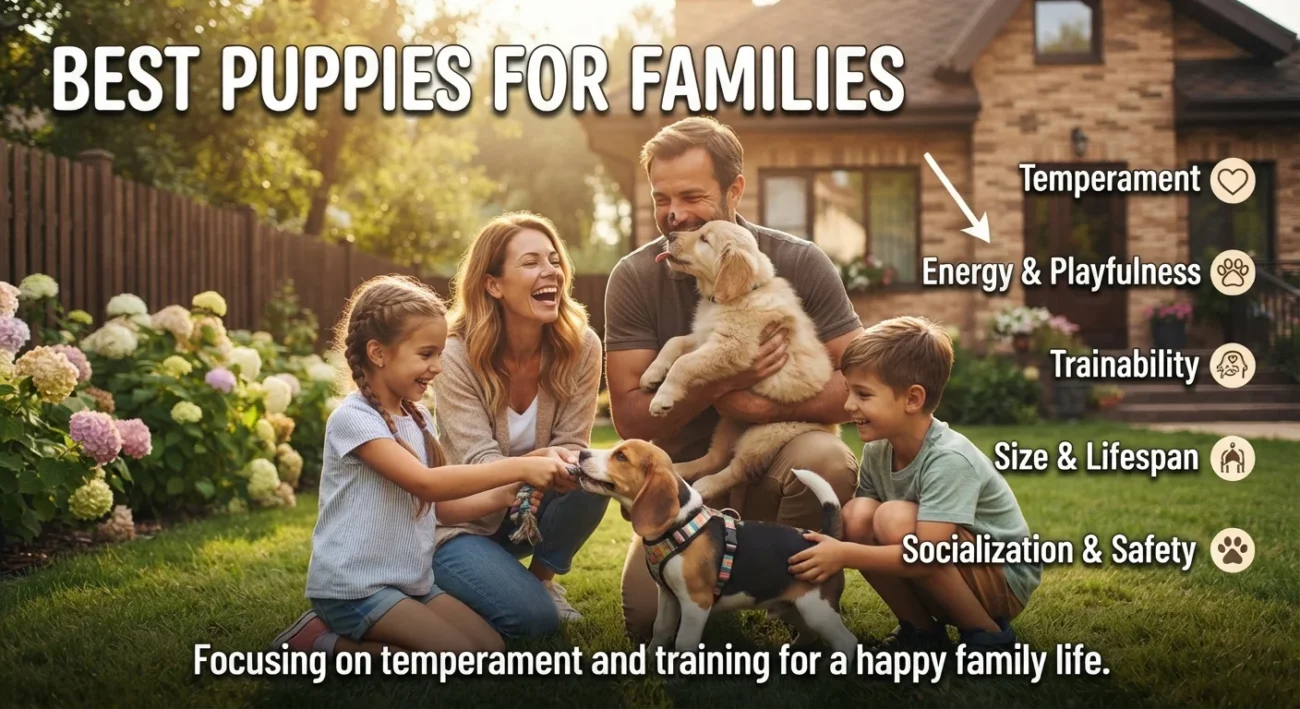
Choosing a puppy is exciting, but it is also a decision that can affect an entire household for many years. Families often begin the search by asking, “What are the best puppies for families?” or looking for a list of the most popular family dogs.
However, choosing a puppy should involve much more than picking a breed with a good reputation.
The best puppy for one family may be completely unsuitable for another.
A family living in a small apartment may need a different dog from a family with a large yard. A household with toddlers has different considerations from one with teenagers. An active family that enjoys hiking may want a higher-energy dog, while a busy household may prefer a breed that is easier to exercise and manage.
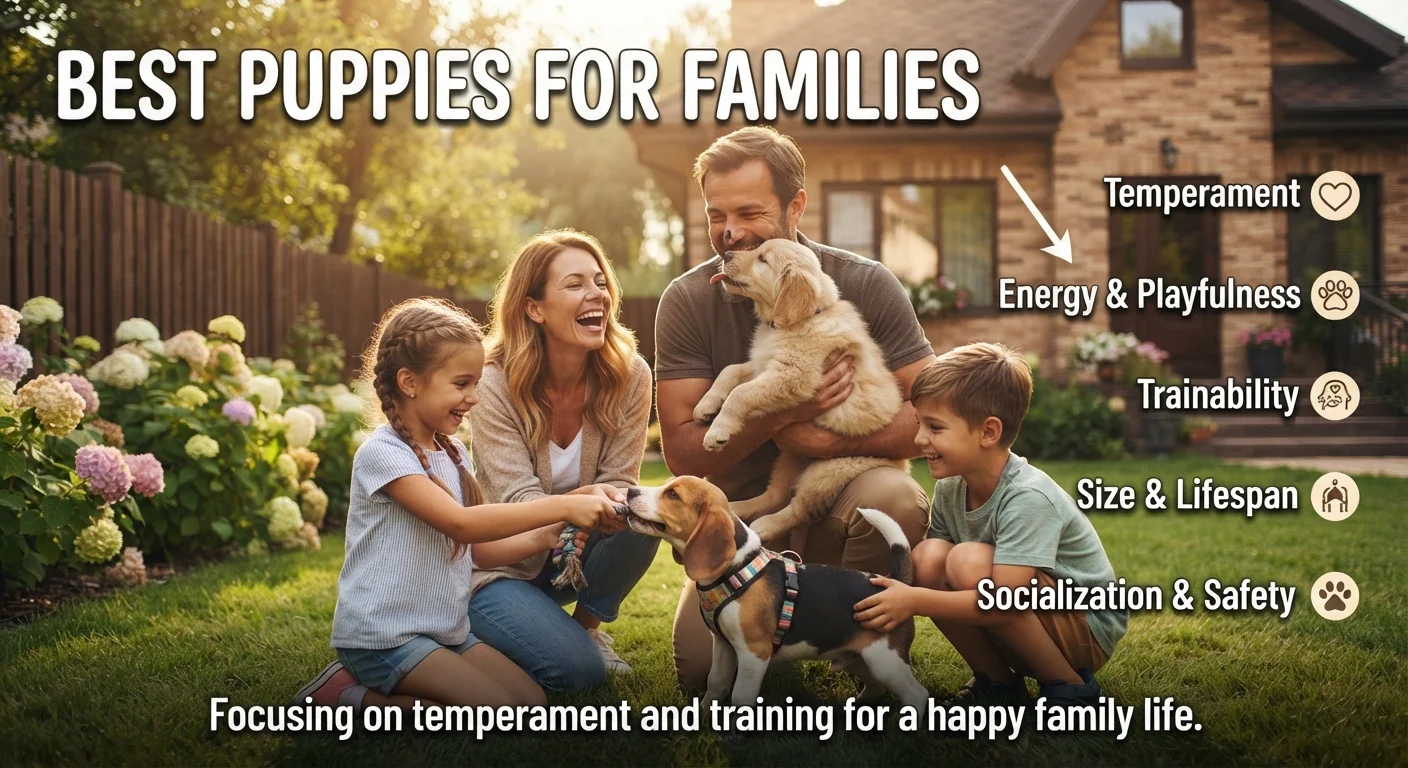
Temperament, energy level, trainability, adult size, grooming requirements, socialization needs, and the family’s available time all matter.
There is another important point that is sometimes overlooked: a puppy’s breed does not guarantee its personality.
Individual dogs vary. Genetics, early experiences, socialization, training, environment, and health can all influence behavior.
This means that choosing among puppies for families should be approached as a matching process rather than a popularity contest.
A dog can be affectionate and generally good with children while still being unsuitable for a particular household. A high-energy breed may be wonderful for an outdoorsy family but overwhelming for people who prefer a quiet lifestyle. A small dog may look ideal for a young child but actually be more vulnerable to accidental injury because of its size.
Families should also remember that children and puppies require supervision.
Even the friendliest puppy can bite during play, become frightened, guard food, or react unpredictably when overwhelmed. Likewise, children may accidentally pull ears, disturb a sleeping dog, take away toys, or hug a dog that does not enjoy being hugged.
Responsible adults should therefore supervise interactions and teach children how to behave respectfully around dogs.
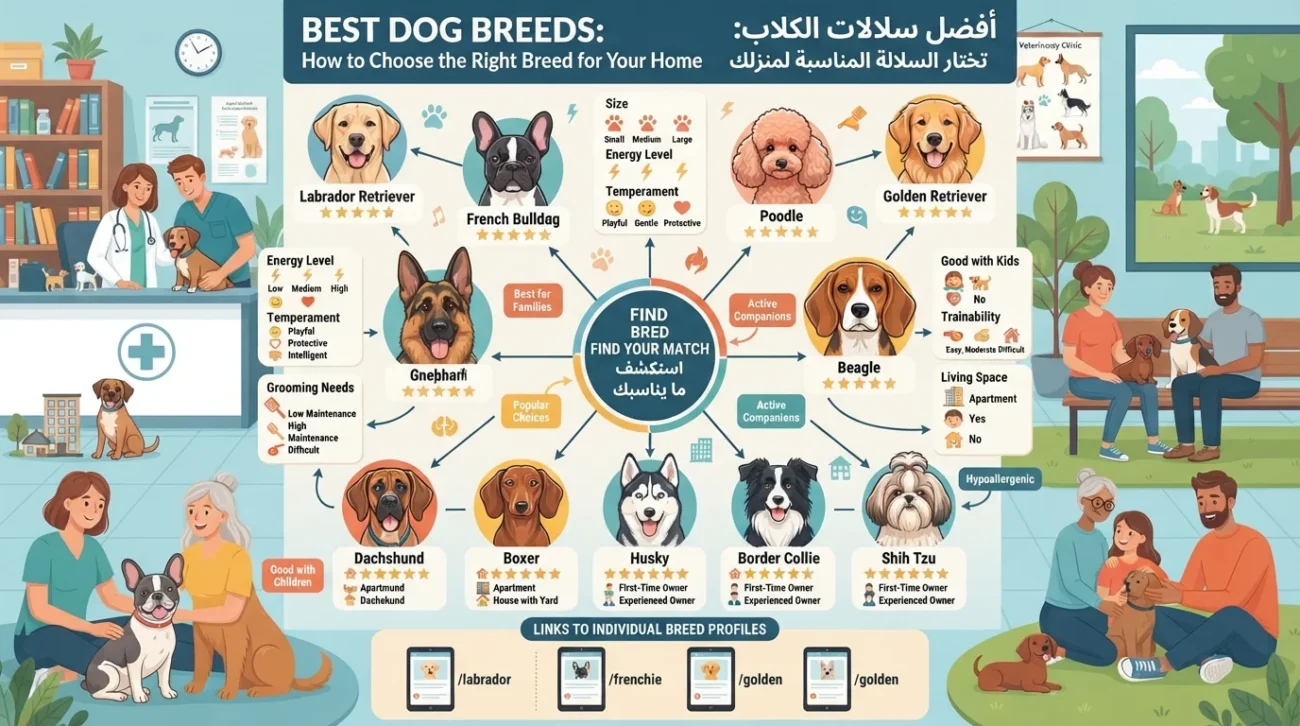
This guide explores the characteristics that make certain best family dogs easier to integrate into family life, examines several breeds that may suit different households, and explains how to choose the individual puppy rather than relying only on breed labels.
read more about dogs for sale
What Makes a Puppy Good for a Family?
Temperament Comes First
When considering family-friendly dogs, temperament should be one of the first characteristics to evaluate.
A family dog ideally has a stable, predictable temperament.
This does not mean the dog must be calm every second.
Puppies naturally:
- Play
- Explore
- Get excited
- Become distracted
- Chew
- Jump
- Vocalize
- Test boundaries
A suitable family puppy should be capable of learning how to settle down and should generally respond well to positive training.
Families should look for traits such as:
- Sociability
- Confidence without excessive boldness
- Emotional stability
- Curiosity
- Ability to recover from mild surprises
- Willingness to interact
- Appropriate play behavior
- Tolerance of handling
Energy Level Matters
Energy mismatch is one of the most common reasons a family struggles with a dog.
A high-energy breed may need significant daily exercise and mental stimulation.
If the family cannot provide that, the dog may become frustrated or develop unwanted behaviors.
Possible signs of insufficient stimulation include:
- Excessive barking
- Chewing
- Digging
- Jumping
- Restlessness
- Destructive behavior
- Difficulty settling
A lower-energy dog, however, is not automatically easier.
Every puppy needs exercise, training, socialization, play, and attention.
The goal is to find a realistic match.
Trainability Is Valuable
A puppy does not arrive knowing the household rules.
It must learn:
- Where to eliminate
- How to walk on a leash
- How to greet people
- What it can chew
- How to respond to basic cues
- How to behave around children
- How to settle
A dog that responds well to reward-based training can make family life considerably easier.
Why Adult Size Should Be Considered
Puppies Do Not Stay Small
One of the biggest mistakes families make is choosing a puppy based on its current size.
A tiny puppy may eventually become a large, powerful dog.
Before adopting, research the expected adult:
- Height
- Weight
- Strength
- Exercise needs
- Space requirements
This is particularly important when young children are involved.
Large Dogs Can Be Wonderful Family Dogs
Size alone does not determine whether a dog is good with children.
Many large breeds can be affectionate and gentle.
However, a large, enthusiastic adolescent dog can accidentally knock over a small child.
Families with toddlers should consider not only temperament but also physical manageability.
The Importance of Socialization
What Is Puppy Socialization?
Socialization means helping a puppy develop positive, appropriate experiences with different people, environments, sounds, surfaces, handling situations, and other safe experiences during early development.
Good socialization does not mean forcing a puppy to interact with everything.
Instead, it should involve controlled, positive exposure.
A puppy can gradually learn that new experiences are safe.
Why Socialization Matters for Family Dogs
Family life can be unpredictable.
A dog may encounter:
- Children running
- Doorbells
- Visitors
- Vacuum cleaners
- Loud conversations
- Toys
- Bikes
- Strollers
- Other animals
- Car rides
- New environments
A well-socialized dog may be better equipped to handle these experiences.
Children and Puppies: Why Supervision Is Essential
Never Assume a Dog Is Automatically Safe
Even breeds known as dogs good with children are still animals with individual boundaries.
Adults should supervise interactions, particularly with babies and young children.
Teach Children Appropriate Behavior
Children should learn not to:
- Pull a dog’s tail
- Pull its ears
- Ride on the dog
- Chase it
- Disturb it while eating
- Take food from it
- Wake it suddenly
- Corner it
- Climb on it
- Take toys away without adult guidance
Teach Children to Recognize Warning Signs
Children should learn that dogs communicate through body language.
A dog may be uncomfortable if it:
- Turns its head away
- Moves away
- Licks its lips repeatedly
- Yawns when not tired
- Freezes
- Tucks its tail
- Shows avoidance
- Growls
A growl should not simply be punished.
It can be an important warning that the dog is uncomfortable.
Adults should intervene and identify what caused the discomfort.
Best Puppies for Families: Labrador Retriever
Why Labradors Are Popular
The Labrador Retriever is one of the most recognizable family dog breeds.
Many Labradors are:
- Friendly
- Social
- Trainable
- Playful
- People-oriented
- Adaptable
These traits can make them suitable for active families.
Energy Level
Labradors can be energetic, especially when young.
A Labrador puppy may need substantial:
- Exercise
- Play
- Training
- Mental stimulation
Families should not assume that a Labrador will naturally become a calm household dog without effort.
Training
Labradors often respond well to reward-based training.
Their food motivation can make training engaging.
However, young Labradors can be enthusiastic and sometimes mouthy.
Teaching appropriate play and impulse control is important.
Families Best Suited to Labradors
A Labrador may work especially well for families that enjoy:
- Outdoor activities
- Walking
- Hiking
- Fetch
- Training
- Active weekends
It may be less suitable for a household that wants a dog requiring very little daily activity.
Golden Retriever
Why Golden Retrievers Are Considered Family Dogs
Golden Retrievers are often associated with friendly family life.
They can be:
- Affectionate
- Social
- Intelligent
- Playful
- Trainable
Their people-oriented nature can make them enjoyable companions.
Exercise Requirements
Golden Retrievers are not low-energy dogs.
They need regular activity and mental stimulation.
A family considering one should be prepared for an active puppy and adolescent period.
Grooming
Their longer coats require regular grooming.
Families should be comfortable with:
- Brushing
- Shedding
- Bathing when needed
- Coat maintenance
Best Match
Golden Retrievers may suit families that want a medium-to-large active dog and have time for exercise and training.
Poodle
Why Poodles Deserve Consideration
Poodles come in different sizes, including:
- Standard
- Miniature
- Toy
Their intelligence and trainability can make them attractive to families.
Size Matters
The different varieties offer different physical profiles.
A family with young children should consider which size best fits its environment.
Very small dogs can be physically vulnerable around rough play.
Intelligence
Poodles are intelligent dogs that generally benefit from mental stimulation.
Training can be a major part of their daily routine.
Coat Care
Poodles do not simply mean “no grooming.”
Their coats require regular maintenance and professional grooming may be necessary.
Families should include grooming costs and time in their planning.
Cavalier King Charles Spaniel
A Smaller Family Companion
The Cavalier King Charles Spaniel is a small companion breed known for its affectionate nature.
Its smaller size can make it attractive to families looking for a compact dog.
Important Consideration for Families
Small does not mean maintenance-free.
Cavaliers still need:
- Training
- Exercise
- Socialization
- Grooming
- Veterinary care
Young Children
Families with very young children should consider whether children can interact gently enough with a small dog.
An adult should supervise interactions.
Beagle
Playful and Curious
Beagles can be energetic, curious, and social.
They may be enjoyable companions for families who appreciate an active dog.
Their Strong Sense of Smell
Beagles were developed as scent hounds.
This means they may become intensely interested in smells.
That can affect:
- Recall
- Outdoor safety
- Leash walking
Secure fencing and careful management may be important.
Training
Beagles can be intelligent but independent.
Families should be prepared for patient, consistent training.
Boxer
Energetic and Playful
Boxers can be affectionate and enthusiastic.
They may fit families that enjoy active lifestyles.
Their Physical Energy
Boxer puppies and young dogs can be exuberant.
Because of their strength and excitement, families with small children should pay particular attention to training and supervision.
Teaching the dog not to jump on people is important.
Newfoundland
Gentle Giant
Newfoundlands are large dogs known for their gentle reputation.
They can be affectionate and devoted family companions.
The Reality of Giant Breeds
Families should not choose a Newfoundland simply because the breed is described as gentle.
Their size means:
- Food costs are higher
- Veterinary costs can be higher
- Grooming can be substantial
- Space requirements are significant
- Physical strength is considerable
They can accidentally knock over children even without aggressive intent.
Bernese Mountain Dog
Calm Family Appeal
Bernese Mountain Dogs are often valued for their affectionate nature and calm presence.
They can be wonderful companions for families with enough space and time.
Size and Grooming
They are large dogs with substantial coats.
Families should be prepared for:
- Shedding
- Brushing
- Large food requirements
- Veterinary expenses
- Space needs
Bichon Frise
A Small Companion Option
The Bichon Frise can be an appealing choice for families seeking a smaller dog.
They are often cheerful and social.
Grooming Requirements
Their coat requires regular grooming.
This should be considered before adoption.
Children
Because of their smaller size, adults should supervise young children closely.
A child can accidentally injure a small dog during rough play.
Cocker Spaniel
Friendly and Active
Cocker Spaniels can be affectionate and energetic.
They may fit families that want a medium-sized companion.
Exercise and Grooming
They require regular exercise and coat care.
Families should also pay attention to ear care.
Mixed-Breed Puppies
Why Consider a Mixed Breed?
Families sometimes focus exclusively on recognized breeds and overlook mixed-breed puppies.
A mixed-breed puppy can be an excellent family companion.
Focus on the Individual
With a mixed-breed puppy, families may have less certainty about eventual:
- Size
- Coat
- Energy
- Appearance
However, shelter staff, foster families, or rescue organizations may provide valuable information about temperament and behavior.
read more about puppies for sale
Foster-Based Information Can Be Valuable
If a puppy has lived in a foster home, caregivers may be able to describe:
- How it behaves around children
- Whether it settles indoors
- How it interacts with other dogs
- Whether it is confident or cautious
- How it responds to handling
That information can help families make a more informed decision.
How to Choose Between Different Family Dogs
Start With Lifestyle
Do not begin with:
“I want a Golden Retriever.”
Start with:
“What kind of life can we provide?”
Ask:
- How much exercise can we provide daily?
- How much time will the dog spend alone?
- Do we travel frequently?
- Do we live in an apartment?
- Do we have a secure yard?
- Are there young children?
- Who will handle training?
- Who will pay for veterinary care?
- Who will care for the dog during vacations?
These questions are more important than popularity.
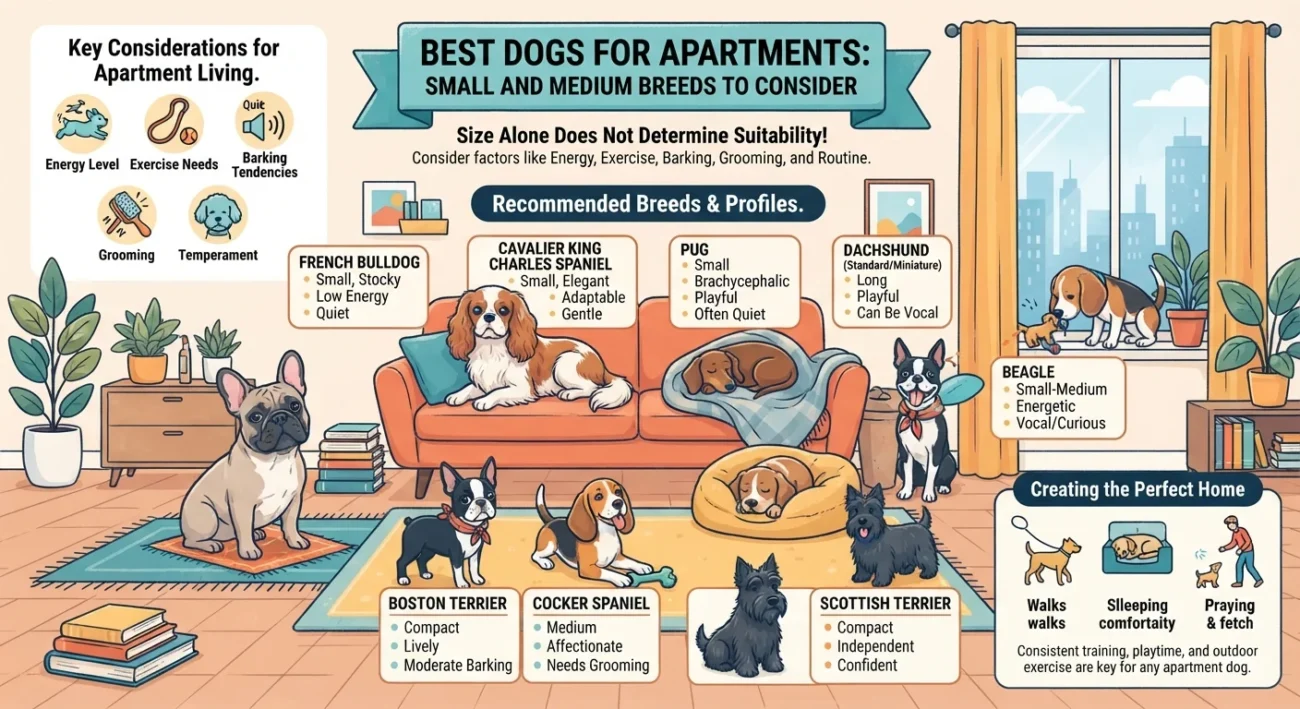
Apartment Families
Space Is Only One Factor
A small home does not automatically require a tiny dog.
Some larger dogs can live comfortably in apartments if their exercise and mental stimulation needs are met.
Conversely, some small dogs can be highly energetic.
Focus on Behavior
Consider:
- Barking tendency
- Exercise requirements
- Ability to settle
- Size
- Neighbor considerations
Families With Toddlers
Extra Care Is Required
Toddlers are unpredictable.
They run, scream, grab, fall, and move suddenly.
A puppy can also be unpredictable.
This combination requires close adult supervision.
Consider a Calm, Manageable Temperament
Families should look for a dog that can learn to settle and is comfortable with appropriate handling.
But even a calm breed requires supervision.
Families With Older Children
More Training Opportunities
Older children may be able to participate in age-appropriate responsibilities.
They can potentially help with:
- Training
- Feeding under supervision
- Grooming
- Walking with an adult
- Enrichment activities
This can strengthen the relationship between the child and dog.
Families With Teenagers
Active Breeds Can Be a Good Match
Teenagers may be able to participate in:
- Hiking
- Running
- Training
- Dog sports
- Long walks
This can make higher-energy breeds more manageable.
Families With Cats
Introductions Matter
A puppy that will live with cats should be introduced gradually.
Do not simply place the puppy and cat together and expect them to become friends immediately.
Use:
- Controlled introductions
- Barriers
- Separate safe spaces
- Supervision
- Positive reinforcement
Prey Drive
Some breeds have stronger chasing instincts.
Families with cats should consider this when choosing a dog.
Families With Other Dogs
Puppy Compatibility
A puppy joining an existing dog household should be introduced carefully.
The resident dog’s temperament matters too.
An older dog may not appreciate constant puppy attention.
Adults should provide breaks and separate spaces.
The First Weeks With a Family Puppy
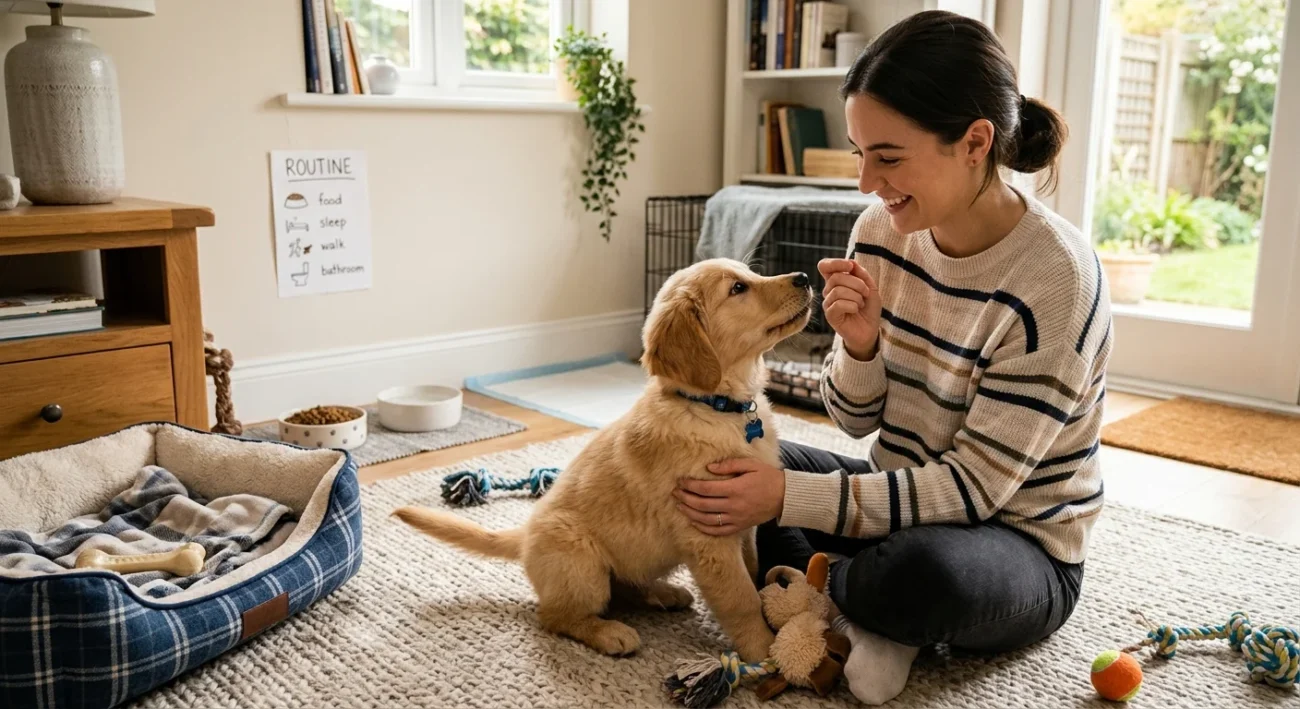
Establish a Routine
Puppies benefit from predictable schedules.
A basic routine may include:
- Wake-up
- Bathroom break
- Breakfast
- Play
- Rest
- Training
- Bathroom break
- Nap
- Evening activity
- Bedtime
Puppies Need a Lot of Sleep
Puppies may sleep for many hours throughout the day.
Families sometimes mistake sleeping puppies for lazy puppies.
Rest is important for development.
Children should be taught not to wake or disturb a sleeping puppy.
Puppy Training for Family Life
Name Recognition
Begin by teaching the puppy to recognize its name.
Basic Cues
Useful skills include:
- Sit
- Come
- Stay
- Leave it
- Drop it
- Down
- Wait
The goal is not to create a perfect obedience competition dog.
The goal is to make everyday life safer and easier.
House Training
Accidents are normal during puppyhood.
Families should use:
- Frequent bathroom breaks
- Consistent routines
- Close supervision
- Positive reinforcement
Punishment for accidents can create fear and confusion.
Teaching Puppies Not to Bite
Puppy Mouthing Is Normal
Puppies explore the world with their mouths.
They may bite during play.
This does not automatically mean the puppy is aggressive.
Appropriate Responses
Redirect the puppy toward suitable toys.
Avoid encouraging rough hand play.
Teach children how to interact safely.
If biting becomes intense, persistent, or concerning, seek guidance from a qualified professional.
Exercise for Family Puppies
Puppies Need Appropriate Activity
More exercise is not always better.
Young puppies are still developing physically.
Families should avoid creating extreme exercise routines without veterinary or professional guidance.
Mental Stimulation
Training games can be excellent enrichment.
Examples include:
- Finding treats
- Simple scent games
- Puzzle toys
- Basic obedience
- Short training sessions
Mental activity can be tiring without excessive physical exertion.
Why Routine Matters
Dogs Thrive on Predictability
A consistent household schedule can help a puppy understand what happens next.
This can reduce confusion around:
- Feeding
- Bathroom breaks
- Sleep
- Play
- Training
Everyone Should Follow the Same Rules
If one family member allows the puppy on the sofa while another constantly removes it, the dog receives mixed signals.
Family members should agree on:
- Allowed furniture
- Feeding rules
- Sleeping arrangements
- Where the dog can go
- Commands
- Rules around children
Feeding a Family Puppy
Nutrition Matters
Puppies have specific nutritional needs.
Families should choose an appropriate complete diet and follow professional guidance regarding feeding.
Avoid Random Human Foods
Children may be tempted to share snacks.
Teach them that dogs cannot safely eat everything humans eat.
Some foods can be dangerous.
Veterinary Care
Preventive Care
A puppy needs appropriate veterinary attention for:
- Vaccination
- Parasite prevention
- Health monitoring
- Nutrition guidance
- Development
- Spaying or neutering decisions where appropriate
Budget for Veterinary Expenses
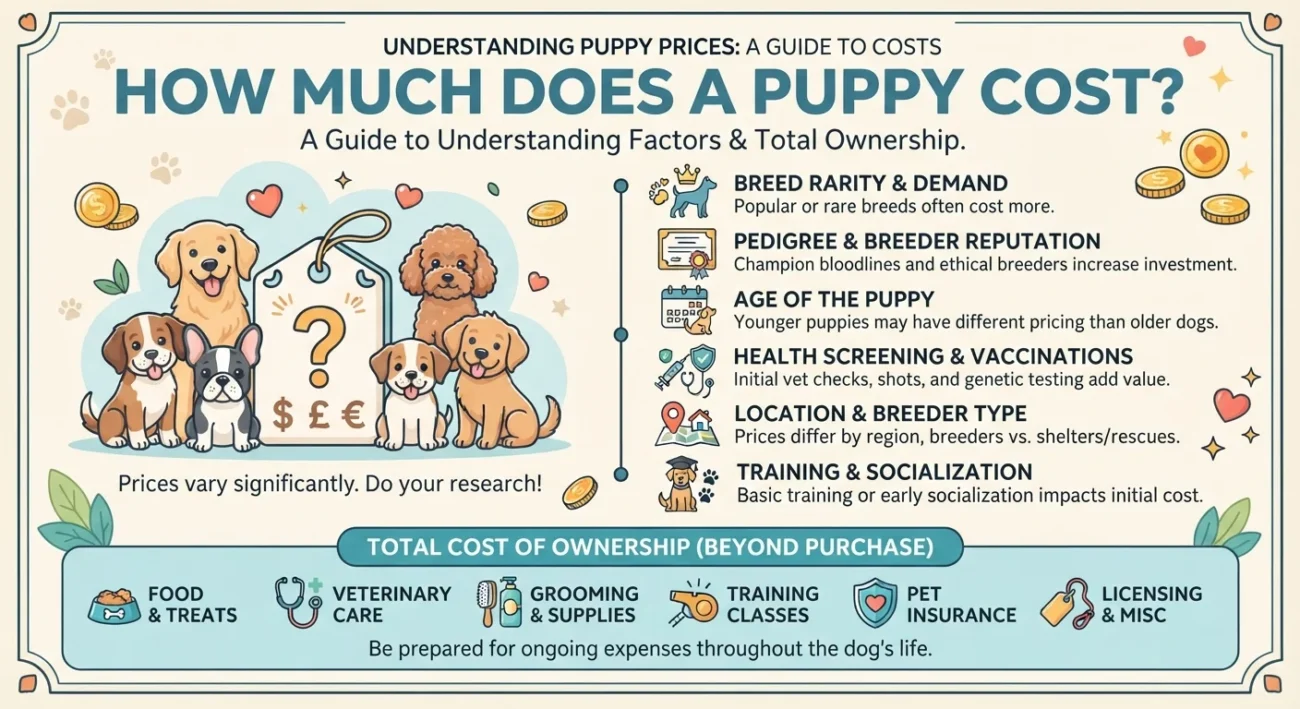
The cost of owning a dog includes more than the adoption or purchase price.
Families should budget for:
- Routine veterinary care
- Vaccines
- Parasite prevention
- Food
- Grooming
- Training
- Supplies
- Emergency care
Grooming Requirements
Short Coats
Some dogs require relatively simple coat maintenance.
However, short hair does not mean no grooming.
Regular brushing can still help remove loose hair and allow owners to notice skin abnormalities.
Long or Curly Coats
These may require more frequent grooming.
Families should consider whether they can manage the time and financial cost.
Allergies and Family Dogs
No Dog Is Completely Hypoallergenic
Some breeds are marketed as hypoallergenic.
However, no dog is completely free of allergens.
People can react to:
- Dander
- Saliva
- Skin particles
- Urine
Families with allergies should discuss their concerns with medical professionals and spend time around the specific dog before making a commitment.
How to Evaluate an Individual Puppy
Observe the Litter
When possible, observe puppies interacting with:
- People
- Littermates
- Toys
- New environments
Look for balanced behavior.
A puppy that confidently explores and then settles may demonstrate useful adaptability.
Avoid Choosing Only by Appearance
The cutest puppy is not necessarily the best family match.
Temperament and health should be much more important than markings or eye color.
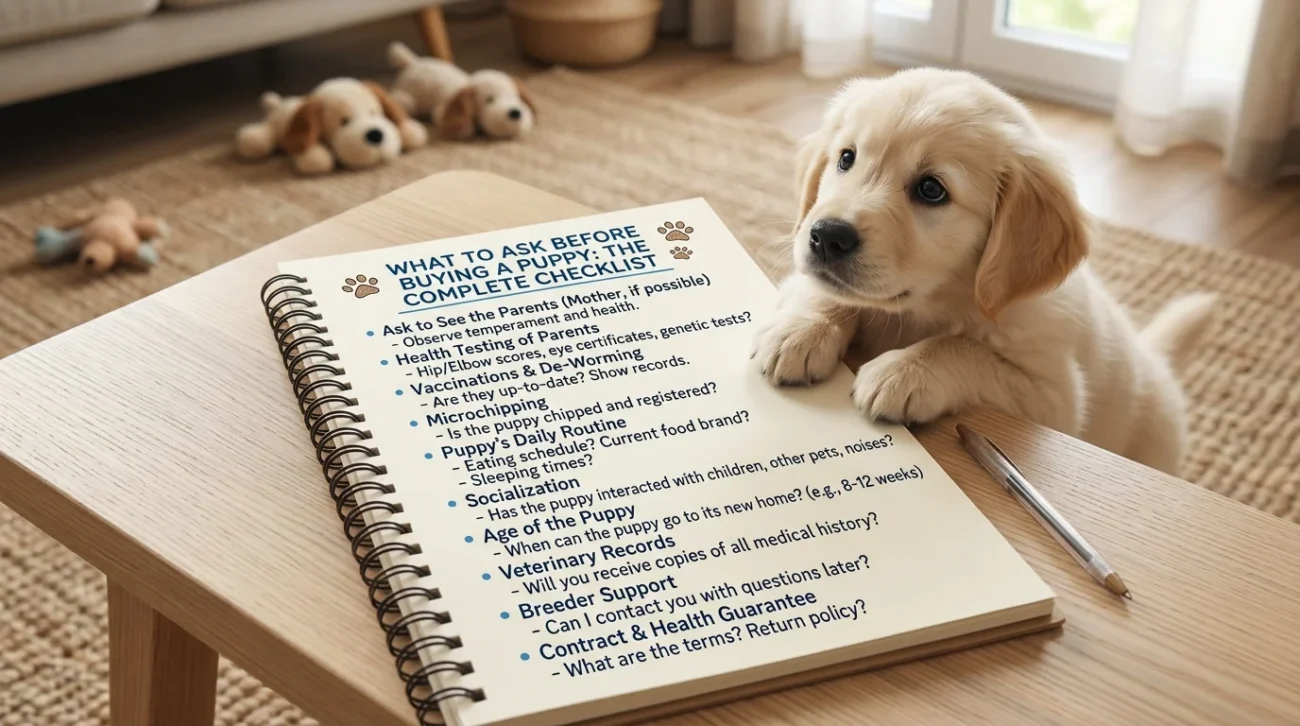
Ask Questions
Responsible breeders or rescue organizations should be willing to discuss:
- Health history
- Parent temperament
- Socialization
- Veterinary care
- Feeding
- Behavior
- Expected adult size
Choosing a Responsible Breeder
Health Testing Matters
When purchasing from a breeder, ask about breed-specific health testing of the parents.
A responsible breeder should prioritize health and temperament rather than simply producing puppies quickly.
Warning Signs
Be cautious if someone:
- Refuses to answer questions
- Will not show where puppies are raised
- Has many unrelated litters constantly available
- Focuses entirely on color or appearance
- Offers no health information
- Pressures you to pay immediately
Choosing a Rescue Puppy
Rescue Can Be a Wonderful Option
Adopting from a shelter or rescue can give a puppy a loving home.
Rescue professionals may also help match a dog to your household.
Ask About Behavior
Find out:
- How the puppy behaves around children
- Whether it has lived with other animals
- How it reacts to handling
- Whether it has shown fear
- How it behaves when separated
The more information you have, the better.
Family Dog vs. Family Project
A Puppy Is Not a Toy
Children may become excited about a puppy and promise to take care of it.
But young children cannot be responsible for the full care of a dog.
Adults remain responsible for:
- Feeding
- Veterinary care
- Training
- Safety
- Exercise
- Grooming
- Supervision
Children Can Participate
Children can still learn responsibility through age-appropriate tasks.
But adults should supervise and remain ultimately responsible.
Common Mistakes When Choosing Family-Friendly Dogs
Choosing Based on Popularity
A breed can be popular and still be a poor fit for your household.
Choosing Based on Appearance
Cute does not equal compatible.
Ignoring Energy
A high-energy puppy needs a high-energy family.
Ignoring Adult Size
A puppy’s current size can be misleading.
Assuming Breed Guarantees Temperament
Individual variation matters.
Underestimating Training
Every puppy needs education.
Leaving Young Children and Dogs Unsupervised
This should never be treated casually.
A Family Puppy Matching Checklist
Before choosing a puppy, ask:
Lifestyle
- Are we active or mostly home-based?
- How many hours will the dog be alone?
- Who will exercise it?
Children
- How old are the children?
- Can they follow dog-safety rules?
- Who will supervise interactions?
Space
- Do we have a secure outdoor area?
- Is our home suitable for the dog’s adult size?
Time
- Can we commit to daily training?
- Can we manage grooming?
- Can we provide mental stimulation?
Money
- Can we afford routine and emergency veterinary care?
- Can we afford food, training, grooming, and supplies?
Long-Term Commitment
- Can we care for this dog for its entire life?
- What happens if our housing or work situation changes?
These questions are often more valuable than a simple “best breed” ranking.
read more about best dog breeds
Finding the Best Puppy for Your Family
There is no single puppy that deserves the title of the best puppy for every family.
The best family dog is the one whose temperament, energy, size, training needs, grooming requirements, and lifestyle fit the household realistically.
Breeds such as Labrador Retrievers, Golden Retrievers, Poodles, Cavalier King Charles Spaniels, Beagles, Boxers, and other family-oriented breeds can be wonderful companions, but the breed name alone should never determine the decision.
The individual puppy matters.
The family environment matters.
Training matters.
Socialization matters.
And adult supervision around children matters enormously.
A family should therefore begin the process by asking what kind of dog it can responsibly care for rather than asking which breed is most popular.
If you have young children, consider physical size, play style, tolerance, and supervision requirements. If you have an active lifestyle, look for a dog capable of participating in that lifestyle. If you live in a smaller home, consider exercise needs and the dog’s ability to settle indoors rather than focusing only on size.
Most importantly, remember that bringing home a puppy is a long-term commitment.
The cute puppy you bring home today will eventually become an adult dog with its own personality, needs, habits, and health requirements.
Choosing carefully at the beginning can make that transition much easier.
The best puppies for families are not simply the breeds that appear most often on internet lists. They are puppies whose individual characteristics and long-term needs match the people who will care for them.
When temperament, energy, trainability, size, socialization, family lifestyle, and responsible supervision are considered together, families have a much better chance of creating the kind of relationship that makes living with a dog rewarding for both the humans and the animal.