
Blog
Puppies for Sale: A Complete Guide to Choosing Your New Puppy
Searching for puppies for sale can be exciting. You may already have a picture in your mind of bringing home a playful puppy, choosing a name, buying a tiny bed, and watching your new companion grow into a member of the family.
But buying or adopting a puppy is also a major responsibility.
A puppy is not simply a product that can be selected based on appearance, price, or breed popularity. It is a living animal whose health, temperament, socialization, genetics, and early experiences can influence the next decade or more of your life together.
That is why the smartest approach to finding puppies for sale online is to treat the process as a combination of research, responsible purchasing, health screening, breeder or seller evaluation, and preparation.
This guide covers the complete puppy-buying journey, from deciding what type of puppy fits your lifestyle to evaluating a seller, asking the right questions, checking health records, identifying warning signs, preparing your home, and bringing your puppy home safely.
Whether you are searching for a specific breed or simply looking for a puppy for sale, the goal should always be the same: find a healthy, appropriately raised puppy from a responsible source and prepare yourself to provide lifelong care.
Before Searching for Puppies for Sale
Decide Whether You Are Ready for a Puppy
Before looking at puppy listings, consider whether your household is genuinely prepared for a young dog.
Puppies require much more than food and affection.
They need:
- Frequent supervision.
- Regular feeding.
- Veterinary care.
- Vaccinations.
- Training.
- Socialization.
- Exercise appropriate for their age.
- Mental stimulation.
- Safe housing.
- Patience.
- Time.
Young puppies can also wake during the night, have accidents indoors, chew furniture, bite during play, and require repeated training.
The first months can be demanding.
Consider the Long-Term Commitment
A puppy may eventually become a dog weighing a few kilograms or several dozen kilograms, depending on breed and genetics.
The decision should therefore account for the adult dog, not just the puppy.
Ask yourself:
- Can I care for this dog for many years?
- Can I afford routine veterinary care?
- Can I afford unexpected medical expenses?
- Does my living situation allow dogs?
- Will I have enough time for exercise and training?
- Who will care for the dog when I travel?
- Is everyone in the household comfortable with the decision?
These questions are more important than finding the cutest listing.
Choose a Dog That Fits Your Lifestyle
Breed Is Only One Factor
Breed characteristics can provide useful guidance, but individual dogs vary.
When considering a breed, research:
- Adult size.
- Exercise requirements.
- Grooming needs.
- Typical temperament.
- Trainability.
- Common health concerns.
- Energy level.
- Suitability for children.
- Compatibility with other animals.
Do not choose solely because you like the appearance of a breed.
Think About Your Daily Routine
A high-energy puppy may not be a good fit for someone who works long hours and has little opportunity for exercise.
A dog with significant grooming needs may be unsuitable for someone who cannot commit to regular grooming.
A large breed may require more space, food, equipment, and potentially higher veterinary expenses.
The best puppy is not necessarily the rarest or most attractive one.
It is the one whose needs you can realistically meet.
Puppies for Sale Online: What to Know
Online Listings Are Only a Starting Point
Searching for puppies for sale online can make it easy to compare breeds, prices, locations, and sellers.
However, an attractive online listing does not prove that the puppy is healthy or that the seller is responsible.
Online advertisements can contain:
- Accurate information.
- Incomplete information.
- Misleading claims.
- Old photographs.
- Stock images.
- Incorrect ages.
- Unverified health statements.
Treat the listing as an introduction, not as proof.
Never Let Convenience Replace Verification
A seller who communicates quickly and provides beautiful photographs may still require careful evaluation.
Before making a financial commitment, verify as much information as possible about:
- The puppy.
- The mother.
- The breeding environment.
- Health history.
- Veterinary records.
- Vaccinations.
- Identification.
- Seller practices.
- Ownership and transfer documentation.
How to Evaluate a Puppy Listing
Look for Specific Information
A trustworthy listing should ideally provide meaningful details rather than vague marketing language.
Useful information can include:
- Date of birth.
- Breed or breed mix.
- Sex.
- Current weight if relevant.
- Vaccination status.
- Deworming history.
- Microchip information where applicable.
- Health examination details.
- Parent information.
- Location.
- Availability date.
Be Cautious With Emotional Marketing
Words such as:
- “Perfect.”
- “Guaranteed.”
- “Rare.”
- “Premium.”
- “Best.”
- “100% healthy.”
should not replace evidence.
A responsible seller should be able to explain the puppy’s history and provide appropriate documentation.
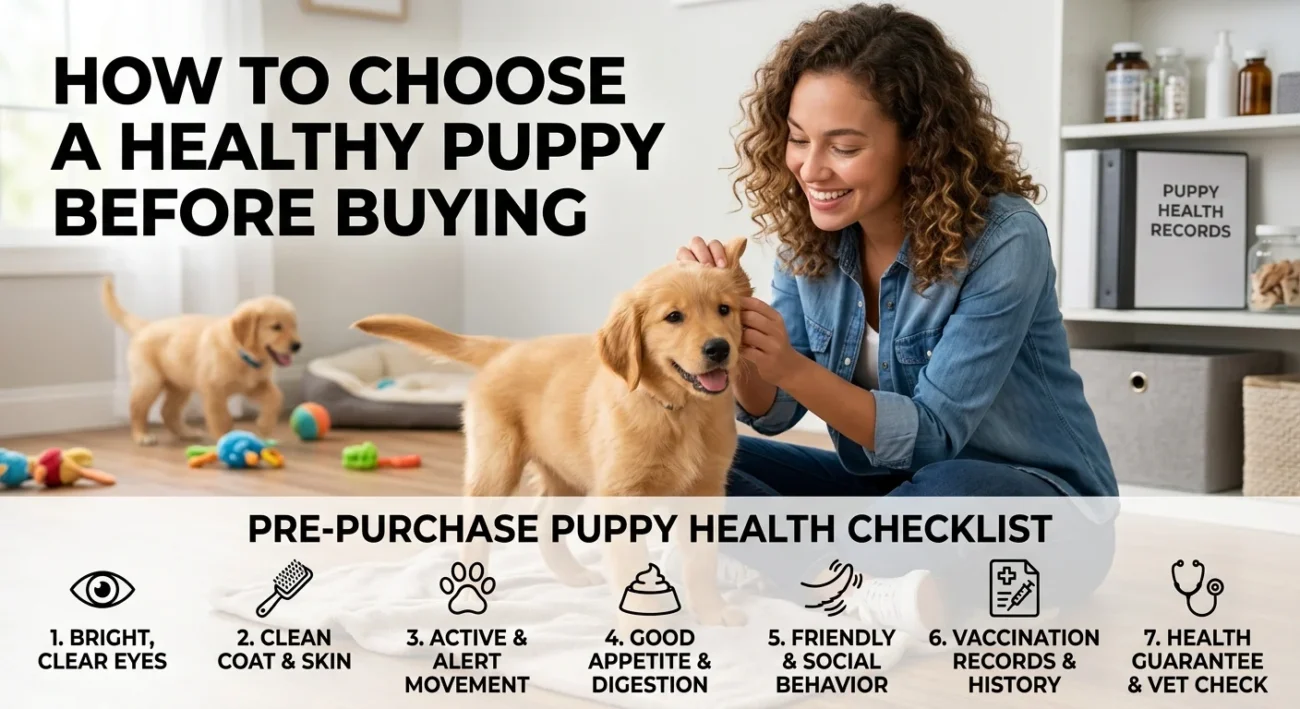
How to Choose a Healthy Puppy
Observe the Puppy’s General Condition
When meeting a puppy in person, look at its overall condition.
A healthy-looking puppy will generally appear:
- Alert.
- Responsive.
- Interested in its surroundings.
- Comfortable moving around.
- Appropriately nourished.
- Clean.
- Free from obvious signs of illness.
No visual inspection can guarantee perfect health, however.
Look at the Eyes
The eyes should generally appear clear and appropriately responsive.
Be cautious about:
- Significant discharge.
- Severe redness.
- Swelling.
- Cloudiness.
- Constant squinting.
Minor temporary discharge can have many causes, so any concern should be assessed by a veterinarian.
Check the Nose and Breathing
Watch the puppy breathe while it is calm.
Be cautious about:
- Persistent difficulty breathing.
- Significant nasal discharge.
- Continuous coughing.
- Labored breathing.
- Unusual respiratory sounds.
Some breeds naturally have different breathing characteristics, but obvious respiratory distress requires veterinary attention.
Examine the Ears
Check for obvious:
- Strong odor.
- Excessive discharge.
- Swelling.
- Redness.
- Frequent scratching.
Ear problems can require veterinary treatment.
Observe the Coat and Skin
The coat should generally look appropriate for the puppy’s breed and age.
Look for:
- Bald patches.
- Severe redness.
- Open sores.
- Excessive scratching.
- Heavy parasite infestation.
- Significant scaling.
A puppy with obvious skin problems should not be purchased without understanding the cause and veterinary treatment plan.
Check the Puppy’s Body Condition
Avoid Extreme Thinness or Obesity
A puppy should have an appropriate body condition for its age and breed.
Visible ribs do not automatically indicate illness, but pronounced skeletal appearance, weakness, or a severely swollen abdomen can be concerning.
A veterinarian is best qualified to assess body condition.
Watch How the Puppy Moves
Movement Can Reveal Problems
Observe the puppy walking and playing.
Look for:
- Severe limping.
- Difficulty standing.
- Reluctance to move.
- Weakness.
- Unusual gait.
- Obvious pain.
Some temporary awkwardness is normal in young puppies, but persistent abnormalities deserve investigation.
Observe Behavior and Temperament
A Puppy Should Be Curious
Healthy social behavior can vary between individuals.
You may see a puppy that is:
- Energetic.
- Curious.
- Calm.
- Playful.
- Cautious.
- Social.
There is no single personality that makes a puppy perfect.
Extreme Fear Requires Attention
A puppy that consistently:
- Freezes.
- Hides.
- Trembles.
- Avoids all interaction.
- Shows extreme distress.
may need additional evaluation.
Fear does not automatically mean the puppy will develop behavioral problems, but early temperament and socialization deserve serious consideration.
Aggression Should Not Be Ignored
Young puppies naturally bite during play.
However, persistent intense aggression, uncontrolled behavior, or severe fear-related aggression should be discussed with an experienced professional before purchase.
Meet the Puppy’s Mother
Why the Mother Matters
If possible and appropriate, meet the puppy’s mother.
Her physical condition and behavior can provide useful information about:
- General care.
- Temperament.
- Environment.
- Breeding practices.
Genetics also influence temperament and health, so observing the mother can provide valuable context.
Be Careful if the Mother Is Never Available
There can be legitimate reasons why a mother cannot be seen.
For example, she may have died, become seriously ill, or been placed elsewhere.
However, a seller who consistently refuses to provide any reasonable explanation should be treated cautiously.
Ask About the Father
Learn What You Can
The father may not live on the same property.
Ask for information such as:
- Breed.
- Age.
- Health testing.
- Temperament.
- Registration information where applicable.
- Photographs.
Responsible breeding decisions should consider both parents.
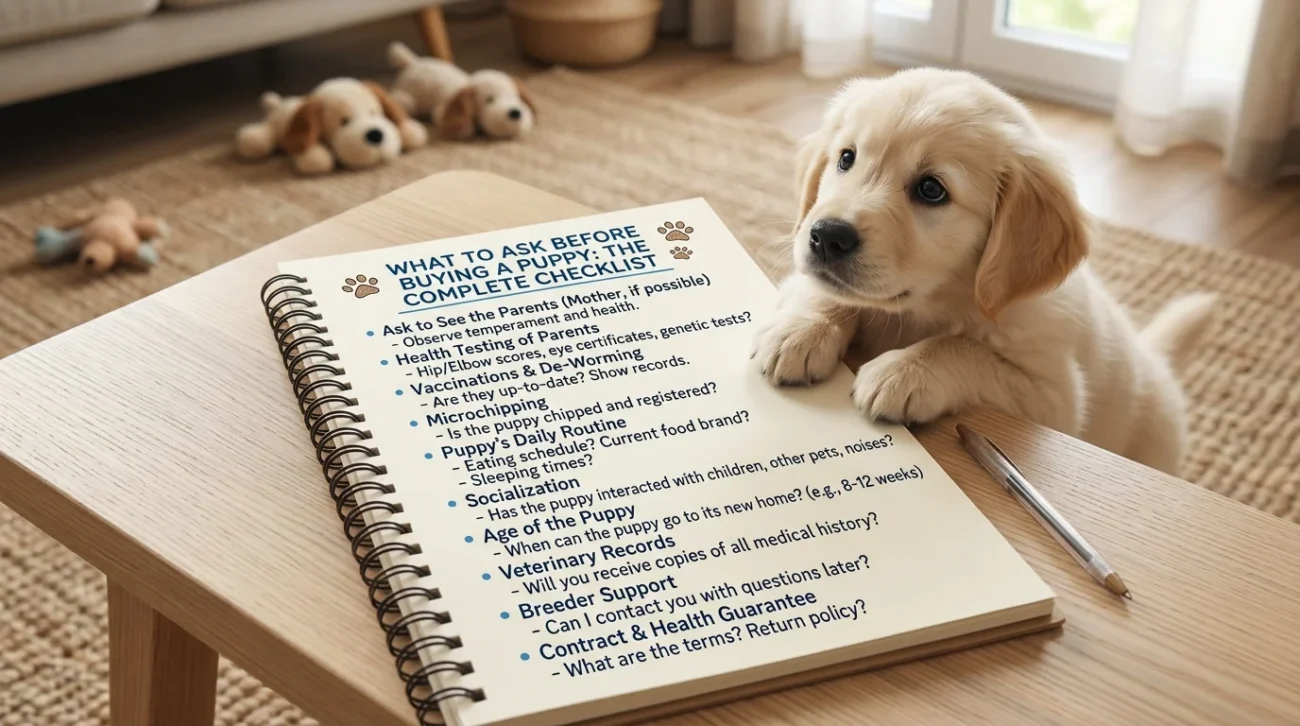
Ask the Seller Important Questions
Basic Puppy Questions
Ask:
- When was the puppy born?
- How many puppies were in the litter?
- What is the puppy currently eating?
- Has the puppy been examined by a veterinarian?
- What vaccinations have been given?
- Has the puppy been dewormed?
- Has the puppy received parasite prevention?
- Is the puppy microchipped?
- What health problems have occurred in the litter?
- What is the puppy’s daily routine?
Questions About the Parents
Ask:
- Can I meet the mother?
- Can I see information about the father?
- Have the parents undergone relevant health testing?
- Are there known inherited conditions in the family?
- What are the parents’ temperaments?
A knowledgeable seller should be able to answer these questions without becoming defensive.
Ask About Socialization
Early Experiences Matter
Puppies benefit from appropriate early exposure to different people, sounds, environments, handling, and experiences.
Ask whether the puppy has been exposed safely to:
- Adults.
- Children where appropriate.
- Household sounds.
- Different surfaces.
- Gentle handling.
- Car travel.
- Grooming experiences.
Early socialization can help puppies develop confidence, although it must be appropriate for their age and health status.
Ask About Feeding
Do Not Change Food Immediately
Ask exactly what the puppy currently eats.
Get information about:
- Brand or type of food.
- Feeding schedule.
- Portion guidance.
- Treats.
- Any known food sensitivities.
Keeping the diet stable initially can make the transition home easier.
Ask About Veterinary Care
Request Specific Records
Do not settle for statements such as:
“Everything is up to date.”
Ask for the actual records.
Depending on the puppy’s age and circumstances, these may include:
- Examination records.
- Vaccination records.
- Deworming records.
- Parasite prevention.
- Microchip information.
- Health testing.
- Medication history.
Vaccination Records
Check Dates and Vaccine Details
A vaccination record should contain enough information to establish:
- Which vaccine was given.
- When it was administered.
- Which puppy received it.
- When the next dose may be due.
Puppy vaccination schedules depend on age, vaccine type, local veterinary guidance, and individual circumstances.
Do not assume that one vaccination means a puppy is fully protected.
Deworming and Parasite Prevention
Puppies Commonly Need Parasite Management
Ask whether the puppy has been treated for intestinal parasites and what product was used.
Also ask about:
- Dates.
- Dosage.
- Future schedule.
- Flea prevention.
- Tick prevention where relevant.
Never repeat medication simply because a seller says it was given without confirming the details with your veterinarian.
Health Testing and Genetic Screening
Why Parent Testing Matters
Some breeds are predisposed to particular inherited conditions.
Responsible breeders may use health screening appropriate to the breed.
Depending on the breed, this could involve evaluations related to:
- Hips.
- Elbows.
- Eyes.
- Heart.
- Genetic disorders.
The appropriate tests vary considerably by breed.
Ask for Evidence
Do not rely solely on:
“Our dogs have no health problems.”
Ask what testing was performed and request documentation where available.
Puppy Medical Examination
Arrange Your Own Veterinary Examination
One of the most important steps after acquiring a puppy is arranging an examination with your own veterinarian.
The veterinarian can assess:
- General health.
- Body condition.
- Heart and lungs.
- Eyes and ears.
- Skin and coat.
- Parasites.
- Development.
- Vaccination needs.
- Future preventive care.
This also establishes a medical relationship for your new puppy.
Puppy Age and Readiness
Do Not Rush the Separation
Puppies need adequate time with their mother and littermates for development and social learning.
The appropriate minimum age for transfer can vary according to applicable animal welfare rules and professional guidance, but responsible sellers should not pressure buyers to take extremely young puppies away from their mother.
Beware of “Tiny Is Better” Marketing
Extremely young puppies may appear especially cute and appealing.
But younger does not necessarily mean better.
Proper early development matters more than bringing the puppy home as soon as possible.
Puppy Documents to Check
Identification
Depending on the puppy and applicable regulations, documentation may include:
- Microchip information.
- Registration papers.
- Ownership records.
- Transfer documents.
Make sure the identifying information matches the puppy.
Medical Documentation
Keep copies of:
- Vaccination records.
- Veterinary examinations.
- Deworming records.
- Medication history.
- Relevant health tests.
Purchase Agreement
A written agreement can clarify:
- Puppy details.
- Purchase price.
- Deposit.
- Transfer date.
- Health representations.
- Return policy.
- Responsibilities of buyer and seller.
Read it carefully before signing.
Pedigree and Registration
Understand What Registration Means
A pedigree can document ancestry.
Registration can document membership in a recognized registry.
Neither automatically guarantees:
- Good health.
- Good temperament.
- Responsible breeding.
- Quality care.
Treat registration as one piece of information rather than proof that a puppy is superior.
Contracts and Health Guarantees
Read Every Clause
Some sellers provide health guarantees.
Understand:
- What conditions are covered.
- How long coverage lasts.
- What veterinary examination is required.
- Whether the puppy can be returned.
- What documentation is needed.
- What happens if a congenital condition is discovered.
A guarantee is only useful if you understand its actual terms.
Warning Signs When Buying a Puppy
The Seller Refuses Questions
A responsible seller should expect potential buyers to ask questions.
You Cannot See Where Puppies Are Raised
If you are repeatedly prevented from seeing the environment without a reasonable explanation, investigate further.
The Seller Has Many Different Breeds Available
A large number of unrelated breeds constantly available can be a reason to investigate the operation more carefully.
It does not automatically prove irresponsible breeding, but it deserves questions about how the puppies are raised.
Puppies Are Always Available
Constant availability can indicate a high-volume operation.
Ask about:
- Number of litters.
- Parents.
- Housing.
- Socialization.
- Veterinary care.
Pressure to Pay Immediately
Be cautious if someone says:
“Pay now or the puppy will be gone.”
Responsible decisions should not depend on artificial urgency.
Online Payment Warning Signs
Be Careful With Unusual Payment Requests
Be cautious if a seller insists on payment methods that provide little protection or refuses normal documentation.
Avoid Sending Money Without Verification
Before paying a deposit, verify:
- The seller’s identity.
- The puppy’s existence.
- The location.
- The terms of the agreement.
- The puppy’s records.
A video call showing the puppy may provide additional evidence, although it does not replace an in-person visit when possible.
Fake Puppy Listings
Why Online Puppy Scams Happen
Puppies are emotionally appealing.
Scammers can exploit this by using:
- Stolen photographs.
- Fake websites.
- Fake identities.
- Unrealistically low prices.
- Fake shipping companies.
- Fake veterinary documents.
Be Skeptical of Unusually Cheap Puppies
Price alone does not prove legitimacy.
An extremely low price combined with pressure, poor documentation, and refusal to meet should raise concerns.
“Puppies Available” Does Not Mean “Healthy Puppies”
Availability Is a Marketing Statement
A seller advertising many puppies available may still provide insufficient information about:
- Health.
- Genetics.
- Socialization.
- Housing.
- Parents.
Evaluate the underlying evidence.
How to Compare Sellers
Create a Comparison Table
For each seller, record:
- Breed.
- Puppy age.
- Parent information.
- Health testing.
- Veterinary records.
- Socialization.
- Living environment.
- Contract.
- Price.
- Return policy.
This makes emotional decision-making less likely.
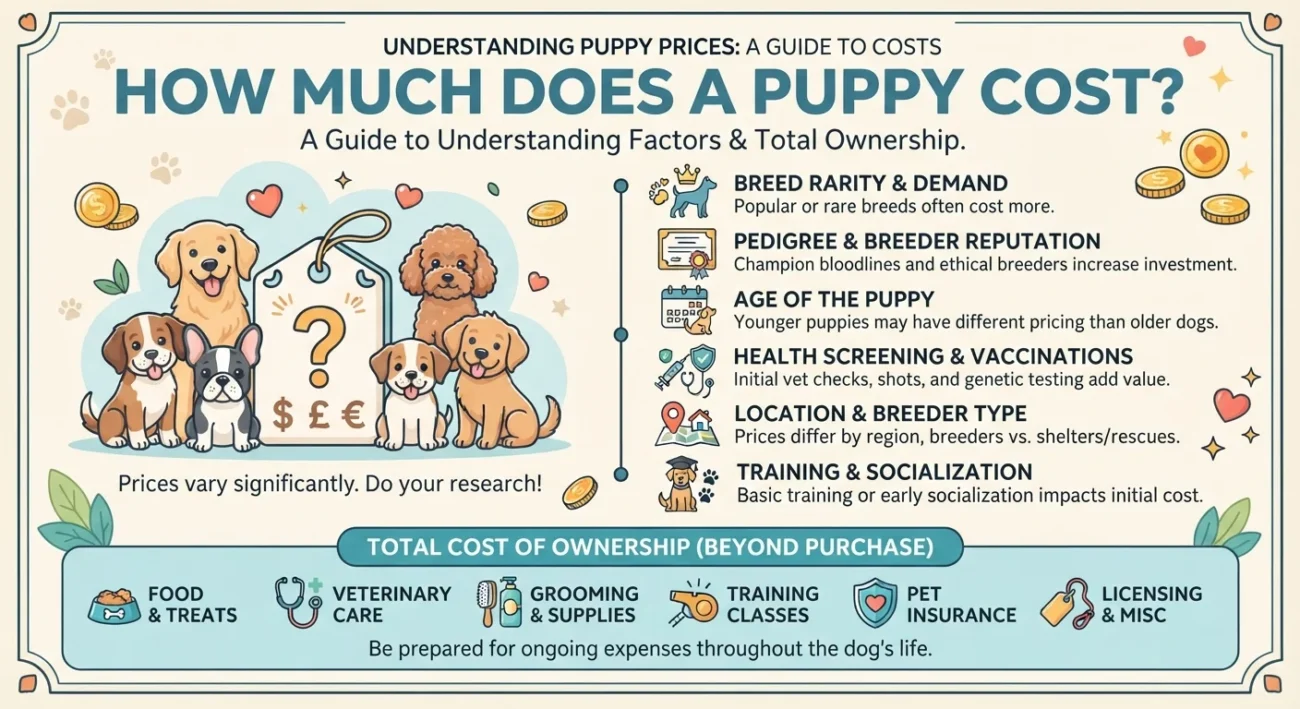
Price and the True Cost of a Puppy
The Purchase Price Is Only the Beginning
Your puppy’s lifetime costs can include:
- Food.
- Veterinary care.
- Vaccinations.
- Parasite prevention.
- Grooming.
- Training.
- Toys.
- Bedding.
- Crate.
- Collar and leash.
- Identification.
- Pet insurance where available.
- Emergency care.
A lower purchase price does not necessarily mean lower overall cost.
Prepare Your Home Before the Puppy Arrives
Puppy-Proof the Environment
Puppies explore with their mouths.
Remove or secure:
- Electrical cords.
- Toxic plants.
- Cleaning products.
- Medications.
- Small objects.
- Sharp objects.
- Unsafe foods.
- Easily accessible chemicals.
Secure Dangerous Areas
Use gates or barriers where necessary.
Potentially dangerous areas include:
- Stairs.
- Kitchens.
- Balconies.
- Pools.
- Garages.
- Storage rooms.
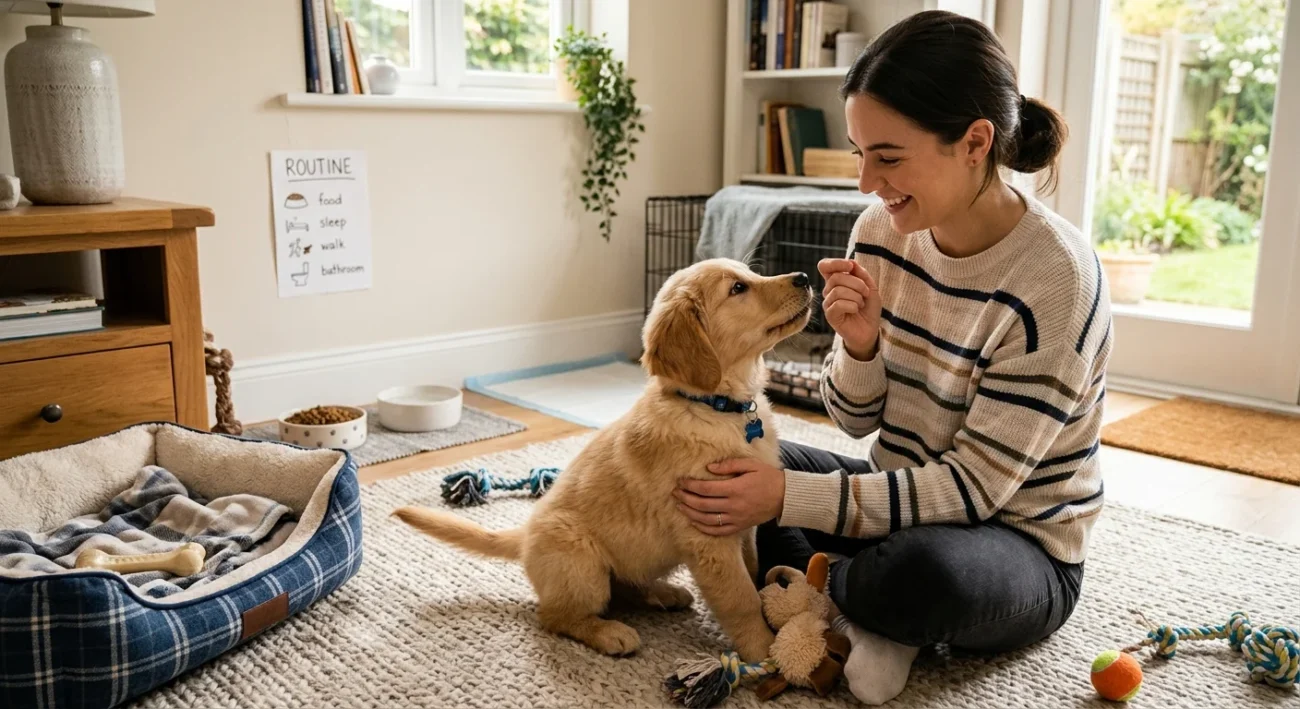
Create a Safe Puppy Zone
Give the Puppy a Defined Area
A designated area can help with:
- Rest.
- Supervision.
- House training.
- Preventing destructive behavior.
The area should be comfortable, secure, and appropriately sized.
Choose a Crate
Crate Training Can Be Useful
A properly introduced crate can become a safe resting space.
It should never be used as punishment.
The puppy should learn to associate it with:
- Safety.
- Rest.
- Comfort.
Choose the Right Size
The puppy should be able to:
- Stand.
- Turn around.
- Lie down comfortably.
For growing puppies, an adjustable crate can be practical.
Prepare Bedding
Comfort Matters
Provide a washable, appropriately sized bed.
Avoid bedding that can easily be shredded and swallowed if your puppy is a destructive chewer.
Buy Food Before Arrival
Keep the Initial Diet Familiar
Buy the same food the puppy has been eating if possible.
After your veterinarian advises you, you can transition to another food gradually if needed.
Food and Water Bowls
Keep Bowls Accessible
Use sturdy bowls that are easy to clean.
Fresh water should be available appropriately throughout the day.
Puppy Collar and Identification
Identification Is Essential
A collar can hold identification information where appropriate.
Microchipping provides another method of identifying a dog and can be especially important if the puppy becomes lost.
Make sure registration information is kept current.
Leash and Harness
Start With Comfortable Equipment
A lightweight leash and appropriately fitted collar or harness can help begin safe outdoor training.
The equipment should fit comfortably without restricting breathing or movement.
Puppy Toys
Provide Appropriate Toys
Good options may include:
- Durable chew toys.
- Food-stuffable toys.
- Soft toys appropriate for supervised use.
- Interactive toys.
Avoid objects that can easily break into dangerous pieces.
Grooming Supplies
Start Grooming Habits Early
Depending on the breed, you may need:
- Brush.
- Comb.
- Puppy-safe shampoo.
- Nail-care tools.
- Ear-care supplies.
Ask your veterinarian or groomer about appropriate products.
Cleaning Supplies
Accidents Are Normal
House training takes time.
Have suitable cleaning products ready before the puppy arrives.
Clean accidents thoroughly so lingering odor does not encourage repeated elimination in the same place.
Preparing Your Family
Everyone Should Follow the Same Rules
Decide before the puppy arrives:
- Where the puppy can sleep.
- Where it can eat.
- Whether furniture is allowed.
- Where toilet training will happen.
- Which words will be used for commands.
- Who handles feeding.
- Who handles walks.
Consistency makes training easier.
Preparing Children
Teach Respectful Interaction
Children should learn:
- Do not pull the puppy’s ears.
- Do not disturb the puppy while eating.
- Do not climb on the puppy.
- Do not chase the puppy.
- Do not take toys aggressively.
- Ask an adult for help when necessary.
Young children should always be supervised around puppies.
The First Day at Home
Keep the Environment Calm
A puppy is experiencing a major transition.
Avoid overwhelming it with a large crowd of visitors immediately.
Give it time to:
- Explore.
- Sleep.
- Eat.
- Drink.
- Eliminate.
- Become comfortable.
The First Night
Expect Some Adjustment
A puppy may cry or wake during the night.
This does not necessarily mean something is wrong.
The puppy has just left its familiar environment.
Establish a calm bedtime routine and follow veterinary guidance regarding nighttime toilet needs.
The First Veterinary Visit
Schedule It Early
Contact your veterinarian as soon as possible after bringing the puppy home.
Bring all available records.
Ask about:
- Vaccination schedule.
- Parasite prevention.
- Nutrition.
- Growth.
- Socialization.
- Training.
- Spaying or neutering.
- Microchip registration.
- Breed-specific health concerns.
Puppy Vaccinations
Follow a Veterinary Schedule
Puppies typically require a series of vaccinations rather than a single appointment.
The schedule depends on age, vaccine type, local disease risks, and veterinary recommendations.
Until your puppy has appropriate protection, your veterinarian can explain which environments and interactions should be avoided.
Socialization and Safety
Socialization Should Be Thoughtful
Puppies benefit from safe exposure to the world.
This can include:
- Different sounds.
- Surfaces.
- People.
- Handling.
- Car rides.
- Grooming.
However, disease exposure must also be considered.
Your veterinarian can help you determine safe socialization options based on your puppy’s vaccination status and local disease risks.
Puppy Training
Start With Simple Skills
Early training can focus on:
- Name recognition.
- Recall.
- Sit.
- Leave it.
- Gentle handling.
- Toilet routines.
- Walking calmly.
Keep sessions short and positive.
Positive Reinforcement
Reward the Behavior You Want
Positive reinforcement can involve:
- Treats.
- Praise.
- Toys.
- Play.
- Attention.
The goal is to make desirable behaviors rewarding.
House Training
Expect Accidents
Young puppies have limited bladder control.
A consistent routine helps.
Take the puppy to the appropriate toilet area:
- After waking.
- After eating.
- After drinking.
- After playing.
- Before sleeping.
- At appropriate regular intervals.
Praise successful elimination in the correct place.
Puppy Biting
Biting Is Common
Puppies explore and play with their mouths.
Rather than punishing normal puppy behavior harshly, redirect biting toward appropriate toys and reinforce calm interactions.
If biting becomes severe or concerning, seek professional training support.
Separation and Alone Time
Teach Independence Gradually
A puppy should not be expected to remain alone for long periods immediately.
Build alone time gradually while providing a safe environment.
This can help the puppy learn that separation is temporary.
Exercise for Puppies
More Is Not Always Better
Growing puppies need appropriate movement, but excessive or inappropriate high-impact exercise may not be suitable, particularly for certain large breeds.
Ask your veterinarian about exercise appropriate for your puppy’s age and breed.
Mental Stimulation
Puppies Need More Than Physical Exercise
Mental activities can include:
- Training games.
- Puzzle feeders.
- Scent games.
- Finding treats.
- Learning new cues.
- Exploring safe environments.
Mental stimulation can help reduce boredom.
Nutrition After Bringing Your Puppy Home
Puppy Food Is Formulated for Growth
Choose an appropriate complete diet for puppies based on veterinary advice and the dog’s size and breed needs.
Large-breed puppies, in particular, may have specific nutritional considerations.
Avoid Random Supplements
Do not add calcium, vitamins, or other supplements without professional advice.
Excessive supplementation can be harmful.
Recognizing Puppy Illness
Watch for Changes
Contact a veterinarian if your puppy develops concerning signs such as:
- Repeated vomiting.
- Significant diarrhea.
- Difficulty breathing.
- Severe lethargy.
- Refusal to eat.
- Collapse.
- Persistent coughing.
- Bloody stool.
- Seizures.
- Severe pain.
Young puppies can deteriorate quickly, so significant symptoms should not be ignored.
Emergency Planning
Know Where to Go Before You Need It
Save the contact details of:
- Your regular veterinarian.
- An emergency veterinary clinic.
- A poison-control resource where applicable.
Keep medical records accessible.
Buying Puppies vs Adoption
Consider All Responsible Options
Searching for a puppy does not necessarily mean buying from a breeder.
Depending on your circumstances, adoption or rescue may also be an option.
Some shelters and rescue organizations have puppies and young dogs available.
The Important Question Is Responsible Placement
Whether you purchase or adopt, focus on:
- Health.
- Temperament.
- Compatibility.
- Transparency.
- Responsible care.
Responsible Breeding
What Does a Responsible Breeder Look Like?
A responsible breeder generally cares about the long-term welfare of the dogs they produce.
They should be willing to discuss:
- Health.
- Genetics.
- Temperament.
- Socialization.
- Parent dogs.
- Veterinary care.
- Puppy development.
Responsible Breeders Ask Buyers Questions Too
A good breeder may ask about your:
- Home.
- Experience with dogs.
- Lifestyle.
- Work schedule.
- Family.
- Expectations.
This is often a positive sign.
They want to ensure their puppies go to suitable homes.
Why Responsible Sellers May Refuse a Sale
A Reputable Seller Is Not Always Trying to Sell Immediately
If a breeder believes a particular puppy is unsuitable for your lifestyle, they may recommend another puppy or decline the sale.
That can be a sign that animal welfare matters more than making a quick transaction.
The Importance of Transparency
Good Sellers Explain Both Strengths and Challenges
Every breed has potential challenges.
A responsible seller should not pretend that the puppies are completely free from risk.
Ask:
- What health problems occur in this breed?
- What are the parents like?
- What challenges should I expect?
- What grooming will be required?
- How much exercise will the adult dog need?
Honest answers are valuable.
Choosing Between Puppies in the Same Litter
Do Not Automatically Choose the Most Active Puppy
The most energetic puppy is not necessarily the healthiest or best match.
Observe each puppy.
Consider:
- Curiosity.
- Confidence.
- Responsiveness.
- Energy.
- Recovery after a new experience.
- Interaction with people.
Temperament assessments are useful but not perfect predictors of adult behavior.
Don’t Choose Based Only on Color
Appearance Should Be Secondary
Coat color, eye color, markings, and size may be visually appealing.
But they should not outweigh:
- Health.
- Temperament.
- Genetics.
- Responsible breeding.
- Compatibility.
Questions to Ask Yourself Before Paying
Health
Do I have enough health information?
Seller
Have I verified the seller?
Environment
Have I seen where the puppy is raised?
Parents
Do I understand the parents’ health and temperament?
Documents
Do I have appropriate records?
Contract
Have I read the agreement?
Lifestyle
Is this puppy suitable for my home?
Budget
Can I afford lifelong care?
If you cannot confidently answer these questions, slow down.
A Complete Puppy-Buying Checklist
Before Searching
- Determine your lifestyle.
- Research suitable breeds.
- Estimate long-term costs.
- Discuss the decision with household members.
Before Choosing a Seller
- Research reputation.
- Ask questions.
- Request health information.
- Verify documentation.
- Understand the contract.
Before Paying
- Meet the puppy where possible.
- Meet the mother where appropriate.
- Observe the puppy.
- Review records.
- Confirm identification.
- Understand return policies.
Before Bringing the Puppy Home
- Puppy-proof the home.
- Buy food.
- Prepare bedding.
- Set up a safe area.
- Buy toys.
- Buy a leash and identification.
- Schedule veterinary care.
read more about dogs for sale
Finding puppies for sale should never be treated as a simple transaction.
The right puppy is not determined by a photograph, a low price, a rare color, or an attractive online advertisement. Choosing a puppy responsibly means looking at the complete picture: health, temperament, genetics, early socialization, living conditions, documentation, seller practices, and your own ability to provide lifelong care.
When searching for puppies for sale online, remember that the internet is a useful research tool but cannot replace verification. Ask questions. Request records. Speak with the seller. Meet the puppy when possible. Observe the mother and the environment. Be cautious of pressure, vague answers, unrealistic claims, and requests for money before you have verified what you are buying.
When you find a potential puppy for sale, focus first on health and suitability rather than appearance.
Look for a puppy that appears appropriately nourished, alert, responsive, comfortable moving around, and free from obvious signs of illness. Ask about vaccinations, deworming, parasite prevention, veterinary examinations, parent health testing, and inherited conditions relevant to the breed.
Then look beyond the puppy.
A responsible source should be willing to discuss the parents, explain how the puppies were raised, describe socialization experiences, provide appropriate records, and answer reasonable questions. Good breeders and responsible sellers should also care about where their puppies are going.
Finally, remember that buying a puppy is only the beginning.
Before bringing your new companion home, prepare the environment, puppy-proof dangerous areas, purchase appropriate supplies, establish household rules, arrange veterinary care, and prepare for training. The first weeks require patience because the puppy is learning how to live in an entirely new environment.
The goal should never simply be to buy puppies quickly.
The goal is to make a careful decision that gives both you and the puppy the best possible chance of building a healthy, safe, and lasting relationship.
A well-researched choice today can influence the quality of life you and your dog share for many years.