
Blog
Best Dog Breeds: How to Choose the Right Breed for Your Home
Choosing one of the best dog breeds for your home is not simply a matter of picking the breed that looks cutest, appears most popular online, or has the reputation of being friendly. A dog can be wonderful and still be completely unsuitable for a particular household.
The best dog for one family might be an energetic Labrador Retriever that loves outdoor activities. For another household, a calm adult Greyhound may be a much better choice. A person living in a small apartment might prefer a compact companion breed, while someone with a large garden and an active lifestyle may be happier with a larger working or sporting breed.
This is why there is no universal list of good dog breeds that works for everyone.
The right choice depends on your lifestyle, experience, available space, daily schedule, budget, family structure, expectations, and willingness to provide training, exercise, grooming, and veterinary care.
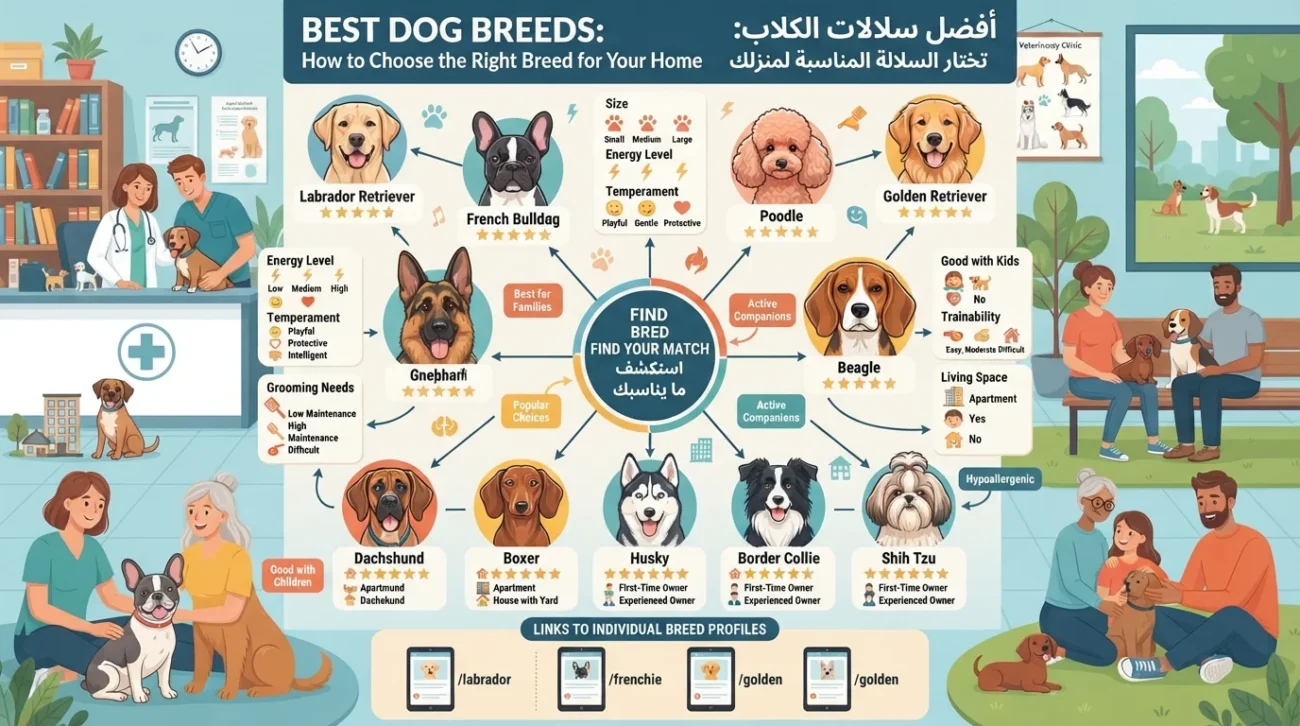
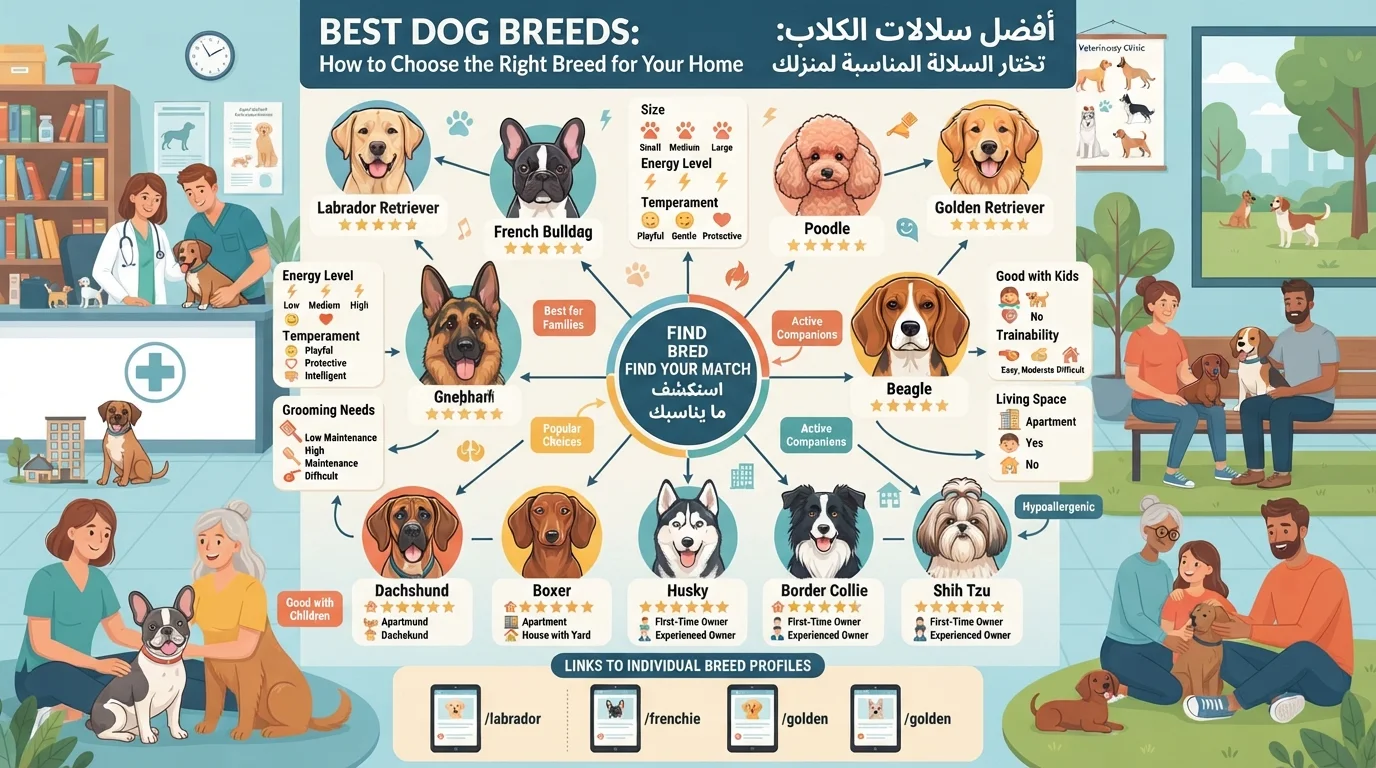
This guide provides a broad framework for comparing dog breeds and choosing one that fits your home. It considers size, energy level, temperament, grooming, trainability, children, living arrangements, and owner experience.
The goal is not to tell you that one breed is objectively better than another. Instead, it is to help you understand what makes a breed suitable—or unsuitable—for your particular circumstances.
What Makes a Dog Breed “Best”?
There Is No Single Best Dog Breed
The phrase best dog breeds can be misleading because “best” is subjective.
Imagine two potential owners.
The first person:
- Lives in an apartment
- Works long hours
- Prefers quiet evenings
- Has limited experience with dogs
- Does not want intensive grooming
The second person:
- Lives in a large house
- Runs several times a week
- Has experience training dogs
- Wants a dog for outdoor adventures
- Enjoys spending significant time with a pet
These people should probably not choose the same breed.
A dog that thrives with the second owner could become frustrated or under-exercised with the first.
read more about dogs for sale
The Right Breed Is the Right Match
A better question than “What is the best dog?” is:
“Which dog breed best matches my lifestyle?”
This changes the selection process from popularity-based shopping to responsible ownership.
Breed Characteristics Are Guidelines
Breed tendencies are useful, but individual dogs are still individuals.
Two dogs from the same breed can differ in:
- Personality
- Confidence
- Energy
- Sociability
- Trainability
- Sensitivity
- Food motivation
- Behavior around children
Genetics, early socialization, upbringing, health, training, and environment all influence behavior.
A breed profile should therefore be treated as a starting point rather than a guarantee.
The Most Important Factors When Choosing a Dog
Size
Size affects much more than appearance.
A large dog generally requires consideration of:
- Food costs
- Equipment size
- Transportation
- Physical strength
- Living space
- Veterinary expenses
- Exercise needs
- Training management
A small dog may be easier to physically manage, but small does not automatically mean low-maintenance.
Some small breeds can be extremely energetic or vocal.
Energy Level
Energy level is one of the most important factors for long-term compatibility.
A high-energy dog may need:
- Long walks
- Running
- Structured exercise
- Games
- Training
- Mental stimulation
A lower-energy dog may be happier with shorter walks and more relaxed activities.
The mistake is choosing a breed based on appearance without considering how much activity it needs.
Temperament
Temperament influences how a dog interacts with:
- Family members
- Children
- Strangers
- Other dogs
- Cats
- Visitors
- New environments
Some breeds tend to be outgoing and social, while others may be more reserved or protective.
Grooming
Grooming requirements range from relatively simple to highly demanding.
Consider:
- Brushing frequency
- Shedding
- Bathing
- Ear care
- Nail trimming
- Coat trimming
- Professional grooming
A beautiful long coat can require considerable time and expense.
Trainability
Some breeds were historically developed to work closely with humans and may be highly responsive to training.
Others may be more independent.
A less naturally biddable breed is not necessarily unintelligent. It may simply require different training techniques and greater patience.
Children
If you have children, consider more than whether a breed is “good with kids.”
Think about:
- Size
- Energy
- Play style
- Patience
- Sensitivity
- Predictability
- Ability to settle indoors
A large, energetic dog can accidentally knock over a young child even if the dog has a friendly temperament.
Living Space
A house with a large yard can provide useful space, but a yard does not replace walks, training, or interaction.
Likewise, apartment living does not automatically rule out every large breed.
The dog’s energy level, exercise routine, noise level, and ability to relax indoors may matter more than square footage alone.
Owner Experience
First-time owners may benefit from breeds that are generally easier to train and manage.
Experienced owners may be better prepared for:
- Independent breeds
- Strong working instincts
- High-energy dogs
- Protective breeds
- Dogs requiring specialized training
Understanding Small, Medium, and Large Dog Breeds
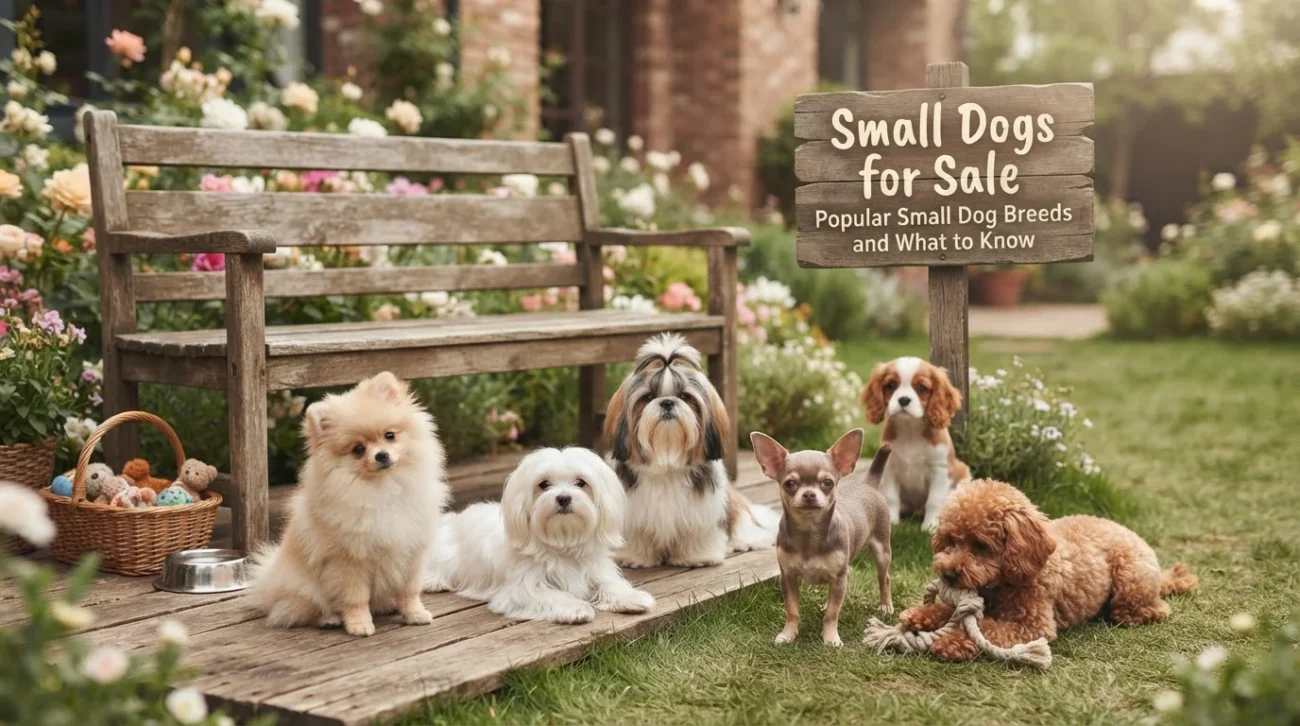
Small Dog Breeds
Small dogs are often attractive to people living in apartments or smaller homes.
Potential advantages include:
- Easier transportation
- Lower food consumption
- Easier handling
- Smaller equipment
- Less physical space required
However, small dogs still need:
- Exercise
- Training
- Socialization
- Veterinary care
- Mental stimulation
A small body does not mean a small personality.
Medium Dog Breeds
Medium-sized breeds can offer a balance between physical manageability and athletic ability.
They may be suitable for:
- Families
- Active individuals
- Suburban households
- Owners wanting a versatile companion
Their needs vary enormously depending on the breed.
Large Dog Breeds
Large breeds can be wonderful family companions, working dogs, or guardians.
But potential owners need to consider:
- Space
- Training
- Food
- Exercise
- Strength
- Transportation
- Veterinary costs
A large dog that pulls strongly on a leash can be difficult for someone who cannot physically control it.
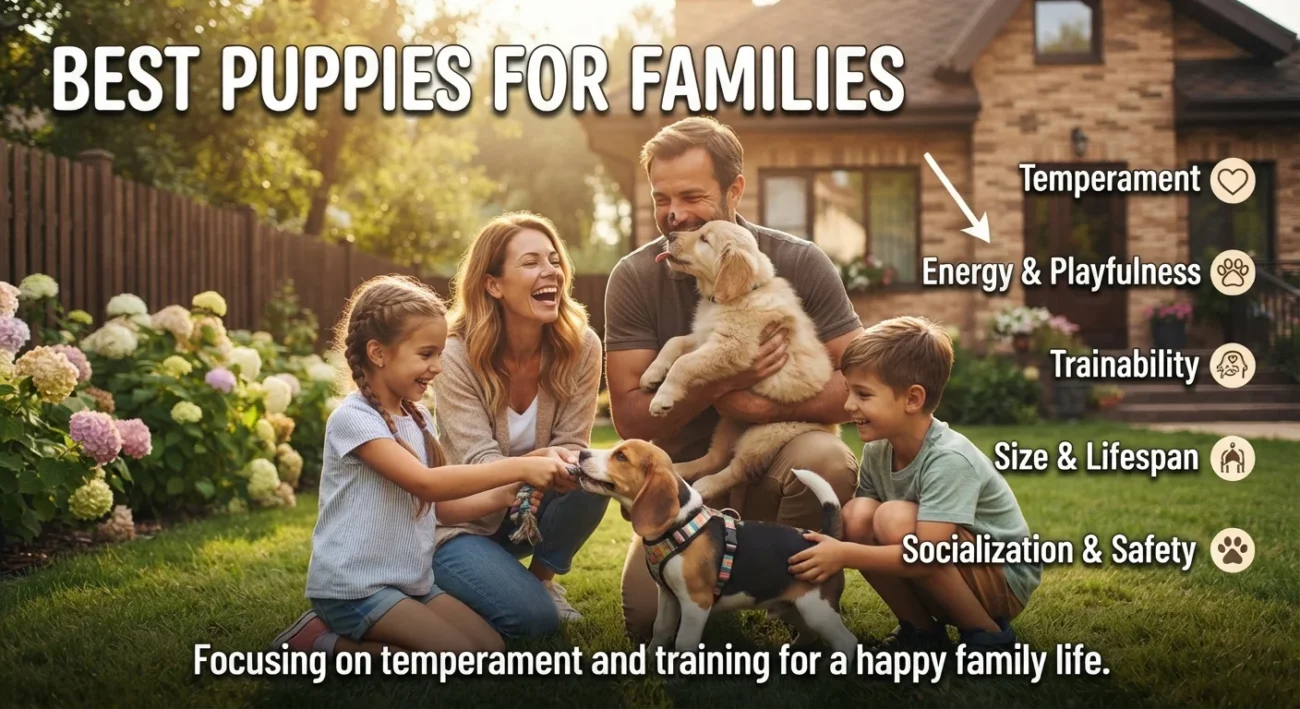
Best Dog Breeds for Families
What Families Should Look For
The best dog breeds for families are not necessarily the most popular breeds.
Families should consider dogs that fit their:
- Children’s ages
- Activity level
- Schedule
- Home environment
- Training experience
- Expectations
Labrador Retriever
The Labrador Retriever is one of the most recognizable family-oriented breeds.
Many Labradors are:
- Social
- Playful
- Food-motivated
- Energetic
- Trainable
They can be excellent companions for active families.
However, their energy and enthusiasm can be challenging.
Young Labradors may jump, chew, run, and demand considerable interaction.
Families should be prepared to provide structured exercise and training.
Golden Retriever
Golden Retrievers are widely appreciated for their friendly appearance and generally sociable nature.
They often enjoy:
- Family activities
- Training
- Outdoor exercise
- Retrieving games
- Human companionship
Their coats require regular grooming, and they can shed significantly.
Beagle
Beagles are small-to-medium scent hounds known for their curious and energetic personalities.
Potential owners should remember that their strong sense of smell can influence behavior.
A Beagle may become intensely interested in scents and may not always prioritize its owner’s instructions when following an interesting trail.
They can be affectionate family companions but benefit from consistent training and safe exercise areas.
Poodle
Poodles come in different sizes, including Standard, Miniature, and Toy.
They are often highly trainable and mentally active.
Their coat is different from that of many shedding breeds, but it requires regular maintenance and professional grooming may be necessary.
Poodles can be excellent companions for owners who are willing to provide mental stimulation and coat care.
Cavalier King Charles Spaniel
The Cavalier King Charles Spaniel is a small companion breed known for its affectionate nature.
Its size can make it attractive to people living in smaller homes.
However, potential owners should research the breed’s health considerations carefully and obtain puppies from responsible sources with appropriate health screening.
Popular Dog Breeds Are Not Automatically Suitable
Popularity Can Be Misleading
A breed may become popular because of:
- Movies
- Social media
- Celebrity ownership
- Appearance
- Advertising
- Historical reputation
None of these factors guarantee that the breed suits your household.
Research the Lifestyle Behind the Breed
Before choosing a popular breed, ask:
What was this breed originally developed to do?
The answer can reveal important behavioral tendencies.
A dog bred for:
- Herding
- Hunting
- Guarding
- Retrieving
- Scent work
- Pulling
- Companionship
may have instincts related to that original purpose.
Working Dogs and Owner Experience
Why Working Breeds Can Be Challenging
Working breeds were often developed to perform demanding jobs.
They may be:
- Intelligent
- Energetic
- Focused
- Independent
- Highly responsive
These characteristics can be wonderful when properly managed.
They can also create challenges for inexperienced owners.
Border Collie
The Border Collie is famous for intelligence and working ability.
It can excel in:
- Obedience
- Agility
- Herding
- Trick training
- Dog sports
But intelligence does not mean easy ownership.
A highly intelligent dog can become frustrated when its mental and physical needs are ignored.
German Shepherd
The German Shepherd is a versatile working breed commonly associated with:
- Service work
- Police work
- Search and rescue
- Protection
- Companionship
It can be highly trainable and devoted to its family.
However, responsible ownership requires early socialization, consistent training, exercise, and careful attention to temperament.
Belgian Malinois
Belgian Malinois are exceptionally athletic working dogs.
They can be outstanding partners for experienced handlers involved in demanding training or working activities.
They are generally not an ideal choice simply because someone wants a “cool-looking guard dog.”
Their intensity and exercise requirements can be overwhelming for inexperienced households.
Companion Breeds for Lower-Activity Homes
What Makes a Lower-Energy Dog Suitable?
A lower-energy dog may still enjoy walks and play.
The difference is that it may not require hours of intense physical activity every day.
Potentially suitable breeds vary significantly, but owners should evaluate each individual breed rather than assuming every small companion breed is low-energy.
Shih Tzu
Shih Tzus were developed primarily as companion dogs.
They can be suitable for people looking for a small companion.
However, their coat requires regular maintenance.
French Bulldog
French Bulldogs are popular companion dogs and often enjoy human interaction.
Their physical structure means owners should be particularly thoughtful about heat, strenuous exercise, and respiratory limitations.
They should not be selected simply because they appear convenient for apartment living.
High-Energy Dog Breeds
Who Should Consider High-Energy Dogs?
High-energy breeds can be excellent for:
- Runners
- Hikers
- Outdoor enthusiasts
- Active families
- Dog-sport participants
They may be poor matches for people who prefer sedentary lifestyles.
Australian Shepherd
Australian Shepherds are energetic, intelligent dogs that often thrive when given structured activities.
They may enjoy:
- Agility
- Obedience
- Hiking
- Fetch
- Advanced training
Without sufficient stimulation, they may develop unwanted behaviors.
Siberian Husky
Siberian Huskies are athletic and energetic.
They were developed for endurance and pulling work.
They can be independent and determined, making training and secure containment particularly important.
A Husky should not be chosen solely because of its striking appearance.
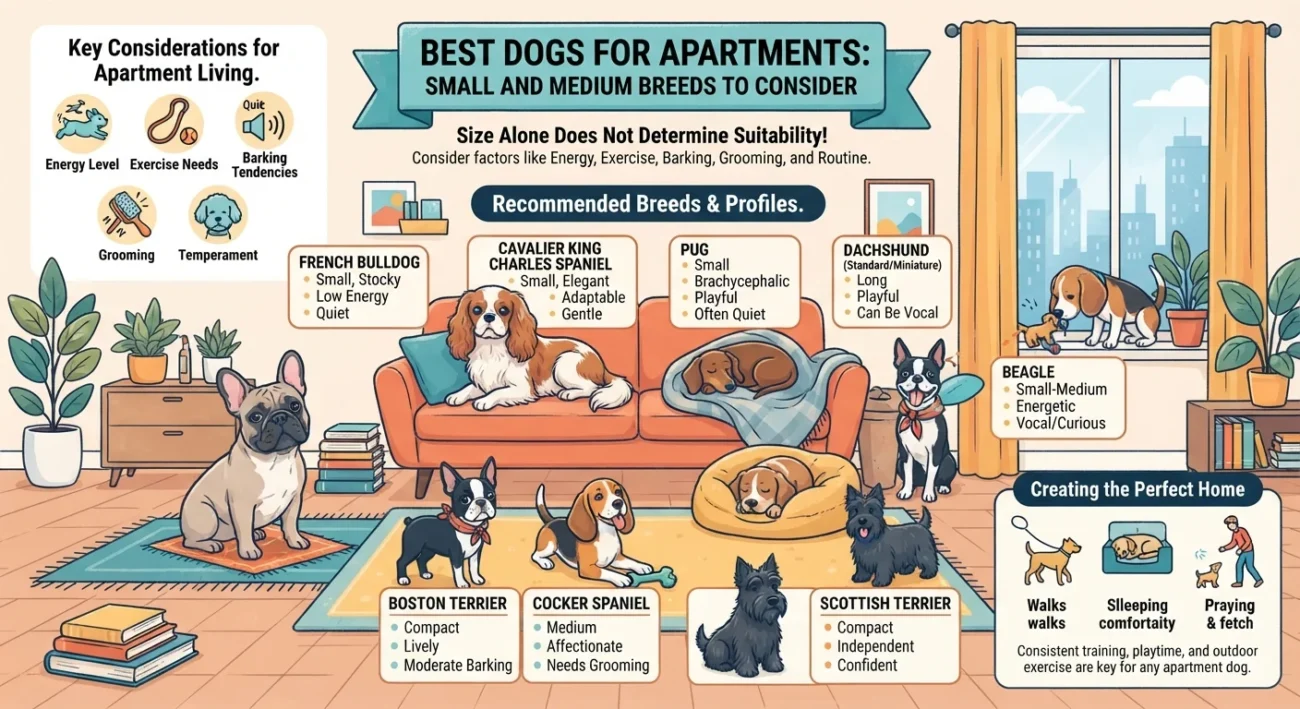
Dogs for Apartment Living
Does Apartment Living Rule Out Large Dogs?
Not necessarily.
The important questions include:
- How much exercise does the dog need?
- Can the dog settle indoors?
- Is it excessively vocal?
- Can you provide daily walks?
- Can you meet its mental needs?
A calm dog that sleeps much of the day may adapt better than a small but extremely energetic dog.
Noise Matters
In an apartment, consider barking.
Frequent vocalization can create difficulties with neighbors.
Research breed tendencies, but remember that individual behavior varies.
Dogs for Houses With Large Yards
A Yard Is Helpful but Not Enough
A large yard provides opportunities for:
- Short play sessions
- Toilet breaks
- Training
- Exploration
But simply opening the door is not a complete exercise plan.
Dogs need interaction and enrichment.
Large Homes and Large Breeds
A large house can make owning a large breed easier, but the owner still needs to provide:
- Training
- Exercise
- Veterinary care
- Socialization
- Appropriate boundaries
Dogs and Children
Never Rely on Breed Reputation Alone
Even breeds known for family friendliness should be supervised around children.
Children need to learn how to interact respectfully with dogs.
They should understand that dogs should not be:
- Pulled by the ears
- Hugged against their will
- Disturbed while eating
- Chased
- Hit
- Climbed on
- Woken suddenly
Teach Children to Read Dog Signals
Parents should teach children to recognize signs such as:
- Turning away
- Lip licking
- Yawning
- Avoidance
- Stiff posture
- Growling
- Attempting to escape
A growl should not simply be punished. It can be an important warning signal that the dog is uncomfortable.
Supervision Is Essential
Young children should never be left unsupervised with a dog, regardless of breed.
Choosing a Dog for First-Time Owners
What Beginners Often Need
First-time owners may benefit from a dog that is:
- Trainable
- Social
- Adaptable
- Manageable
- Relatively predictable
But there is no completely effortless breed.
Every dog requires commitment.
Training Matters More Than People Expect
Even a generally easygoing breed needs:
- House training
- Leash training
- Recall training
- Socialization
- Basic obedience
- Appropriate boundaries
Choosing a Dog for Experienced Owners
Experience Expands Your Options
Experienced owners may feel more comfortable managing:
- High prey drive
- Strong working instincts
- Independence
- High energy
- Protective behavior
However, experience does not make every breed suitable for every person.
Your lifestyle still matters.
Grooming Requirements
Low-Maintenance Coats
Short coats often require less intensive grooming than long or continuously growing coats.
But short-haired dogs can still shed heavily.
Long Coats
Long-coated breeds may need:
- Frequent brushing
- Mat prevention
- Coat trimming
- Professional grooming
Curly or Continuously Growing Coats
Some curly-coated breeds require professional grooming on a regular schedule.
Potential owners should include grooming costs in their budget.
Shedding and Home Cleanliness
Low-Shedding Does Not Mean No Maintenance
A dog that sheds less may require more grooming.
Owners should consider which inconvenience they prefer:
Hair around the house or regular professional grooming.
There is no completely maintenance-free coat.
Training and Intelligence
Intelligence Is Not the Same as Obedience
A highly intelligent dog may understand a task quickly but still decide not to perform it.
Independent breeds can be intelligent while being less motivated by repetitive obedience exercises.
Motivation Matters
Training often becomes easier when you understand what motivates your dog.
Potential rewards include:
- Food
- Toys
- Praise
- Play
- Access to something enjoyable
Positive reinforcement can help create a strong relationship between owner and dog.
Prey Drive and Other Instincts
What Is Prey Drive?
Prey drive refers broadly to a dog’s instinct to chase or pursue certain moving objects or animals.
This can be important for households with:
- Cats
- Rabbits
- Small pets
- Chickens
A breed with strong hunting instincts may require more careful management.
Never Assume Compatibility
Even if a breed is commonly described as good with other animals, introductions should be managed carefully.
Individual temperament matters.
Guarding and Protective Breeds
Wanting a Guard Dog
Some owners look for good dog breeds because they want protection.
But there is an important distinction between:
- A confident dog that alerts you to unusual activity
- A highly protective working dog requiring advanced management
A protective breed is not automatically a better security solution.
Training Is Essential
Poorly socialized protective behavior can become a serious liability.
Owners should prioritize:
- Stable temperament
- Early socialization
- Professional training when appropriate
- Clear household rules
Matching Dogs to Your Daily Schedule
Busy Owners
If you spend most of the day away from home, consider how the dog will spend that time.
Ask:
- Can someone provide a midday walk?
- Is daycare available?
- Can you work from home?
- How much companionship does the breed generally seek?
Remote Workers
Working from home can provide more companionship but doesn’t automatically satisfy exercise needs.
A dog may still need scheduled walks and activities.
Retired Owners
Retirement may provide more time for a dog, but owners should also consider long-term mobility and the dog’s physical strength.
Puppy vs Adult Dog
Puppies Require Major Time Investment
Puppies need:
- House training
- Socialization
- Vaccination schedules
- Safe exploration
- Chew management
- Basic training
- Frequent supervision
They are adorable, but they are not low-maintenance.
Adult Dogs
An adult dog may already have:
- Basic manners
- Established temperament
- House-training experience
Adopting an adult can make it easier to evaluate personality and energy level.
Breed Selection Should Include Health
Research Common Breed Health Issues
Every breed can have health concerns.
Before choosing, research:
- Hereditary conditions
- Orthopedic problems
- Eye conditions
- Skin issues
- Respiratory concerns
- Lifespan
- Typical veterinary needs
Responsible Breeding Matters
If purchasing a puppy, look for breeders who conduct appropriate health screening and provide transparent information about the parents.
Avoid choosing a breeder solely because the puppy is cheap or immediately available.
The Cost of Owning Different Dog Breeds
Purchase or Adoption Cost
The initial cost is only one part of dog ownership.
Ongoing Expenses
Budget for:
- Food
- Veterinary care
- Vaccinations
- Parasite prevention
- Grooming
- Training
- Toys
- Bedding
- Leashes
- Crates
- Insurance where available
- Emergency care
Size Can Affect Costs
Large dogs generally consume more food and may require larger equipment.
Some veterinary treatments are also calculated according to body weight.
How to Compare Dog Breeds
Create a Breed Comparison Table
Before choosing, compare potential breeds across the same categories.
| Factor | Breed A | Breed B | Breed C |
|---|---|---|---|
| Size | Small | Medium | Large |
| Energy | Low | Medium | High |
| Grooming | Low | Medium | High |
| Trainability | High | Medium | High |
| Apartment suitability | High | Medium | Low |
| Children | Often suitable | Often suitable | Depends |
| First-time owner | Often easier | Moderate | Depends |
| Exercise needs | Low | Medium | High |
The table is only a starting point.
Individual dogs can behave differently from breed averages.
Questions to Ask Before Choosing
Questions About Your Lifestyle
Ask yourself:
- How many hours am I away from home?
- How active am I?
- Do I travel frequently?
- How much time can I dedicate to training?
- Do I enjoy grooming?
- How much can I realistically spend?
- Do I have children?
- Do I already have pets?
Questions About Your Home
Consider:
- Apartment or house?
- Stairs?
- Yard?
- Secure fencing?
- Nearby walking areas?
- Neighbors sensitive to noise?
Questions About Your Experience
Ask:
- Have I trained a dog before?
- Can I handle a strong dog physically?
- Am I comfortable managing challenging behavior?
- Am I willing to hire a professional trainer?
How to Avoid Choosing a Breed for the Wrong Reasons
Don’t Choose Only for Appearance
A beautiful dog can still be a terrible lifestyle match.
Don’t Choose Because of Social Media
A breed may look adorable in short videos while hiding the daily work required to care for it.
Don’t Choose Based on a Single Personality Trait
A breed described as “friendly” can still have:
- High exercise needs
- Strong prey drive
- Heavy shedding
- Significant grooming requirements
Look at the entire profile.
The Importance of Socialization
Early Experiences Matter
Proper socialization helps puppies become familiar with:
- People
- Dogs
- Sounds
- Surfaces
- Vehicles
- Household activities
- Different environments
Socialization should be controlled and positive rather than overwhelming.
Socialization Is Not Just Meeting Everyone
The objective isn’t to make your puppy greet every person and dog.
Instead, teach the puppy to remain calm and confident around different situations.
Exercise Requirements
Physical Exercise
Depending on the breed, exercise may include:
- Walking
- Running
- Fetch
- Swimming
- Hiking
- Dog sports
Mental Exercise
Mental stimulation can include:
- Training
- Puzzle toys
- Scent games
- Food enrichment
- Learning tricks
A dog can be physically tired and still mentally frustrated.
The Role of Mental Stimulation
Intelligent Dogs Need Something to Do
Some dogs thrive when given jobs.
That job does not have to be formal.
It can be:
- Finding treats
- Learning commands
- Carrying an appropriate toy
- Practicing obedience
- Participating in agility
The goal is to provide appropriate outlets for natural behavior.
Finding Individual Breed Pages
Why Breed-Specific Research Matters
A general guide can help you narrow your options.
Once you have identified several potential breeds, read detailed breed-specific information.
For each breed, research:
- History
- Adult size
- Exercise requirements
- Temperament
- Grooming
- Common health concerns
- Training
- Children
- Other pets
- Apartment suitability
- Owner experience
This is where individual breed pages become particularly valuable.
Build a Shortlist
Instead of researching dozens of breeds equally, narrow your list to three or five candidates.
Then compare them carefully.
A Practical Breed-Selection Formula
Step One: Determine Your Activity Level
Choose whether you are:
- Low activity
- Moderately active
- Highly active
Step Two: Determine Your Space
Consider:
- Apartment
- Small house
- Large house
- House with yard
Step Three: Determine Your Experience
Classify yourself as:
- First-time owner
- Some experience
- Experienced owner
Step Four: Consider Your Family
Think about:
- Children
- Elderly family members
- Other dogs
- Cats
- Small animals
Step Five: Consider Maintenance
Decide how much grooming and shedding you can tolerate.
Step Six: Evaluate the Breed
Only after answering the previous questions should you start comparing breeds.
Example: An Active Family
Imagine a family with:
- Two parents
- Two school-age children
- Large yard
- Daily outdoor activities
- Time for training
They might consider breeds such as:
- Labrador Retriever
- Golden Retriever
- Standard Poodle
- Certain herding or sporting breeds
But the final choice depends on their specific preferences and willingness to manage exercise and grooming.
Example: A First-Time Apartment Owner
Imagine someone who:
- Lives in an apartment
- Works a standard schedule
- Enjoys moderate walks
- Wants a companion
- Has limited dog-training experience
They may prioritize:
- Small or manageable size
- Moderate energy
- Lower noise
- Adaptability
- Trainability
The best candidates should then be evaluated individually.
Example: An Experienced Outdoor Owner
An experienced owner who:
- Hikes frequently
- Runs regularly
- Enjoys training
- Has access to outdoor space
may be able to handle higher-energy breeds.
But the owner should still choose a breed whose working instincts fit their lifestyle.
Breed Selection for Seniors
Physical Strength Matters
A senior owner may enjoy an energetic dog but should consider whether they can physically manage:
- Pulling
- Jumping
- Running
- Leash reactivity
Lower-Impact Companionship
A calm, manageable dog may provide companionship without creating unnecessary physical challenges.
Again, individual dogs vary significantly.
Dogs for Active Singles and Couples
Outdoor Lifestyle
Active adults may enjoy breeds that accompany them on:
- Hiking
- Running
- Camping
- Long walks
- Outdoor trips
But Don’t Overestimate Your Activity Level
Be honest.
If you exercise once a month, don’t choose a breed that needs extensive daily activity simply because you hope the dog will motivate you.
The dog should fit your existing lifestyle rather than depend on a major lifestyle transformation.
Choosing Between a Purebred and a Mixed-Breed Dog
Purebred Dogs
Purebred dogs provide greater predictability regarding:
- Size
- Coat
- General breed tendencies
- Historical purpose
But individual variation still exists.
Mixed-Breed Dogs
Mixed-breed dogs can make wonderful companions.
Depending on the individual, they may combine characteristics from multiple breeds.
The best way to evaluate an adult mixed-breed dog is to observe its actual:
- Temperament
- Energy
- Size
- Behavior
rather than relying only on guesses about ancestry.
Adoption and Responsible Purchasing
Adoption
Shelters and rescue organizations can have dogs of many sizes and temperaments.
For adult dogs, staff may already know useful information about personality and behavior.
Responsible Breeders
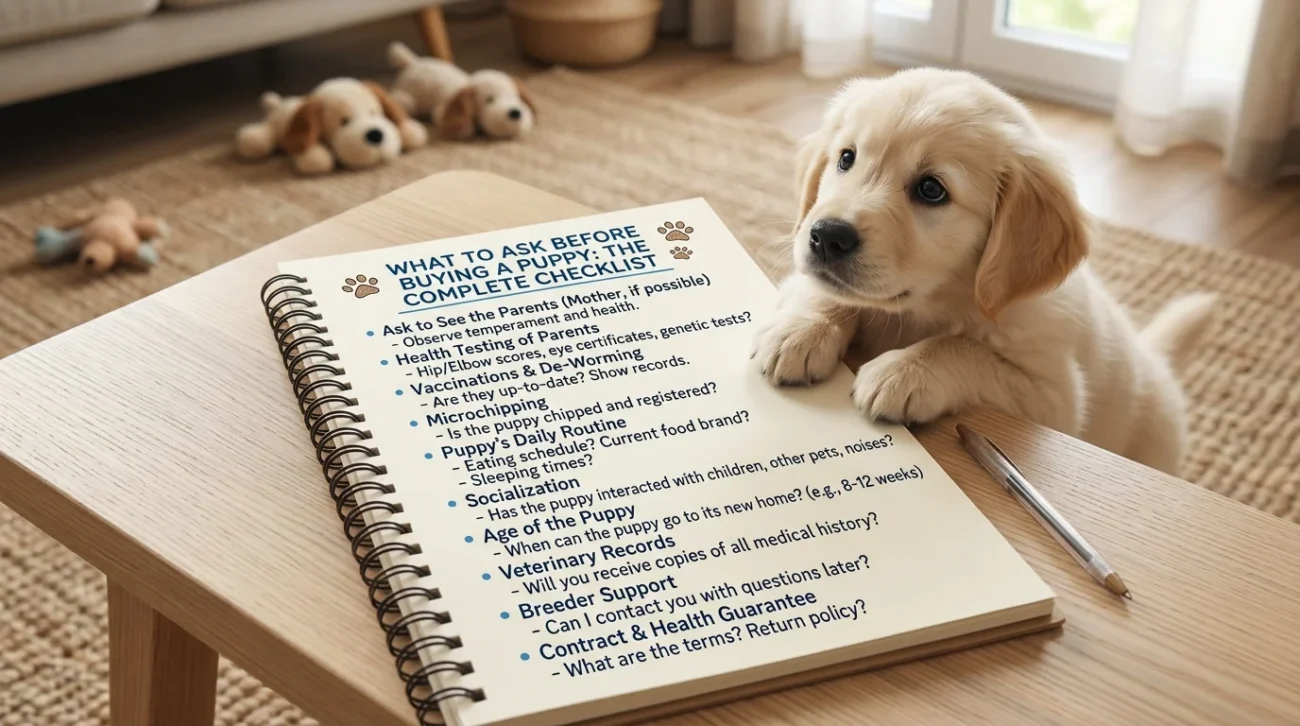
If you want a specific breed, a responsible breeder can provide information about:
- Parents
- Health screening
- Temperament
- Early socialization
- Breed-specific concerns
Avoid breeders who refuse reasonable questions or cannot provide transparent health information.
Red Flags When Choosing a Puppy
Be Careful With Sellers Who:
- Pressure you to pay immediately
- Refuse to show where puppies are raised
- Avoid health questions
- Cannot provide basic documentation
- Offer suspiciously low prices
- Have many unrelated breeds constantly available
- Refuse to discuss the puppy’s parents
A healthy puppy should not be treated like a product that needs to be sold as quickly as possible.
Bringing the Dog Home
Prepare Before Arrival
Have:
- Food
- Bowls
- Bed
- Collar
- Identification
- Leash
- Safe toys
- Cleaning supplies
- Appropriate crate if desired
Puppy-Proof the Home
Remove or secure:
- Electrical cables
- Toxic substances
- Small objects
- Dangerous plants
- Unstable furniture
- Easily swallowed items
The First Weeks Matter
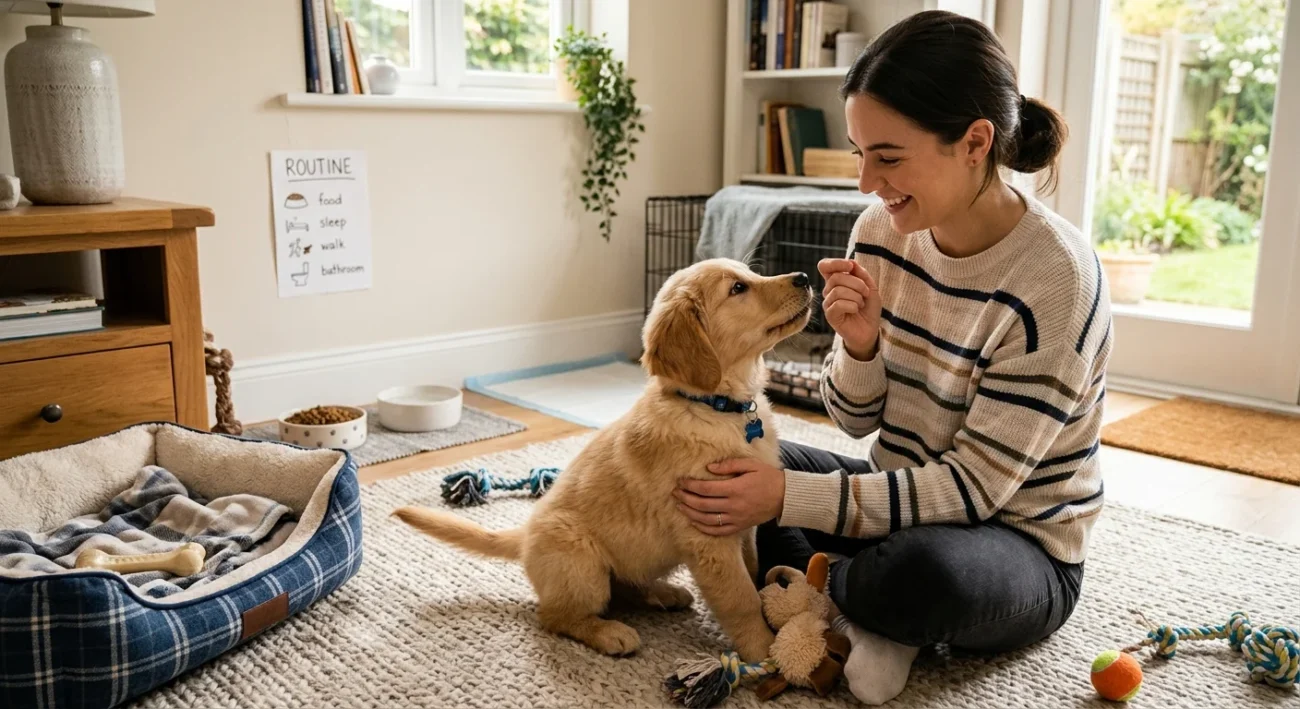
Establish a Routine
Dogs generally benefit from predictable schedules.
A routine can include:
- Meals
- Toilet breaks
- Walks
- Training
- Play
- Rest
Don’t Overwhelm a New Dog
Moving into a new home can be stressful.
Give the dog time to adjust.
Avoid introducing too many people, places, and experiences at once.
What Makes a Dog a Good Match?
Compatibility Beats Popularity
The ideal dog is one whose needs you can realistically meet.
That means asking:
Can I provide this dog with enough exercise, attention, training, space, grooming, healthcare, and companionship for its entire life?
If the answer is yes, you are much closer to finding a suitable match.
read more about puppies for sale
the Best Dog Breeds
There are countless wonderful dog breeds, but there is no single breed that deserves the title of the best dog for everyone.
The best dog breeds for families depend on the family’s lifestyle. The best breed for an apartment owner may be very different from the best choice for an active household with a large yard. A first-time owner may need a different type of dog from an experienced handler who enjoys advanced training.
When comparing popular dog breeds and other potential choices, look beyond appearance and popularity.
Consider:
- Size
- Energy
- Temperament
- Grooming
- Trainability
- Children
- Other pets
- Living space
- Exercise
- Mental stimulation
- Health
- Cost
- Owner experience
A Labrador Retriever may be perfect for an active family but exhausting for someone seeking a low-energy companion. A Border Collie may be extraordinary for someone interested in training and dog sports but frustrating for a household that expects a dog to entertain itself. A small companion breed may fit an apartment beautifully while still requiring substantial attention and grooming.
The most responsible approach is to start with your lifestyle, not the breed.
Create a shortlist of breeds that appear compatible, then research each one individually. Read detailed breed profiles, speak with experienced owners, talk to reputable breeders or rescue professionals, and spend time around adult dogs whenever possible.
Most importantly, remember that a breed label can describe tendencies, not guarantee personality.
Your future dog is an individual.
The goal is therefore not to find the most popular dog, the most beautiful dog, or the breed that someone else calls the “best.”
The goal is to find a dog whose needs, temperament, energy, size, and lifestyle fit naturally into your home—and whose needs you are genuinely prepared to meet for years to come.