Local dog businesses operate in a highly competitive digital environment. A customer looking for a puppy, professional dog grooming, training, pet supplies, veterinary guidance, or another dog-related service may begin with a broad search and then narrow the decision down to a few local businesses.
For example, someone might search for “puppies for sale near me,” “Golden Retriever puppies in my city,” “best dog groomer nearby,” “puppy training classes near me,” or “pet shop open today.”
These searches have something important in common: the customer is often looking for a business that can serve a specific location and meet a specific need.
That means having a website is not enough.
A local dog business needs a digital presence that helps search engines understand what the company offers, where it operates, which audiences it serves, and why its website deserves to appear in relevant search results.
This is where a combination of local link building, technical SEO, useful content, and social media can become valuable.
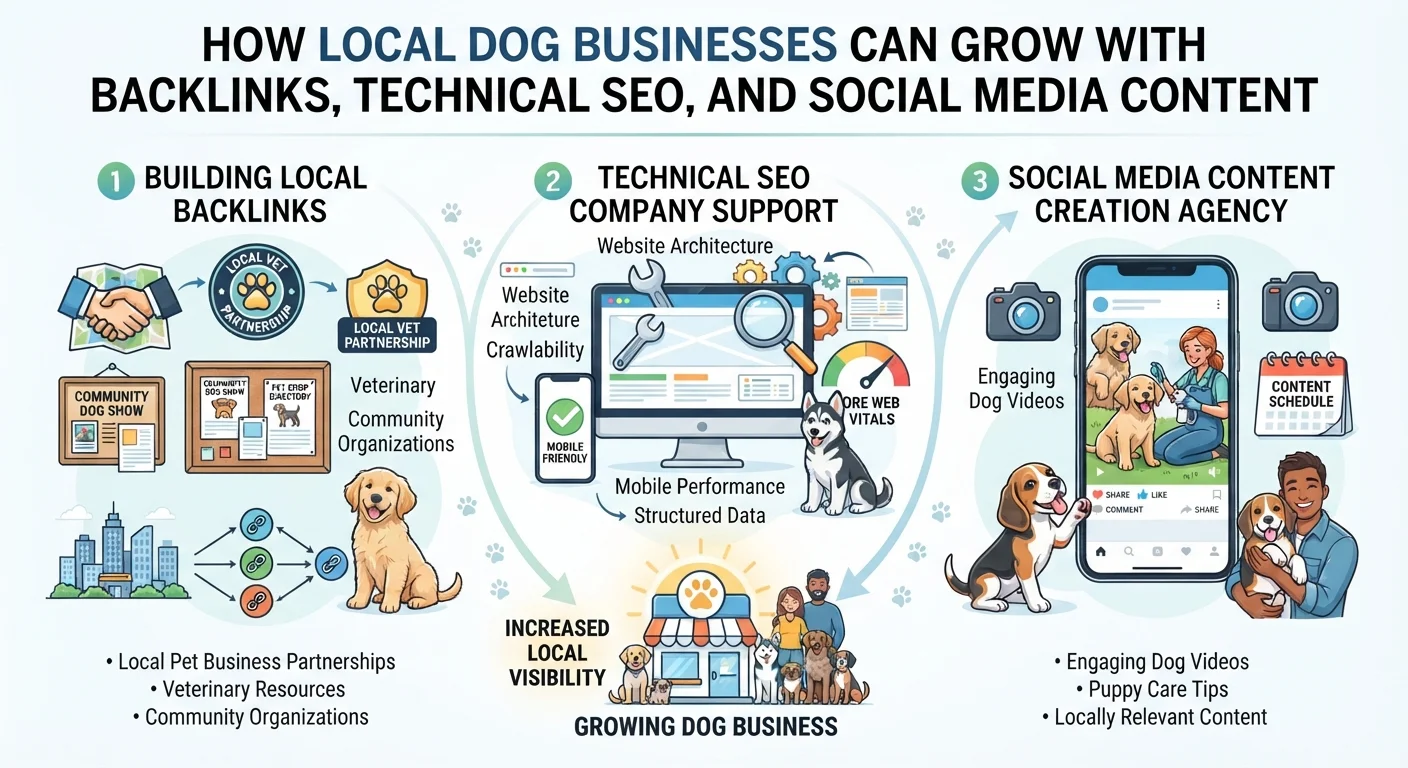
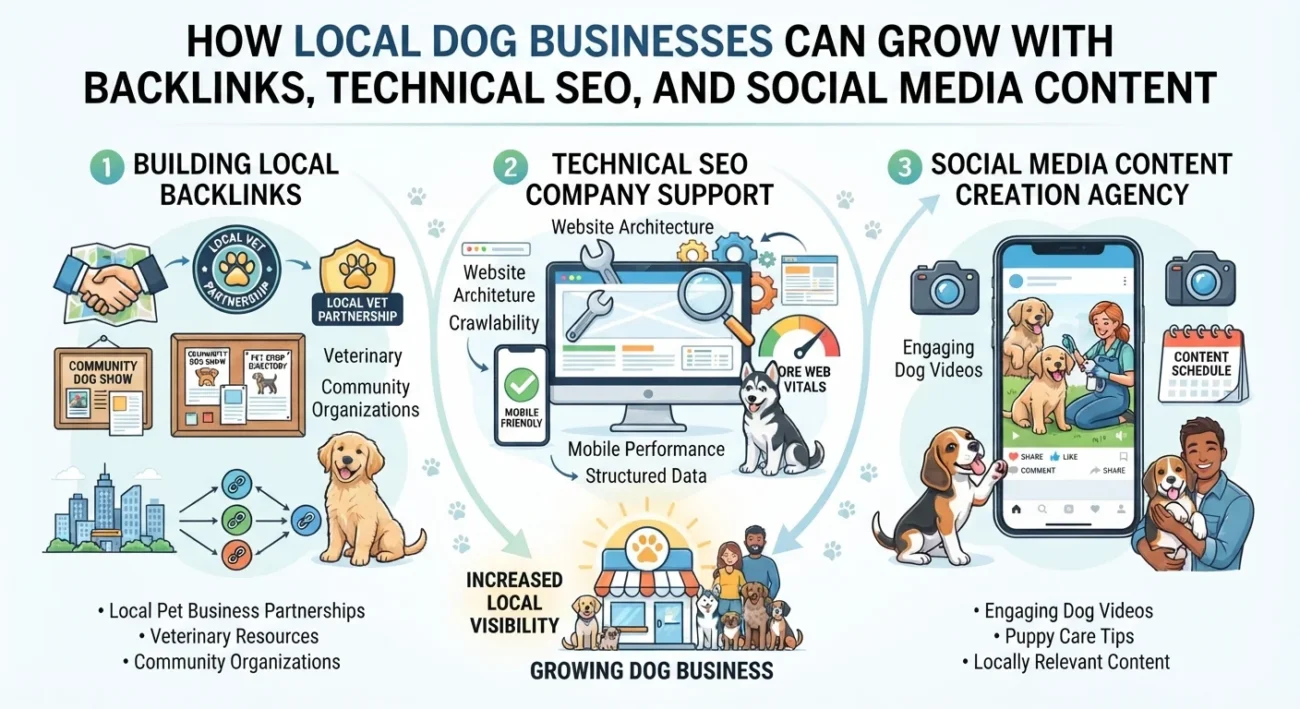
A strategy focused on building backlinks for local service business websites can help establish connections between a dog business and its local community. Technical SEO can make the website easier for search engines to crawl and understand. A social media content creation agency can support visibility by producing useful and engaging content that attracts attention, encourages sharing, and creates opportunities for local relationships.
None of these activities should be treated as a shortcut to guaranteed rankings. Search visibility depends on many factors, including relevance, competition, website quality, search intent, location, content usefulness, and overall site experience.
The goal is to build a trustworthy digital ecosystem around the business.
read more about dogs for sale
Why Local Relevance Matters in the Dog Niche
A dog business may have excellent products or services, but customers usually care about accessibility.
Someone searching for puppy supplies in one city may not want a business hundreds of kilometers away. A person looking for a dog groomer wants to know whether the groomer serves their neighborhood. Someone searching for puppy training needs information about the location, schedule, and type of training available.
Local relevance therefore needs to appear throughout the website.
This can include:
- Business location
- Service areas
- Local landing pages
- Contact information
- Local partnerships
- Community involvement
- Local guides
- Customer-focused content
- Local pet resources
- Relevant backlinks
- Structured data
- Clear internal linking
For dog businesses, local SEO becomes especially powerful when commercial pages and educational resources work together.
A puppy sales page can target customers who are ready to inquire about a particular breed, while a detailed guide about caring for that breed can attract people earlier in the research process.
The two pages serve different purposes and should not compete unnecessarily.
The Three-Part Growth Model
A strong local SEO strategy for a dog business can be organized around three major areas.
The first is authority and local relevance through backlinks.
The second is technical quality through a well-structured, crawlable, mobile-friendly website.
The third is visibility and content distribution through social media.
These areas support one another.
Useful content can attract local organizations and businesses that may want to reference it. Technical SEO ensures that search engines can properly access and interpret that content. Social media can help expose the content to dog owners, local communities, potential partners, and existing customers.
This creates a cycle in which the website is not treated as an isolated marketing asset but as the central hub of a broader digital presence.
Building Backlinks for Local Dog and Pet Businesses
What Local Backlinks Actually Do
A backlink is a link from another website to a page on your website.
For a local dog business, the value of a backlink is not simply determined by how many links exist.
Context matters.
A relevant mention from a local animal welfare organization, pet-related publication, dog event, community organization, local business, or veterinary resource can be much more meaningful than a large number of unrelated links.
The objective should therefore not be “get as many backlinks as possible.”
The better objective is to develop legitimate relationships that naturally create useful references to the business.
This approach is particularly important for local businesses because the surrounding community can provide many opportunities for relevant mentions.
Build Partnerships With Local Pet Businesses
One of the most practical backlink strategies is developing relationships with complementary businesses.
A local puppy store could collaborate with:
- Dog groomers
- Pet supply stores
- Dog trainers
- Veterinary clinics
- Pet photographers
- Dog walkers
- Pet sitters
- Dog-friendly cafés
- Boarding facilities
- Pet transport services
- Animal behavior specialists
- Local pet event organizers
For example, a puppy business could create a local puppy owner’s resource page that recommends useful services in the area.
A participating groomer might also publish a puppy grooming guide that references the puppy business as a local resource.
The key is that the relationship should provide genuine value.
A backlink should be a natural consequence of collaboration rather than an artificial transaction.
Create Local Pet Resource Pages
Resource pages can provide an excellent reason for local organizations to mention a dog website.
Instead of creating a generic page called “Dog Resources,” develop something more specific.
Examples include:
“New Puppy Owner Resources in [City]”
“Local Dog Owner Guide”
“Dog-Friendly Places in [City]”
“Where to Find Puppy Services in [City]”
“Local Puppy Care Resources for New Dog Owners”
“Complete Guide to Dog Services in [Area]”
These pages can include useful categories such as grooming, training, veterinary services, pet supplies, walking areas, boarding, transportation, and dog-friendly activities.
The page should be genuinely useful rather than created solely to attract backlinks.
Partner With Veterinary Resources
Veterinary organizations and animal-care professionals can be valuable local connections for dog businesses.
A puppy website, for example, could create educational resources about preparing a home for a new puppy, vaccination questions to discuss with a veterinarian, safe feeding practices, parasite prevention, and the importance of regular veterinary care.
The content should remain educational and avoid presenting unsupported medical claims.
A local veterinarian may be interested in contributing expert comments, participating in an educational event, or being included in a local pet-owner resource.
That collaboration can create opportunities for legitimate online mentions.
The relationship also benefits customers because they receive better information about responsible pet ownership.
Work With Community Organizations
Local community organizations often publish information about events, activities, and resources.
Dog businesses can participate in community initiatives such as:
- Local adoption events
- Responsible pet ownership campaigns
- Community clean-up events
- Dog walks
- Charity activities
- Pet education sessions
- Animal welfare events
- Neighborhood activities
If the business contributes something meaningful, the organization may naturally mention the company on its website or social channels.
Again, the objective should be participation first and backlinks second.
Get Involved in Local Pet Events
Pet events can create both offline and online visibility.
A dog business might sponsor a responsible pet ownership workshop, participate in a local dog show, provide educational materials, organize a puppy-care session, or collaborate with another pet business during a community event.
Before the event, organizers may publish participating businesses.
After the event, they may publish photographs, summaries, or participant information.
The business can also publish its own event recap.
This produces several opportunities for local content and references.
Develop Relationships With Dog-Friendly Locations
Dog-friendly businesses can become useful partners.
Consider cafés, parks, outdoor venues, pet-friendly accommodation, walking areas, and lifestyle businesses that welcome dog owners.
A dog website could create a local guide such as:
“10 Dog-Friendly Places to Visit With Your Puppy”
“Dog-Friendly Weekend Activities in [City]”
“Where Can You Walk Your Dog in [Area]?”
The guide can include practical information and clearly distinguish between businesses that welcome dogs and locations with restrictions.
If the featured businesses find the guide useful, they may share it with their own audiences.
Create Neighborhood Guides
Neighborhood-level content can be highly useful for local dog owners.
Instead of creating dozens of thin pages that differ only by city name, develop substantial guides for locations where the business genuinely operates.
A neighborhood guide could cover:
- Nearby dog parks
- Groomers
- Training providers
- Pet stores
- Walking routes
- Veterinary resources
- Dog-friendly cafés
- Pet boarding
- Puppy socialization opportunities
- Local regulations and responsible ownership information
The information should be accurate and maintained over time.
A well-developed local guide can become a reference point for residents and other businesses.
Earn Links Through Original Local Data
Original research can create a strong reason for others to reference a website.
A local dog business could conduct a survey of customers about puppy ownership challenges, analyze common questions received by its team, or publish a local report about pet-owner preferences.
For example:
“Common Questions New Puppy Owners Ask in [City]”
or
“What Local Dog Owners Look for When Choosing a Groomer”
The research should explain the methodology clearly.
Do not invent statistics simply to make an article look authoritative.
Even a small survey can be useful when presented honestly and transparently.
Create Content Worth Referencing
The best backlink strategy begins with something worth linking to.
A generic article such as “How to Take Care of a Dog” gives another website little reason to reference it.
A comprehensive resource such as “The New Puppy Owner’s Guide to Preparing a Home in [City]” is more specific and potentially more useful.
Useful content can include:
- Puppy preparation checklists
- Breed comparison guides
- Local dog-service directories
- Puppy socialization resources
- Dog-friendly travel guides
- Grooming schedules
- Puppy feeding questions
- Training basics
- New owner mistakes
- Dog safety guides
- Seasonal pet-care resources
The content should be written for people first.
Avoid Low-Quality Link Building
Not every backlink is valuable.
Dog businesses should be cautious about strategies involving:
- Mass directory submissions
- Irrelevant websites
- Automated link networks
- Spam comments
- Paid links intended to manipulate rankings
- Low-quality guest-post networks
- Pages created exclusively for links
- Excessive exact-match anchor text
A backlink profile should develop naturally.
If a business has 100 links but almost all of them come from unrelated websites, the quantity does not necessarily represent meaningful authority.
Relevance, editorial context, quality, and legitimacy should guide the strategy.
read more about puppies for sale
How a Technical SEO Company Supports Local Dog Websites
Technical SEO Is the Foundation
Backlinks and content cannot perform at their full potential if search engines have difficulty accessing or understanding the website.
This is why working with a technical seo company can be useful for larger or more complex dog websites.
Technical SEO focuses on the infrastructure and accessibility of the site.
For a dog business, technical work may include:
- Website architecture
- Crawlability
- Indexing
- Mobile performance
- Core Web Vitals
- Structured data
- Internal linking
- Image optimization
- Canonicalization
- Location-page structure
- Product-page indexing
- Service-page organization
- Broken-link management
- Redirects
- Duplicate-content control
These elements may not be visible to customers in the same way as a beautiful puppy photograph, but they can strongly affect how efficiently search engines discover and interpret website content.
Improve Website Architecture
A dog website should have a logical structure.
For example:
Home
Puppies
Dog Breeds
Puppy Care
Dog Products
Services
Locations
About
Contact
Each major category should contain relevant subcategories.
A puppy section might include breed pages.
A service section might include grooming, training, boarding, or transportation.
A location section could explain where the business operates.
The architecture should reflect how customers actually search for information.
Make Important Pages Easy to Reach
A valuable page should not be buried deep inside the website.
If a specific puppy breed page is commercially important, users and search engines should be able to reach it through clear navigation and internal links.
For example:
Puppies → Available Puppies → Golden Retriever
or
Dog Breeds → Golden Retriever → Golden Retriever Puppies
The exact structure depends on the business model, but the principle is simple: important pages should have clear pathways.
Improve Crawlability
Search engines need to discover website pages efficiently.
Technical SEO teams can review factors such as:
- XML sitemaps
- Robots directives
- Internal links
- Redirects
- Broken links
- Orphan pages
- JavaScript-dependent navigation
- Duplicate URLs
- Parameterized pages
This is particularly important for large pet websites with hundreds or thousands of product, breed, puppy, or service pages.
A site can accidentally create thousands of URLs through filters, sorting options, search functions, or duplicate category paths.
Technical auditing helps identify these issues.
Optimize Mobile Performance
Many local searches happen on mobile devices.
Someone searching for a nearby pet shop or puppy service may be using a phone while traveling or while already in the local area.
The mobile experience therefore needs to be fast and easy to use.
Important considerations include:
- Responsive design
- Readable text
- Easy navigation
- Accessible buttons
- Fast page loading
- Optimized images
- Limited intrusive elements
- Simple contact options
A customer should be able to find the address, phone number, services, opening information, and relevant content without struggling with the interface.
Pay Attention to Core Web Vitals
Core Web Vitals are performance-related measurements associated with aspects of user experience.
For dog websites, large images can be a particular issue.
A website selling puppies or showcasing breeds may rely heavily on high-quality photographs.
Beautiful images can improve engagement, but oversized image files can negatively affect loading performance.
Technical optimization may involve:
- Compressing images
- Choosing appropriate dimensions
- Using modern image formats
- Implementing responsive images
- Lazy-loading suitable images
- Reducing unnecessary scripts
- Improving server response
- Optimizing page resources
The objective is to balance visual quality with performance.
Use Structured Data Appropriately
Structured data can help search engines understand certain types of information on a page.
A local dog business may have opportunities to implement relevant structured data for business information, products, services, events, articles, or other appropriate content types.
Implementation should match the visible information on the page and follow current search-engine guidelines.
Structured data should not be treated as a guarantee of enhanced search features.
Its primary purpose is to provide clearer machine-readable context.
Build Strong Location Pages
Create Genuine Local Landing Pages
A dog business serving multiple locations may need dedicated location pages.
However, simply replacing a city name throughout the same paragraph is not a strong local strategy.
Each location page should provide useful information specific to that area.
For example, a local puppy business might explain:
- Which neighborhoods it serves
- How customers can visit
- Available services
- Local delivery options if applicable
- Nearby landmarks
- Frequently asked questions
- Relevant local pet resources
- Contact information
- Specific customer considerations
The page should exist because there is a real business relationship with that location.
Avoid Doorway-Style Pages
Creating dozens of nearly identical pages for every possible city can create a poor user experience.
For example, producing pages titled:
“Puppies in City A”
“Puppies in City B”
“Puppies in City C”
with almost identical content provides little value if the business does not genuinely operate in those places.
Location pages should represent real service areas and contain meaningful differences where appropriate.
Connect Location Pages With Internal Links
Internal linking helps users move between related content.
A location page can link to relevant services, breed guides, puppy-care resources, and contact pages.
A breed page can link to relevant locations.
A local guide can link to appropriate services.
This creates a connected website rather than a collection of isolated pages.
Optimize Breed, Puppy, Product, and Service Pages
Give Every Important Page a Clear Purpose
Dog websites often have many similar pages.
There may be individual pages for Labrador puppies, Golden Retriever puppies, Poodle puppies, German Shepherd puppies, and many other breeds.
Each page needs a clear search intent.
A commercial breed page should provide information useful to someone considering that breed and potentially interested in available puppies.
It might cover:
- Breed characteristics
- Typical temperament
- Exercise considerations
- Grooming needs
- Training considerations
- Suitable household types
- Puppy-care considerations
- Questions prospective owners should ask
- Current availability where applicable
- How to inquire
The information should be accurate and responsible.
Optimize Product Pages
Pet shops may have hundreds or thousands of products.
Each important product page should have unique, useful information.
Avoid relying entirely on manufacturer descriptions.
Include:
- Product purpose
- Suitable dog types
- Size information
- Material details
- Usage instructions
- Care information
- Important limitations
- Original images where possible
- Clear product availability information
This makes the page more useful to customers and differentiates it from competing product listings.
Optimize Service Pages
A groomer, trainer, boarding facility, or pet care company should give each major service a dedicated page when the service is substantial enough to deserve one.
For example:
Puppy Training
Adult Dog Training
Dog Grooming
Puppy Grooming
Dog Boarding
Pet Transportation
Each page should explain what the service involves, who it is suitable for, how the process works, and how customers can get started.
read more about best dog breeds
Use Internal Linking to Build Topical Relationships
Connect Commercial and Informational Content
Internal links can help create relationships between educational resources and commercial pages.
Suppose a website has a commercial page about Golden Retriever puppies.
It may also have educational articles about:
“How to Prepare Your Home for a Golden Retriever Puppy”
“Golden Retriever Puppy Exercise Needs”
“Golden Retriever Grooming Basics”
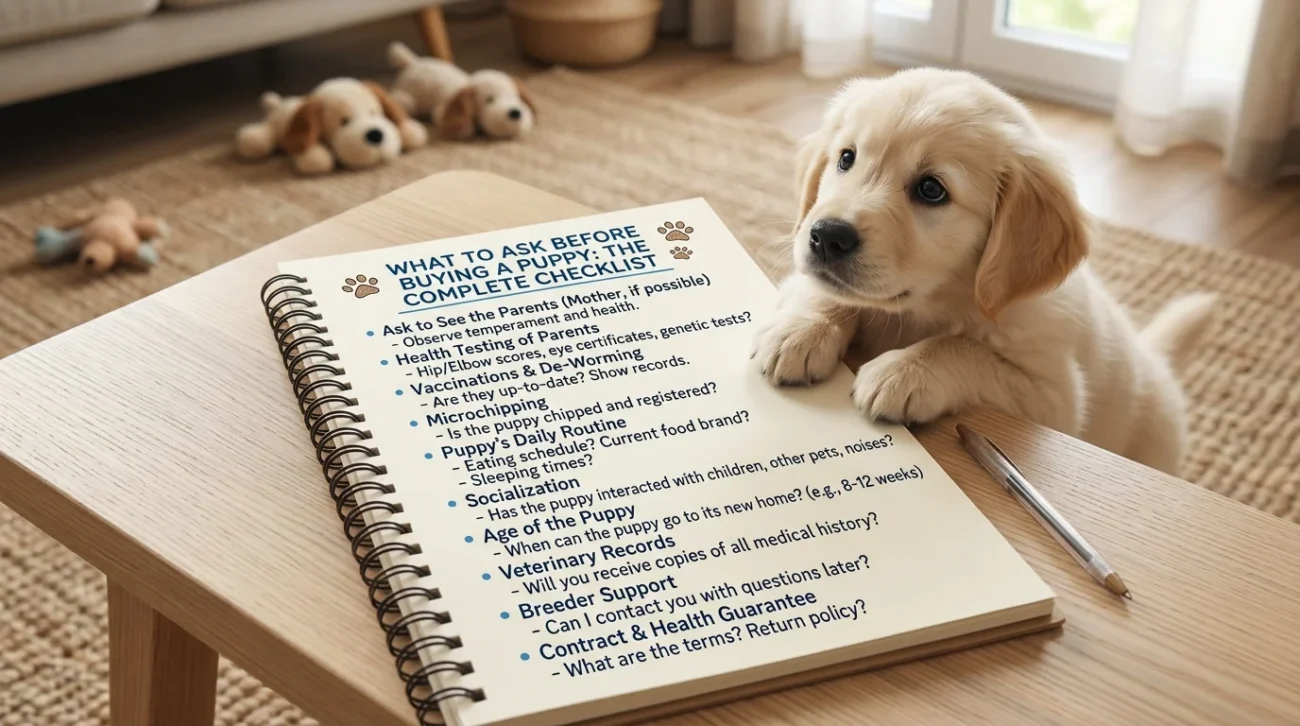
“What to Ask Before Bringing Home a Puppy”
These pages can connect naturally when the context makes sense.
The educational page can help readers understand the breed while the commercial page serves visitors who are evaluating available puppies.
Avoid Keyword Cannibalization
Keyword cannibalization can become a concern when several pages target essentially the same query and intent.
A dog website should define the purpose of each page before publishing large amounts of content.
For example:
Commercial page: Golden Retriever Puppies
Purpose: Help users evaluate and inquire about available Golden Retriever puppies.
Informational page: Golden Retriever Puppy Care Guide
Purpose: Explain care requirements for new owners.
Informational page: Golden Retriever Grooming Guide
Purpose: Explain grooming needs and maintenance.
These pages can share related terminology without being duplicates.
The difference is search intent.
The commercial page answers, “What puppies are available and how can I inquire?”
The care guide answers, “How do I care for this breed?”
The grooming guide answers, “How do I maintain this dog’s coat?”
This separation allows the site to build topical depth without forcing every article to compete for the same keyword.
The Role of Social Media Content in Local SEO
Why Social Content Matters for Dog Businesses
Dogs are naturally visual subjects, making social media particularly relevant to the pet industry.
Puppies, breed education, grooming transformations, training demonstrations, care tips, customer stories, and behind-the-scenes content can all generate engagement.
A social media content creation agency can help a dog business develop a consistent content system instead of publishing randomly.
The objective should not be to treat social media as a direct ranking shortcut.
Instead, social content can support brand awareness, audience engagement, website discovery, customer relationships, and partnership opportunities.
These indirect benefits can contribute to a stronger overall digital presence.
Create Breed-Focused Videos
Breed videos can answer common customer questions while showcasing expertise.
For example:
“What Is the Temperament of a Golden Retriever?”
“How Much Exercise Does a Border Collie Need?”
“Is a Poodle Suitable for Apartment Living?”
“What Should You Know Before Getting a German Shepherd Puppy?”
The content should avoid exaggerated claims.
The purpose is to educate potential owners and help them make responsible decisions.
Publish Puppy-Care Tips
Short educational posts can address everyday puppy questions.
Examples include:
- Preparing a puppy’s sleeping area
- Basic house-training principles
- Introducing a puppy to a new home
- Safe socialization
- Grooming routines
- Puppy exercise considerations
- Appropriate enrichment
- Preparing for the first veterinary visit
- Choosing basic supplies
- Creating a consistent routine
These topics can attract people who are researching puppy ownership before becoming customers.
Create Locally Relevant Social Content
Local content can make a dog business more recognizable within its service area.
Examples include:
“Weekend Dog Activities in [City]”
“Dog-Friendly Places in [Neighborhood]”
“Preparing Your Dog for Summer in [Location]”
“Local Puppy Owner Questions We Hear Most Often”
“Meet Our Local Dog Community”
The more specific the content, the easier it becomes to connect the brand with its community.
Use Customer Stories Responsibly
Customer-focused stories can humanize a dog business.
With appropriate permission, a business might share a customer’s experience with:
- Bringing home a puppy
- Starting training
- Completing a grooming program
- Choosing pet supplies
- Preparing for a new dog
- Learning about responsible ownership
Customer stories should be authentic.
Do not fabricate testimonials or create misleading before-and-after claims.
Turn Social Content Into Website Content
A social post can become the starting point for a more detailed website resource.
For example, a short video might explain three puppy-training mistakes.
The website can contain a comprehensive article explaining those mistakes in greater detail.
The social post can direct interested users toward the longer resource through the platform’s available publishing features.
This creates a relationship between social media and the website.
The website becomes the permanent knowledge base, while social media helps distribute individual ideas.
Combining Backlinks, Technical SEO, and Social Content
Start With Technical Foundations
Before aggressively pursuing backlinks or publishing hundreds of articles, make sure the website works properly.
Review:
- Site architecture
- Mobile usability
- Indexing
- Crawlability
- Internal links
- Page speed
- Image optimization
- Structured data
- Location pages
- Duplicate content
- Important commercial pages
Fixing foundational problems can make later marketing activities more effective.
Build a Local Authority Strategy
Once the website foundation is sound, identify local relationship opportunities.
Create a list of:
- Veterinary resources
- Pet businesses
- Dog trainers
- Groomers
- Pet stores
- Animal organizations
- Community groups
- Local event organizers
- Dog-friendly businesses
- Local publications
- Neighborhood resources
Then develop genuine collaboration opportunities.
Do not begin with a request for a backlink.
Begin by asking what useful resource, event, guide, partnership, or educational project you can contribute.
Develop a Content Calendar
Social media and website content should support one another.
A monthly content calendar might include:
Four breed education posts
Four puppy-care posts
Two local guides
Two customer stories
Two service explanations
Two short videos
One comprehensive educational article
The exact frequency depends on the business.
Quality and consistency are more important than publishing an arbitrary number of posts.
Measure What Actually Matters
Monitor Organic Visibility
Track relevant searches and organic performance over time.
Do not judge the entire strategy based on one keyword.
A local dog website may receive traffic from hundreds of variations such as:
“puppies near me”
“puppies for sale in [city]”
“Golden Retriever puppies [city]”
“dog groomer [neighborhood]”
“puppy training [city]”
“pet store near me”
The broader picture matters.
Monitor Local Leads
For a service business, traffic alone is not enough.
Track meaningful actions such as:
- Phone calls
- Contact forms
- Appointment requests
- Puppy inquiries
- Product purchases
- Booking requests
- Direction requests
- Qualified leads
A page that receives less traffic but generates more qualified inquiries may be more valuable than a page with thousands of low-intent visitors.
Review Backlink Quality
Do not focus only on the number of backlinks.
Review:
- Relevance
- Local connection
- Website quality
- Editorial context
- Referral traffic
- Relationship with the referring organization
A single highly relevant local mention can be more meaningful than numerous unrelated links.
Evaluate Content Engagement
For social content, monitor meaningful signals such as saves, shares, comments, profile visits, website visits, and direct inquiries.
A post that generates 50 shares may provide more practical value than one that receives hundreds of passive views.
The most useful metrics depend on the business objective.
read more about best puppies for families
Build a Connected Local Dog Business Presence
A successful digital strategy for a local dog business should not depend on one SEO tactic.
Building backlinks for local service business websites can help create relationships with relevant local organizations, pet businesses, community resources, and publications. The strongest opportunities usually come from genuine partnerships, useful local resources, events, original information, and content that people have a reason to reference.
Technical SEO provides the foundation. A technical SEO company can help identify and resolve issues involving website architecture, crawlability, indexing, mobile performance, Core Web Vitals, structured data, internal linking, image optimization, location pages, and the organization of breed, puppy, product, and service content.
Social media adds another layer. A social media content creation agency can help turn dog-related expertise into useful videos, puppy-care tips, breed education, customer stories, local guides, and engaging social content. While social activity should not be presented as a guaranteed direct ranking factor, it can increase exposure, strengthen brand recognition, support content distribution, and create opportunities for relationships and referrals.
The strongest approach is to connect all three areas.
A useful puppy-care guide can attract readers.
A technically sound website can help search engines discover and understand that guide.
A social post can introduce the guide to local dog owners.
A local organization may discover the resource and reference it.
A customer may find the article, explore a breed page, and eventually contact the business.
That is the kind of connected ecosystem a professional local dog website should aim to build.
The goal is not to manufacture backlinks, publish endless pages, or chase every available social trend. The goal is to create a website and brand that genuinely deserve attention from dog owners and the local community.
When local relevance, technical quality, useful content, authentic relationships, and consistent communication work together, a puppy store, breeder, pet shop, groomer, trainer, or other dog-related business can build a much stronger foundation for long-term online visibility.