Choosing a puppy is an exciting decision, but it is also a responsibility that deserves careful thought. A puppy may look adorable, playful, and energetic at first glance, yet appearance alone cannot tell you everything about its health, development, or future needs. Knowing how to choose a healthy puppy can help you avoid preventable problems and give your new companion a stronger start in life.
A responsible puppy selection process should involve more than choosing the smallest, cutest, or most active puppy in a litter. You should observe the puppy carefully, ask the breeder or current caregiver detailed questions, review vaccination and health records, learn about the puppy’s parents and medical history, and evaluate how the puppy interacts with people and other dogs.
You should also remember that a basic visual inspection cannot diagnose every medical problem. Some congenital conditions, infections, parasites, developmental abnormalities, and inherited diseases may not be obvious during a short visit. For this reason, a professional puppy health check with a veterinarian is an important part of responsible puppy ownership.
This guide provides a practical checklist for evaluating healthy puppy signs, understanding health records, assessing behavior and socialization, identifying warning signs, and deciding when veterinary evaluation is necessary.
read more about best puppies for families
Why Choosing a Healthy Puppy Matters
Health Problems Can Be Difficult to Detect
Young puppies can appear healthy even when an underlying problem exists. Some conditions produce obvious symptoms, while others may remain hidden until the puppy becomes older or experiences stress.
A puppy that seems energetic for 20 minutes during a visit may still have a medical problem that is not visible during that short observation.
This does not mean that every puppy with a minor abnormality is unhealthy or unsuitable. It means that prospective owners should avoid making decisions based exclusively on appearance.
Early Health Can Influence Future Development
Puppyhood is a critical period of physical and behavioral development.
Nutrition, vaccination, parasite prevention, socialization, genetics, housing conditions, and veterinary care all contribute to the puppy’s development.
Starting with a puppy that has received appropriate care gives you a better foundation for supporting a healthy dog throughout its life.
Responsible Selection Protects the Puppy Too
Choosing carefully is not only about protecting yourself from future veterinary expenses.
It also helps discourage irresponsible breeding and poor animal-care practices.
When prospective owners ask for medical records, meet the mother, evaluate living conditions, and prioritize responsible breeding practices, they encourage better standards of care.
How to Choose a Healthy Puppy at First Sight
Start With the Whole Litter
If you are visiting a litter, do not immediately focus on one puppy.
Spend a few minutes observing the entire group.
Look at how the puppies move, interact, rest, eat, and respond to their environment.
This gives you a better understanding of the general health and living conditions of the litter.
Observe Before Touching
Stand back and watch the puppies naturally.
A healthy puppy will generally show interest in its surroundings when awake. It may investigate objects, interact with littermates, respond to sounds, and explore appropriately for its age.
Puppies naturally sleep for substantial periods, so a sleeping puppy is not automatically unhealthy.
The important thing is how the puppy behaves when awake and comfortable.
Avoid Judging by Size Alone
The biggest puppy is not necessarily the healthiest.
Likewise, the smallest puppy is not automatically weaker.
Breed, age, genetics, litter size, nutrition, and individual development can all affect size.
Instead of selecting according to body size alone, evaluate the puppy’s overall condition and ask for information about its growth history.
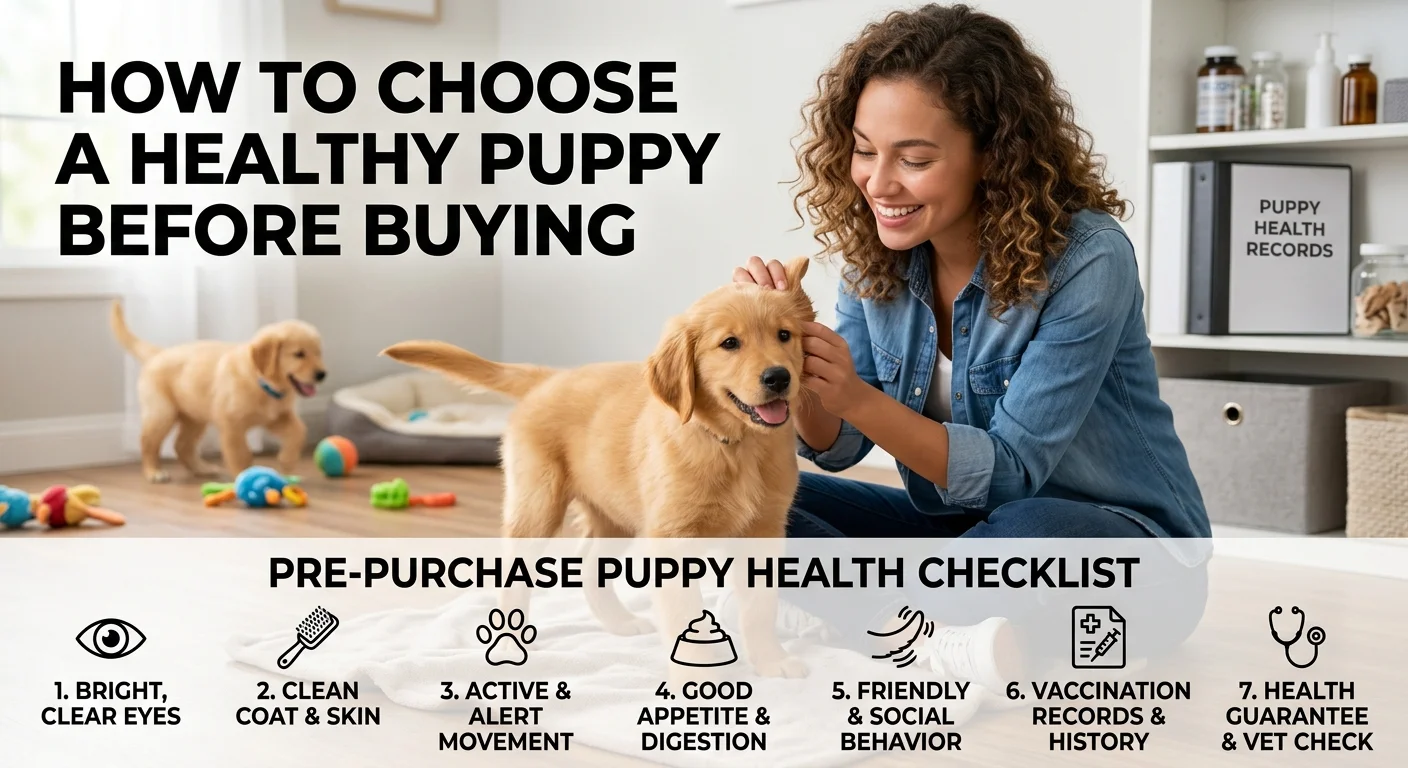
Healthy Puppy Signs: Eyes
What Healthy Eyes Should Look Like
When learning how to choose a puppy, examine the eyes carefully.
Healthy-looking puppy eyes are generally:
- Clear
- Bright
- Appropriately open for the puppy’s age
- Free from obvious discharge
- Free from significant redness or swelling
- Symmetrical in appearance
A small amount of normal tear moisture can be expected, but persistent discharge deserves attention.
Warning Signs Around the Eyes
- Be cautious if you notice:
- Thick discharge
- Yellow or green discharge
- Significant redness
- Swelling
- Cloudiness
- Constant squinting
- Excessive tearing
- Crusting around the eyelids
- One eye appearing noticeably different from the other
These signs do not automatically mean the puppy has a serious disease, but they justify asking questions and potentially obtaining veterinary evaluation.
Consider the Breed
Some breeds naturally have different eye shapes and may have breed-specific eye concerns.
For breeds predisposed to inherited eye conditions, ask whether appropriate health screening has been performed on the parents.
A visual inspection cannot replace specialized screening.
Checking the Puppy’s Nose
Normal Appearance
People sometimes assume that a healthy puppy must have a cold, wet nose.
That is not a reliable health test.
A puppy’s nose can vary in moisture and temperature throughout the day.
Instead of judging health from nose moisture alone, consider the puppy’s overall condition.
Concerning Nasal Signs
Persistent nasal discharge, especially thick or colored discharge, repeated sneezing, difficulty breathing, or obvious respiratory distress should not be ignored.
Ask the breeder or caregiver whether the puppy has recently experienced respiratory symptoms or received treatment.
Examining the Puppy’s Coat
What a Healthy Coat Can Tell You
The coat is another useful part of your initial assessment.
Depending on breed, a healthy puppy should generally have a coat that appears reasonably clean and appropriate for its age and breed.
Look for:
- Even coat coverage
- No obvious bald patches
- No excessive scaling
- No widespread crusting
- No significant redness underneath the fur
- No obvious signs of parasites
Breed differences matter, so do not expect every puppy to have the same coat texture.
Excessive Scratching
Watch the puppy for repeated or intense scratching.
Occasional scratching is normal, but frequent scratching, biting at the skin, rubbing against objects, or repeatedly shaking the head can indicate irritation, parasites, allergies, ear problems, or other issues.
Ask whether the puppy has received appropriate parasite prevention.
read more about best dogs for apartments
Checking the Skin
Healthy-Looking Skin
Part the fur gently where appropriate and look for visible skin.
The skin should not show widespread irritation, severe redness, open wounds, or significant crusting.
Some minor skin variations may be normal, depending on the breed and coat.
Signs That Need Further Investigation
Pay attention to:
- Bald areas
- Severe redness
- Thick crusts
- Sores
- Swelling
- Persistent itching
- Fleas or flea dirt
- Heavy dandruff
- Unusual odor
Skin conditions can be contagious in some circumstances, so visible abnormalities should be professionally evaluated before bringing the puppy into a home with other animals.
Checking Body Condition
Look for Appropriate Development
A healthy puppy should generally have an appropriate body condition for its age and breed.
You do not want a puppy that appears severely thin, but excessive abdominal enlargement can also be concerning.
The puppy should have appropriate muscle development and should not appear extremely weak or lethargic.
Don’t Confuse a Puppy Belly With Obesity
Young puppies can naturally have rounded bellies, particularly after eating.
However, a dramatically distended abdomen may warrant investigation, especially if accompanied by diarrhea, vomiting, poor appetite, weakness, or poor growth.
Intestinal parasites are among the issues that can affect puppies, which is why parasite prevention and deworming history matter.
Evaluating Movement
Watch the Puppy Walk
Movement is one of the most useful parts of a basic puppy assessment.
Watch the puppy walk naturally across the floor.
Look for:
- Coordinated movement
- Appropriate energy
- Balanced walking
- Normal use of all four limbs
- No obvious persistent limping
- No severe stiffness
- No repeated falling
Puppies can be clumsy because they are still developing coordination, so a momentary stumble does not necessarily indicate a medical problem.
Watch the Puppy Play
Play provides another opportunity to evaluate movement.
A healthy puppy should generally be able to stand, walk, explore, and play according to its developmental stage.
Repeated reluctance to move, crying when walking, inability to bear weight, or obvious pain should be taken seriously.
Consider Breed-Specific Concerns
Some breeds have increased risks of orthopedic conditions.
If you are choosing a breed known for particular joint or skeletal problems, ask the breeder about parental health testing and the screening practices used for the litter’s parents.
Evaluating Behavior
Look for Age-Appropriate Curiosity
Behavior is an important part of how to choose a healthy puppy.
When awake, a puppy should generally show some level of curiosity about its environment.
It may investigate new sounds, objects, people, and littermates.
Curiosity is not the same as constant hyperactivity.
Don’t Expect Every Puppy to Behave the Same
Puppies have individual personalities.
One may be outgoing, another cautious, and another more relaxed.
A short visit cannot completely predict adult temperament.
The goal is not to find a puppy that behaves perfectly.
Instead, look for behavior that seems appropriate for the puppy’s age and circumstances and ask about its behavior over time.
Excessive Fear
A puppy that consistently hides, trembles, freezes, or appears extremely fearful around normal human interaction may need additional evaluation.
Fear can result from genetics, limited socialization, environmental stress, previous negative experiences, or simply being overwhelmed by an unfamiliar situation.
One brief reaction is not enough to judge temperament.
Observe whether the puppy gradually becomes more comfortable in a calm environment.
Aggressive Behavior
Playful puppy behavior can include biting, chasing, wrestling, and barking.
This should not automatically be interpreted as aggression.
However, repeated intense threatening behavior, extreme guarding, or persistent inability to disengage from aggressive interactions deserves careful discussion with an experienced professional.
Evaluating Appetite
Why Eating Behavior Matters
A puppy’s appetite can provide useful information about its general condition.
Ask what the puppy normally eats, how frequently it eats, and whether it has experienced changes in appetite.
A puppy that consistently eats appropriately for its age is generally more reassuring than one with unexplained appetite loss.
Don’t Judge a Single Meal
Stress can temporarily affect appetite.
A puppy may eat less than usual in an unfamiliar environment.
Therefore, ask about its normal eating habits rather than relying entirely on what happens during your visit.
Warning Signs
Persistent refusal to eat, repeated vomiting, diarrhea, weakness, dehydration, or marked lethargy should be treated as reasons for veterinary attention.
Very young puppies can become unwell relatively quickly, so significant gastrointestinal symptoms should not be dismissed.
Checking Energy Levels
Normal Puppy Energy
Puppies often alternate between intense activity and deep sleep.
A puppy may play enthusiastically for several minutes and then suddenly fall asleep.
This pattern is normal.
Concerning Lethargy
There is a difference between normal puppy sleepiness and unusual lethargy.
A puppy that is difficult to wake, consistently uninterested in food or interaction, unable to stand normally, or noticeably weaker than its littermates requires further investigation.
Ask whether the puppy has recently been ill or received treatment.
Examining the Ears
Healthy Ear Appearance
Check the outer part of the ears for obvious redness, swelling, discharge, or crusting.
Depending on breed, ear shape and hair growth can vary considerably.
Signs of Ear Problems
Watch for:
- Frequent head shaking
- Persistent ear scratching
- Strong odor
- Visible discharge
- Significant redness
- Pain when the ear is touched
Ear problems can be uncomfortable and may require veterinary treatment.
Checking Teeth and Mouth
Why the Mouth Matters
Depending on the puppy’s age, you may be able to inspect its mouth gently.
Look for obvious abnormalities, excessive odor, damaged tissue, or unusual swelling.
Do not force a frightened puppy’s mouth open.
Puppy Teeth Develop Over Time
Puppies go through normal stages of tooth development, so their mouths will change as they mature.
Ask the breeder or veterinarian about the expected dental development for the specific breed.
read more about small dogs for sale
Checking the Puppy’s Rear Area
What to Look For
A quick visual check can sometimes reveal signs of diarrhea, irritation, or parasite problems.
The area should not have persistent heavy fecal contamination, significant swelling, or obvious bloody discharge.
Ask About Digestive Health
Ask whether the puppy has experienced:
- Diarrhea
- Vomiting
- Blood in stool
- Constipation
- Poor appetite
- Recurring digestive problems
A history of temporary digestive upset is not necessarily a reason to reject a puppy, but it is important information for your veterinarian.
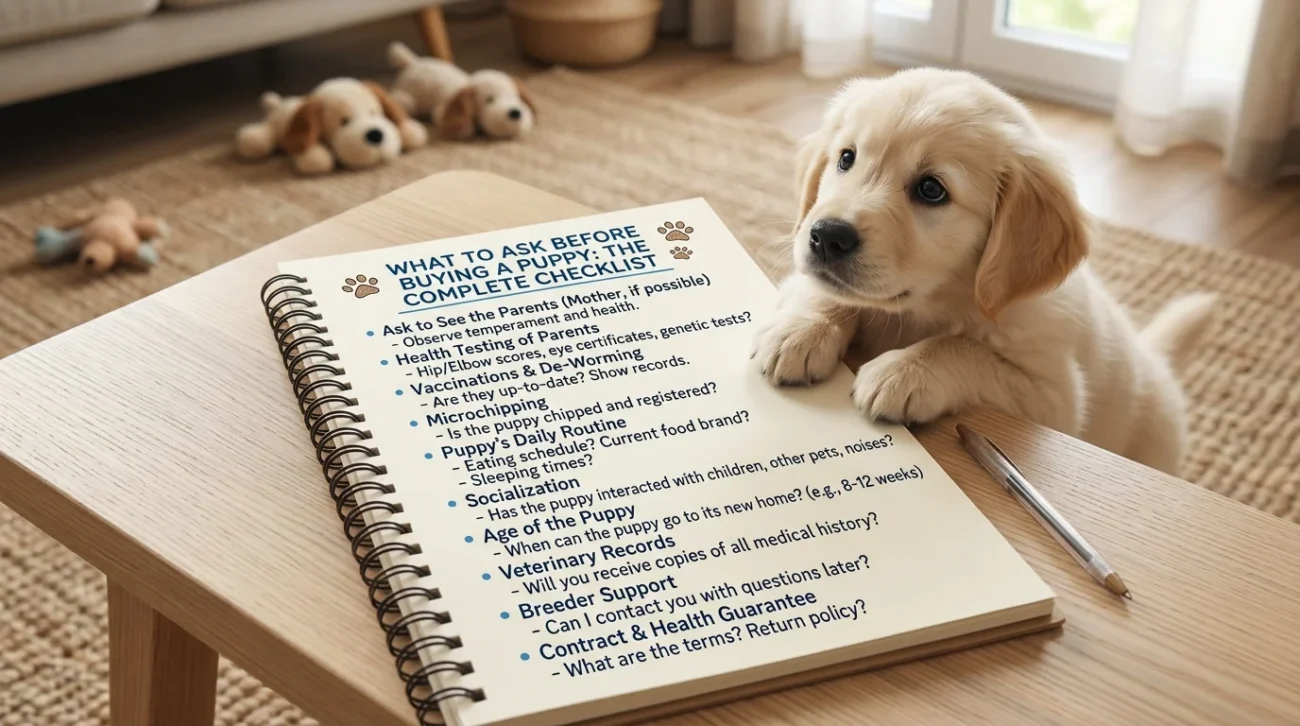
Vaccination Records
Why Vaccination Documentation Matters
Vaccination history is one of the most important documents to review before taking a puppy home.
Ask for written records showing which vaccines the puppy has received, the dates they were administered, and which vaccinations are scheduled next.
Don’t Assume One Vaccine Means Complete Protection
Puppy vaccination schedules commonly involve multiple doses because young dogs require a series of vaccinations during early development.
The exact schedule depends on factors such as age, location, risk, vaccine type, and veterinary recommendations.
Your veterinarian should establish the appropriate vaccination plan after you bring the puppy home.
Verify the Records
Do not rely solely on verbal claims that a puppy is vaccinated.
Ask to see the actual documentation.
If there is uncertainty about the records, discuss the situation with your veterinarian.
Health History
Ask About the Puppy
A responsible seller or breeder should be able to provide useful information about the puppy’s health history.
Ask:
- Has the puppy ever been sick?
- Has it received veterinary treatment?
- Has it experienced diarrhea or vomiting?
- Has it had respiratory symptoms?
- Has it received parasite treatment?
- Has it had any injuries?
- Has a veterinarian examined it?
- Are there any known congenital abnormalities?
Ask About the Parents
The parents’ health history can provide important information about inherited risks.
Ask whether the parents have been screened for health conditions relevant to their breed.
Responsible breeders should understand the health concerns associated with the breed they produce.
Parasite Prevention
Internal Parasites
Puppies can be exposed to intestinal parasites.
Ask when the puppy was dewormed, which product was used, and whether follow-up treatment is scheduled.
A veterinarian can recommend appropriate parasite prevention based on the puppy’s age and risk.
External Parasites
Check for visible fleas, ticks, excessive scratching, or signs of skin irritation.
Do not assume that a puppy without visible fleas has never been exposed to parasites.
Ask about the preventive program used by the breeder or caregiver.
Socialization
Why Socialization Matters
Health is not limited to physical condition.
Early socialization plays an important role in helping puppies develop appropriate responses to people, environments, sounds, handling, and other animals.
A puppy that has been raised in a stimulating and appropriately managed environment may have a stronger foundation for future adaptation.
Ask What the Puppy Has Experienced
Find out whether the puppy has been exposed safely and gradually to:
- Different people
- Household sounds
- Gentle handling
- Different surfaces
- Normal household activity
- Appropriate interactions with healthy dogs
- Car travel
- Basic grooming experiences
Socialization should be age-appropriate and conducted in ways that minimize health risks before the puppy completes its vaccination program.
Socialization Is Not the Same as Forced Exposure
A puppy should not be overwhelmed with frightening experiences simply to make it “tough.”
Good socialization involves gradual, positive, controlled exposure.
Meeting the Puppy’s Mother
Why the Mother Matters
When possible, seeing the puppy with its mother can provide useful information about the environment and the breeding situation.
Observe the mother’s general condition, behavior, and interaction with the puppies.
What to Observe
Look for a mother who appears reasonably healthy and is being cared for appropriately.
Ask about her veterinary history and any known inherited conditions.
A breeder who refuses reasonable questions about the mother should prompt additional caution.
read more about large dogs for sale
Evaluating the Living Environment
Cleanliness
The puppy’s environment should be reasonably clean, safe, and appropriate for young dogs.
Look for clean bedding, access to water, adequate space, and protection from obvious hazards.
Interaction and Stimulation
Puppies need appropriate interaction and stimulation.
An environment where puppies receive little human contact or are kept in poor conditions may increase concerns about both welfare and social development.
Warning Signs of Poor Care
Be cautious if you notice:
- Strong persistent odors
- Excessive feces
- Dirty water
- Very overcrowded conditions
- Sick-looking animals
- Multiple animals with obvious untreated symptoms
- Unsafe surroundings
- Reluctance to let you see where puppies are raised
The environment can tell you a great deal about the quality of care.
The Importance of a Veterinary Puppy Health Check
A Home Inspection Is Not Enough
Even if you know how to choose a healthy puppy, your own assessment has limitations.
A veterinarian can conduct a more systematic physical examination and identify problems that an inexperienced owner may miss.
What a Veterinarian May Evaluate
A veterinary examination may include assessment of:
- Heart and lungs
- Eyes
- Ears
- Mouth
- Skin and coat
- Abdomen
- Musculoskeletal system
- Body condition
- Hydration
- Temperature
- Parasite concerns
- General development
The veterinarian can also discuss vaccination, parasite prevention, nutrition, microchipping, and future preventive care.
Schedule the Examination Promptly
Ask your veterinarian how soon the puppy should be examined after adoption or purchase.
Ideally, establish the appointment in advance rather than waiting until the puppy develops a problem.
Consider a Pre-Purchase Examination
Depending on the circumstances, you may be able to arrange an independent veterinary evaluation before finalizing the purchase.
This can be particularly valuable when buying an expensive puppy, choosing a breed with known inherited health concerns, or when the seller’s health information is incomplete.
What Makes a Healthy Dog Later in Life?
Healthy Beginnings Are Only the First Step
Choosing a healthy puppy does not guarantee a healthy adult dog.
Long-term health depends on nutrition, exercise, preventive veterinary care, dental care, parasite control, vaccinations, genetics, weight management, training, and the living environment.
Establish Preventive Veterinary Care
Once you bring the puppy home, work with your veterinarian to create an ongoing preventive-care plan.
This should be adapted to your dog’s age, breed, lifestyle, geographic location, and health risks.
read more about how much does a puppy cost
How to Choose a Healthy Puppy
Learning how to choose a healthy puppy means looking beyond a cute face and playful personality. A responsible decision combines observation, questions, documentation, knowledge of the breed, evaluation of the puppy’s environment, and professional veterinary care.
Start by observing the puppy naturally. Look at the eyes, coat, skin, body condition, movement, ears, mouth, energy, appetite, and behavior. None of these observations should be considered a definitive diagnosis, but together they can help you identify obvious concerns that deserve further investigation.
Next, examine the puppy’s history. Ask for vaccination records, parasite-treatment information, previous veterinary records, feeding details, and information about illnesses or treatments. If you are purchasing from a breeder, ask about the mother and father and whether relevant breed-specific health screening has been performed.
Socialization deserves equal attention. A puppy’s future well-being depends on more than physical health. Appropriate early experiences with people, environments, sounds, handling, and other animals can help establish a strong behavioral foundation.
Most importantly, do not allow excitement to replace careful evaluation. The right puppy is not simply the one that immediately catches your attention. It is the puppy whose health, background, temperament, and needs are compatible with your household and whose care has been handled responsibly.
A professional puppy health check can provide an additional layer of confidence because veterinarians can identify problems that may not be obvious to a prospective owner. If something seems unusual, do not rely on assumptions or internet checklists alone. Ask a qualified veterinarian for advice.
Ultimately, choosing a puppy should be viewed as the beginning of a long-term relationship rather than a simple purchase. By taking time to evaluate healthy puppy signs, review medical records, understand the puppy’s background, assess socialization, and arrange appropriate veterinary care, you give your future companion the best possible foundation for becoming a healthy, well-adjusted dog.