Bringing a puppy home is an exciting experience, but it also comes with a lot of responsibility. During the first few days and weeks, your puppy is learning what home means, who you are, where to sleep, where to go to the bathroom, what is safe to chew, and how to interact with the world around them. Good puppy care during this early period can help build healthy habits that last throughout your dog’s life.
A new puppy needs much more than food and affection. Proper nutrition, adequate sleep, toilet training, exercise, grooming, socialization, veterinary care, and a predictable routine all contribute to healthy development. At the same time, puppies are naturally curious and vulnerable, so making your home safe before they arrive is an important part of responsible new puppy care.
This puppy care guide explains the essentials for beginners, from the first day at home through the following weeks. Whether you are raising a puppy for the first time or simply want to refresh your knowledge, these practical guidelines can help you provide a comfortable, safe, and positive start.
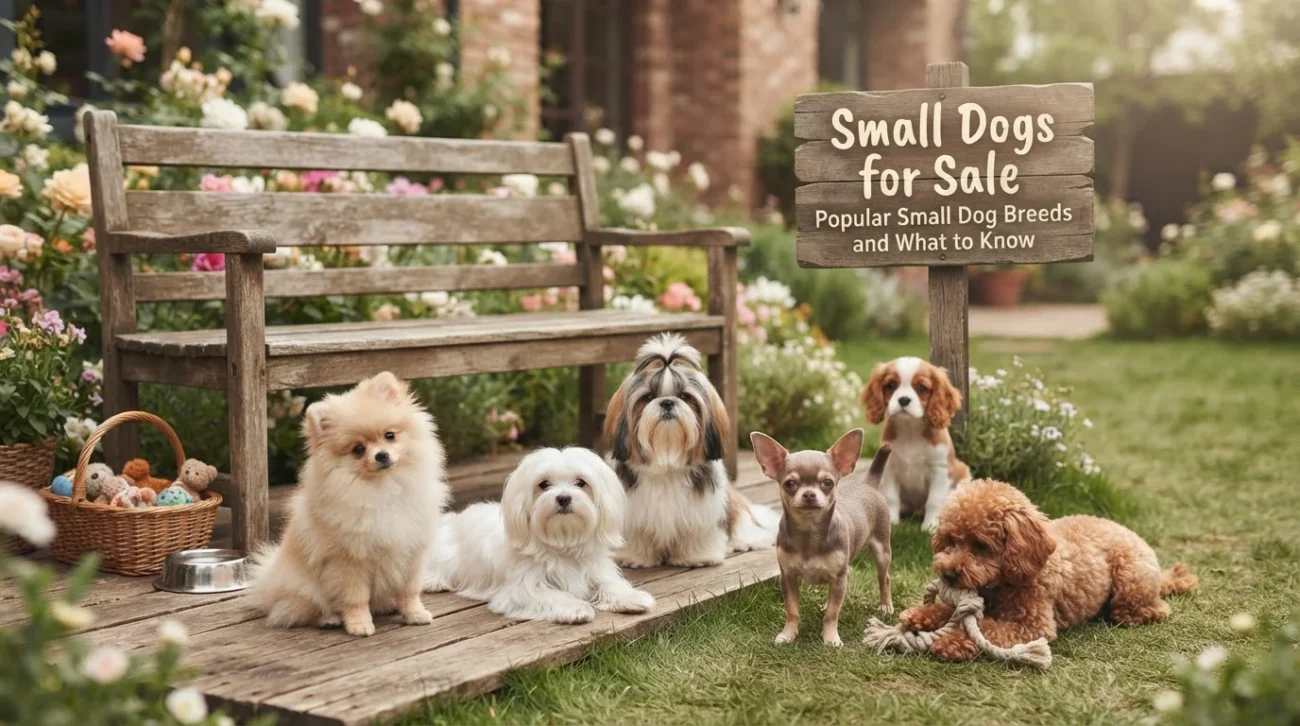
read more about small dogs for sale
Preparing Your Home for a New Puppy
Create a Safe Puppy Area
Before bringing your puppy home, choose a specific area where they can rest, sleep, eat, and gradually become familiar with their surroundings. This can be a puppy-proofed room, a gated section of a room, or another secure space.
A crate can also be useful when introduced positively. It should be large enough for the puppy to stand, turn around, lie down, and stretch comfortably, but it should not be used as punishment.
Keep the puppy’s sleeping area away from dangerous objects, electrical cords, cleaning products, small items, and anything that could be swallowed.
Puppy-Proof the House
Puppies explore the world with their mouths. Anything within reach may become a potential chew toy.
Before your puppy arrives, secure electrical cables, move household chemicals out of reach, close cabinets, remove small objects from the floor, and make sure trash cans are inaccessible.
Pay particular attention to plants. Some common household and garden plants can be harmful to dogs. If you are unsure whether a plant is safe, keep it away from your puppy until you have confirmed its safety with a veterinarian.
Prepare Essential Puppy Supplies
Basic puppy needs usually include:
- Appropriate puppy food
- Food and water bowls
- Comfortable bedding
- A properly sized crate or safe sleeping area
- Collar and identification information
- Leash
- Puppy-safe toys
- Training treats
- Poop bags
- Puppy pads if you plan to use them
- Puppy shampoo
- Grooming supplies
- Enzymatic cleaner for accidents
- Baby gates or puppy barriers
- A first-aid kit appropriate for pets
You do not need to buy everything at once. Start with the essentials and add supplies according to your puppy’s breed, coat, lifestyle, and individual needs.
read more about large dogs for sale
The First Day With Your Puppy
Keep the First Day Calm
The first day can be overwhelming. Your puppy has suddenly left their mother, littermates, familiar environment, and possibly the people who cared for them.
Try not to fill the first day with visitors, loud noises, or exciting activities. Give your puppy time to investigate their new surroundings at their own pace.
Let them sleep when they need to. Puppies often appear energetic for short periods and then suddenly become exhausted.
Introduce the Home Gradually
Instead of immediately allowing your puppy to explore the entire house, start with a smaller, controlled area.
Show them where their bed or crate is located, where they can drink water, and where you want them to go to the bathroom.
Gradual exploration can make the environment less overwhelming and also makes supervision easier.
Expect Some Nervous Behavior
A new puppy may whine, hide, sleep more than expected, or seem unsure during the first few hours.
Some puppies adapt quickly, while others need more time. Avoid forcing interaction. Sit nearby, speak calmly, and allow your puppy to approach you.
Building trust is one of the most important parts of early caring for a puppy.
Feeding Your Puppy Properly
Choose an Age-Appropriate Diet
Puppies have different nutritional requirements from adult dogs because their bodies are growing rapidly.
Choose a complete and balanced puppy diet appropriate for your puppy’s age, size, and expected adult size. Large-breed puppies, for example, often require specially formulated food to support controlled growth.
If you are uncertain about the best diet, ask your veterinarian for guidance.
Establish Regular Meal Times
Young puppies generally benefit from several smaller meals throughout the day rather than one or two large meals.
The appropriate feeding schedule depends on age, breed, size, health, and the specific food being used. Follow the feeding instructions on the food label while adjusting the amount according to your veterinarian’s recommendations and your puppy’s body condition.
Fresh drinking water should always be available.
Avoid Sudden Food Changes
If your puppy was eating a particular food before coming home, maintaining that diet initially can make the transition easier.
If you decide to change foods, introduce the new food gradually rather than changing it suddenly. A slow transition may reduce the risk of digestive upset.
Be Careful With Human Food
Not everything people eat is appropriate for dogs. Chocolate, grapes and raisins, onions, garlic, alcohol, xylitol-containing products, and some other foods can be dangerous.
Keep potentially harmful foods away from your puppy and teach everyone in the household not to feed the puppy table scraps without checking whether they are safe.
Understanding Puppy Sleep
Puppies Need a Lot of Sleep
One of the most surprising parts of new puppy care is how much puppies sleep.
Young puppies may sleep for many hours throughout the day and night because their bodies and brains are developing rapidly.
Do not assume that a sleeping puppy is lazy. Rest is an important part of healthy development.
Create a Consistent Sleeping Routine
Try to make bedtime predictable. Take your puppy to their designated toilet area before bed, provide a calm environment, and avoid stimulating games immediately before sleeping.
A young puppy may wake during the night because they need to urinate or because they are adjusting to being away from their littermates.
Nighttime waking generally becomes less frequent as bladder control and confidence improve.
Helping Your Puppy Sleep Alone
Some puppies settle easily, while others cry when separated from their owners.
A comfortable crate or sleeping area near you can help your puppy feel secure during the initial adjustment period.
Avoid responding to every small noise with exciting attention, but also do not ignore signs that your puppy genuinely needs to go outside or may be distressed.
Toilet Training Your Puppy
Start Toilet Training Immediately
You do not need to wait several weeks before starting toilet training. Begin teaching your puppy where you want them to eliminate from the first day.
Take the puppy to the appropriate toilet area regularly, especially:
- After waking
- After eating
- After drinking
- After playing
- Before bedtime
- After periods of excitement
- When they begin sniffing or circling
Young puppies have limited bladder control, so frequent trips are normal.
Use Positive Reinforcement
When your puppy eliminates in the correct location, praise them immediately and offer an appropriate reward.
The goal is to help the puppy understand exactly which behavior earned the reward.
Avoid punishment after accidents. A puppy does not necessarily understand why you are angry, especially if you discover an accident after it has happened.
Clean Accidents Thoroughly
If a puppy repeatedly smells urine or feces in an area, they may be more likely to use that location again.
Use an appropriate enzymatic cleaner designed for pet accidents to remove odors as thoroughly as possible.
Be Patient With Progress
Toilet training takes time. Some puppies learn quickly, while others need several weeks or longer.
Consistency is more important than expecting perfection immediately.
Exercise and Play for Puppies
Understand That Puppies Have Different Exercise Needs
Exercise is essential, but young puppies should not be treated like miniature adult dogs.
Their bones, joints, muscles, and coordination are still developing. Exercise needs vary according to age, breed, size, health, and individual temperament.
Your veterinarian can help you determine what level of activity is appropriate.
Prioritize Short Play Sessions
Instead of long, exhausting exercise sessions, offer several short periods of age-appropriate play.
Gentle games, supervised exploration, and appropriate toys can provide both physical activity and mental stimulation.
Avoid Overexertion
Signs that your puppy may be getting too tired can include repeatedly lying down, slowing significantly, excessive panting, difficulty maintaining attention, or becoming unusually irritable.
Puppies need a balance between activity and rest.
Mental Exercise Matters
Training can be tiring for a puppy in a positive way.
Simple exercises such as responding to their name, coming when called, sitting, following a treat, or calmly entering their crate can provide valuable mental stimulation.
Puzzle toys designed for puppies can also encourage problem-solving.
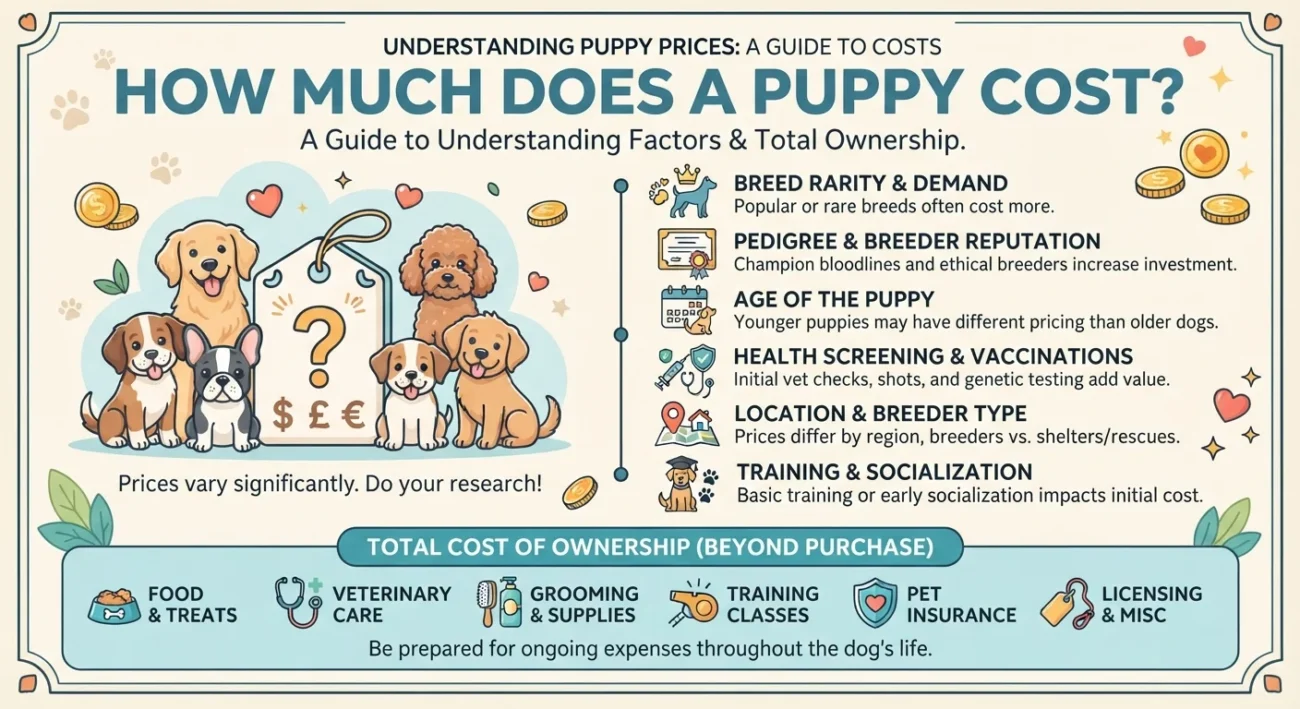
read more about how much does a puppy cost
Puppy Socialization
Why Socialization Is Important
Socialization is one of the most important elements of a complete puppy care guide.
A puppy needs opportunities to become familiar with different sights, sounds, surfaces, people, environments, and appropriate animals.
Good socialization is not simply allowing a puppy to meet as many dogs as possible. It means creating safe, positive experiences that teach the puppy that unfamiliar things do not automatically mean danger.
Introduce New Experiences Gradually
Introduce new experiences at a pace your puppy can handle.
For example, your puppy can gradually experience:
- Different household sounds
- Car rides
- Different floor surfaces
- People wearing different types of clothing
- Gentle handling
- Household appliances
- New safe environments
- Friendly, healthy, vaccinated dogs when appropriate
Reward calm behavior with praise or treats.
Avoid Overwhelming the Puppy
If your puppy becomes frightened, forcing them to remain close to the scary object may make the experience worse.
Instead, create distance and allow the puppy to relax.
The goal is not to make the puppy tolerate everything immediately. The goal is to help them develop confidence.
Ask Your Veterinarian About Safe Socialization
Puppies have developing immune systems and may not yet have completed their recommended vaccination series.
Because vaccination schedules vary, ask your veterinarian which environments and interactions are currently appropriate.
You can often begin controlled social experiences before full vaccination, but the safest options depend on your puppy’s health, vaccination status, and local disease risks.
Puppy Training Basics
Teach Their Name
One of the first useful skills is learning to respond to their name.
Say the puppy’s name in a happy voice. When they look toward you, reward them.
Repeat this frequently without using their name only when something negative is about to happen.
Teach Basic Cues
Once your puppy is comfortable, begin simple training exercises such as:
- Sit
- Come
- Stay
- Leave it
- Drop it
- Wait
- Touch
- Go to bed
Training sessions should be short and positive.
Use Positive Reinforcement
Reward behaviors you want to see repeated.
Rewards may include small treats, praise, toys, play, or access to something the puppy enjoys.
Positive reinforcement can help create a strong relationship between you and your dog while making learning enjoyable.
Teach Bite Inhibition
Puppies naturally use their mouths during play and exploration.
Instead of punishing normal puppy behavior, redirect biting toward appropriate toys.
If play becomes too rough, calmly stop the interaction and allow the puppy to settle.
Consistency among family members is important so that the puppy receives the same message from everyone.
Grooming and Hygiene
Introduce Grooming Early
Even puppies that do not require extensive grooming should become comfortable with being handled.
Gently touch their paws, ears, mouth, tail, and body while providing rewards.
This can make future nail trimming, veterinary examinations, brushing, and other care easier.
Brush According to Coat Type
Grooming requirements vary considerably between breeds.
Some puppies need frequent brushing, while others require less frequent maintenance. Long, curly, or dense coats may need more attention to prevent tangles and mats.
Use grooming tools appropriate for the puppy’s coat and age.
Puppy Bathing
Puppies do not necessarily need frequent baths unless they become dirty or your veterinarian recommends a particular bathing routine.
When bathing is necessary, use a shampoo formulated specifically for dogs. Avoid harsh human shampoos because canine skin has different needs.
Keep the puppy warm and dry afterward.
Nail Care
Overgrown nails can affect comfort and movement.
Introduce nail trimming gradually. Touch the paws, show the puppy the nail clippers, and reward calm behavior before attempting to trim.
If you are uncomfortable trimming the nails yourself, ask a veterinarian or professional groomer to demonstrate the correct technique.
Dental Care
Dental care should begin early.
Ask your veterinarian about puppy-safe toothbrushes, toothpaste, and an appropriate dental-care routine.
Never use human toothpaste unless it is specifically confirmed safe for dogs, as some ingredients can be harmful.
Veterinary Care for a New Puppy
Schedule an Initial Veterinary Visit
A veterinary examination should be an early priority after bringing a puppy home.
The veterinarian can assess the puppy’s general health, discuss vaccinations, parasite prevention, nutrition, growth, behavior, and future medical care.
Bring any health records provided by the breeder, shelter, rescue organization, or previous caregiver.
Keep Vaccinations on Schedule
Puppies generally require a series of vaccinations rather than receiving every necessary vaccine in a single visit.
The schedule depends on factors such as age, previous vaccinations, lifestyle, geographic location, and disease exposure.
Your veterinarian can establish an individualized vaccination plan.
Discuss Parasite Prevention
Puppies can be vulnerable to internal and external parasites.
Ask your veterinarian about appropriate prevention for fleas, ticks, intestinal parasites, heartworm disease, and other regionally relevant concerns.
Do not give your puppy medications intended for another animal or use a product without confirming that it is appropriate for their age and weight.
Monitor Growth and Body Condition
Regular veterinary visits allow professionals to monitor your puppy’s growth and development.
Rapid or inadequate growth can sometimes indicate nutritional or health problems, particularly in growing dogs.
Keeping your puppy at an appropriate body condition is an important part of long-term health.
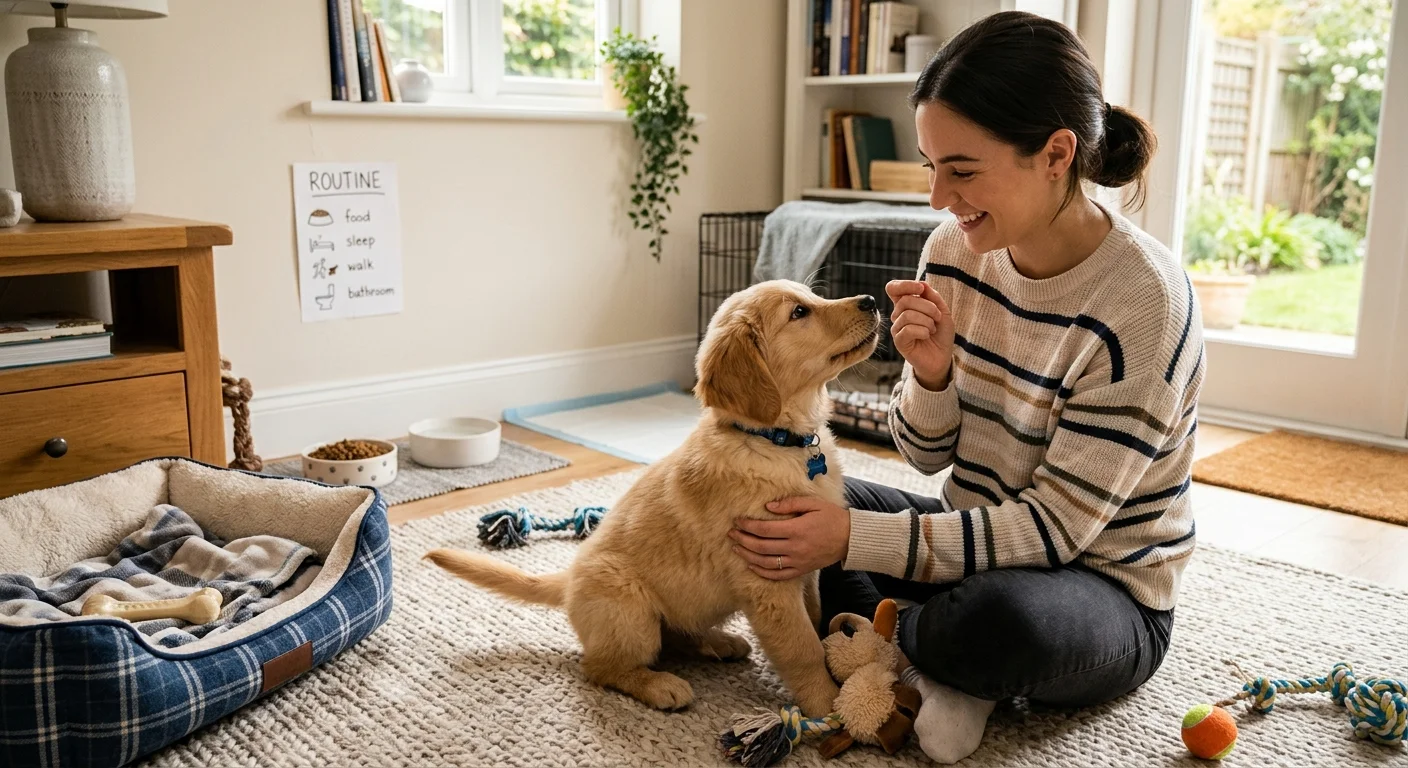
Creating a Daily Puppy Routine
Why Routine Helps
Puppies learn more easily when their environment is predictable.
A consistent daily schedule can help your puppy understand when it is time to eat, sleep, play, train, and go to the bathroom.
Your routine does not need to be perfect. It simply needs to be reasonably consistent.
Example of a Puppy Routine
A typical day might include:
Morning: Wake up, toilet break, breakfast, short play session, and another toilet break.
Late morning: Nap, toilet break, brief training, and supervised play.
Afternoon: Meal if appropriate for the puppy’s age, toilet break, exploration, training, and another nap.
Evening: Dinner, gentle play, toilet break, calm family time, and preparation for bedtime.
Night: Final toilet break followed by quiet sleeping time.
The exact schedule should be adapted to your puppy’s age, feeding requirements, sleep needs, and household routine.
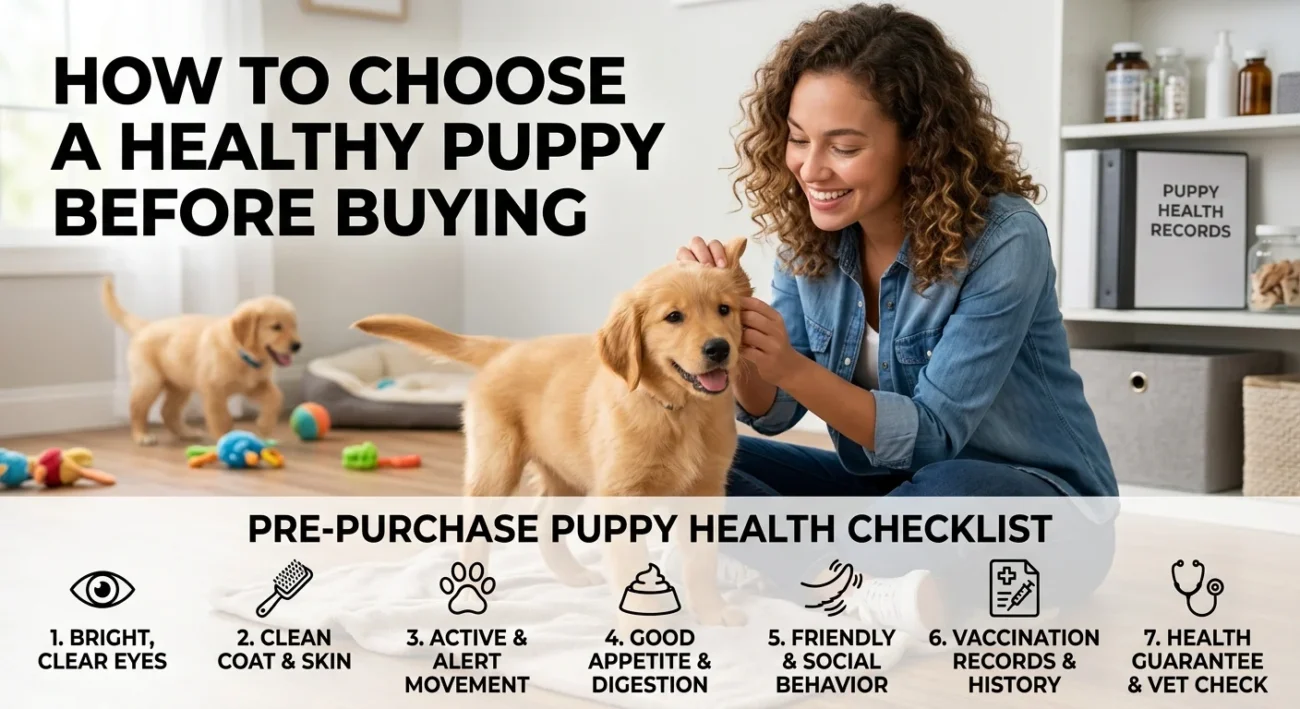
read more about how to choose a healthy puppy
Puppy Safety Inside the Home
Supervise Your Puppy
Supervision is one of the simplest ways to prevent accidents.
When you cannot actively watch your puppy, place them in a safe, puppy-proofed area.
This reduces opportunities for chewing electrical cords, swallowing objects, climbing unsafe furniture, or eliminating in hidden areas.
Watch for Choking Hazards
Puppies can swallow surprisingly small objects.
Keep coins, children’s toys, batteries, socks, hair accessories, plastic packaging, and other small objects out of reach.
Inspect toys regularly and remove damaged toys that could break apart.
Be Careful Around Stairs and Heights
Young puppies may not understand the danger of stairs, balconies, open windows, or elevated furniture.
Use barriers where necessary and supervise exploration.
Secure Doors and Gates
Puppies can move quickly when they see an open door.
Make sure entrances, gates, fences, and windows are secure. Identification information and appropriate microchip registration can also be valuable if a puppy becomes lost.
Understanding Common Puppy Behaviors
Chewing
Chewing is normal puppy behavior.
Provide several safe chew toys and redirect the puppy whenever they attempt to chew something inappropriate.
Avoid turning household objects into accidental toys. For example, allowing a puppy to chew old shoes can make it difficult for them to understand why other shoes are off-limits.
Jumping
Puppies may jump because they are excited and want attention.
Reward calm behavior instead. When the puppy keeps four paws on the floor, provide attention or a treat.
Whining
Whining can have different causes. A puppy may be tired, hungry, uncomfortable, anxious, lonely, or in need of a toilet break.
Consider the context before responding.
Digging and Scratching
Some puppies naturally enjoy digging or scratching.
Provide appropriate outlets for these behaviors rather than simply punishing them.
Understanding normal canine behavior is an important part of successful puppy care.
Handling Separation and Alone Time
Teach Independence Gradually
A puppy should learn that being alone for short periods is normal and safe.
Begin with brief separations while the puppy is comfortable. Gradually increase the duration as they become more confident.
Avoid making departures and arrivals unnecessarily dramatic.
Give Your Puppy Appropriate Activities
A safe puppy-proofed area and suitable toys can help keep the puppy occupied.
Food-based enrichment may also be useful when appropriate, but any chew or food toy should be selected according to the puppy’s size and chewing habits and used with suitable supervision.
Do Not Expect Too Much Too Soon
Very young puppies cannot immediately handle long periods alone.
Their physical needs, including frequent toilet breaks and meals, must be considered when planning alone time.
Recognizing When Your Puppy May Be Sick
Monitor Changes in Behavior
You know your puppy’s normal behavior better as you spend more time together.
Sudden changes such as unusual lethargy, refusal to eat, repeated vomiting, persistent diarrhea, breathing difficulty, collapse, severe weakness, or other concerning symptoms warrant prompt veterinary attention.
Young puppies can become seriously ill quickly, so it is better to contact a veterinarian when you are concerned rather than waiting too long.
Keep Emergency Information Available
Know how to contact your regular veterinarian and identify an emergency veterinary clinic before you need one.
Keep vaccination and medical records organized and accessible.
Common Puppy Care Mistakes to Avoid
Giving Too Much Freedom Too Early
Allowing a puppy unrestricted access to the entire home can make toilet training, supervision, and behavior management much harder.
Expand their freedom gradually as they demonstrate reliable behavior.
Inconsistent Rules
If one family member allows the puppy on the sofa while another constantly removes them, the puppy may become confused.
Agree on basic household rules and use them consistently.
Using Punishment for Accidents
Punishment can create fear without teaching the puppy what you actually want.
Focus on supervision, frequent toilet breaks, immediate rewards, and consistent training.
Skipping Socialization
A puppy that rarely experiences new people, sounds, environments, and situations may have difficulty adjusting later.
Safe and positive exposure is an important part of development.
Overfeeding Treats
Treats can contribute significantly to calorie intake.
Use small treats and consider reducing the amount of regular food when appropriate. Your veterinarian can help you maintain a healthy feeding plan.
Overexercising
More exercise is not always better for a developing puppy.
Follow age- and breed-appropriate activity recommendations and prioritize rest.
The First Few Weeks: What to Focus On
Week One
The first week should focus on adjustment and security.
Establish a routine, schedule veterinary care, begin toilet training, introduce basic cues, and puppy-proof the environment.
Do not expect perfect behavior.
Weeks Two and Three
As your puppy becomes more comfortable, gradually increase training, controlled exploration, and positive social experiences.
Continue reinforcing toilet habits and appropriate chewing.
Week Four and Beyond
By this point, your puppy may be more confident and curious.
Continue building good habits rather than relaxing the rules simply because the puppy seems settled.
Training, socialization, grooming practice, veterinary care, exercise, and rest should remain regular parts of life.
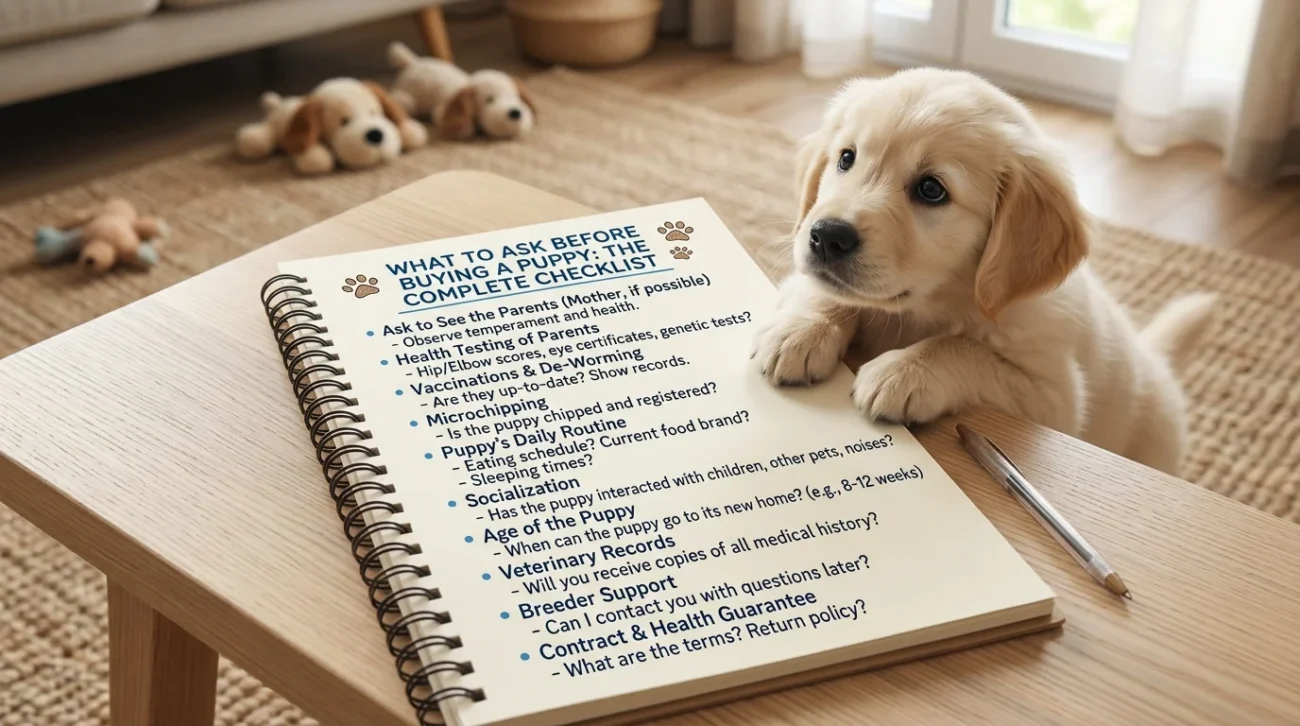
read more about what to ask before buying a puppy
Successful puppy care is not about creating a perfectly behaved dog within a few days. It is about establishing a safe and supportive foundation that allows a young puppy to grow into a confident, healthy companion.
The most important elements of caring for a puppy include appropriate nutrition, plenty of sleep, consistent toilet training, age-appropriate exercise, positive training, safe socialization, regular grooming, veterinary care, and a predictable routine.
Remember that puppies are still learning. Accidents, chewing, whining, excitement, and occasional setbacks are normal parts of development. Patience and consistency will usually accomplish much more than punishment.
When you focus on your puppy’s physical needs, emotional well-being, safety, and education from the beginning, you give them the best possible opportunity to develop healthy habits. With time, repetition, positive reinforcement, and professional veterinary guidance when needed, those early weeks can become the foundation for a happy and rewarding relationship that lasts for years.